
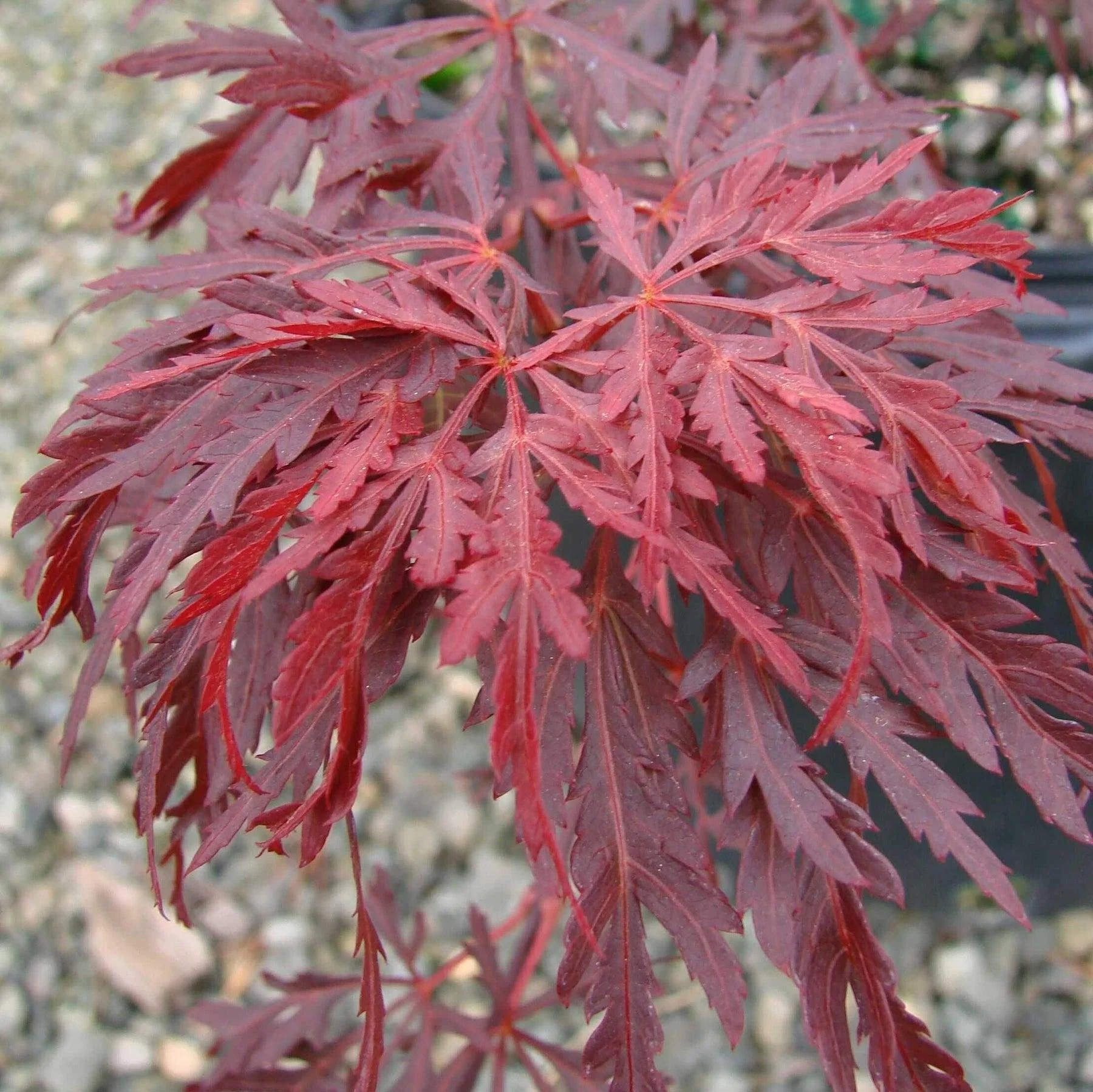
A compact Japanese maple with finely dissected, lace-like foliage. Its red-purple leaves create a dramatic effect throughout the growing season, with particularly strong red coloration in fall.
Size: generally around 6–10 ft. tall × 6–8 ft. wide. Though they grow slowly and can be kept to a smaller size by pruning.
Bloom: spring, with small reddish flowers that are secondary to the foliage.
Best feature: Fine, lace-like red foliage and excellent fall color.
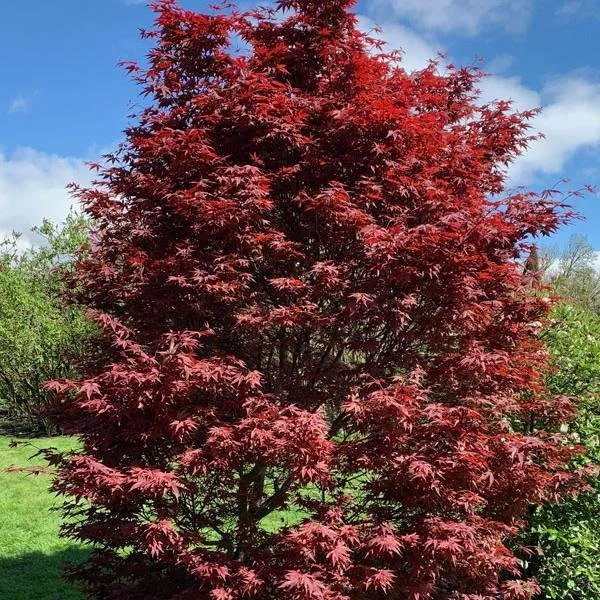
An upright Japanese maple with rich dark red to purple-red foliage. It holds its color well through summer and develops brilliant scarlet-red fall color. It is also relatively late to leaf out, helping reduce damage from late spring frosts.
Size: approximately 15–20 ft. tall × 15–20 ft. wide. (Though they grow very slowly and nowhere near as tall in our zone.
Bloom: April / spring; flowers are small and relatively inconspicuous.
Best feature: Deep red foliage with excellent summer color and scarlet fall color.
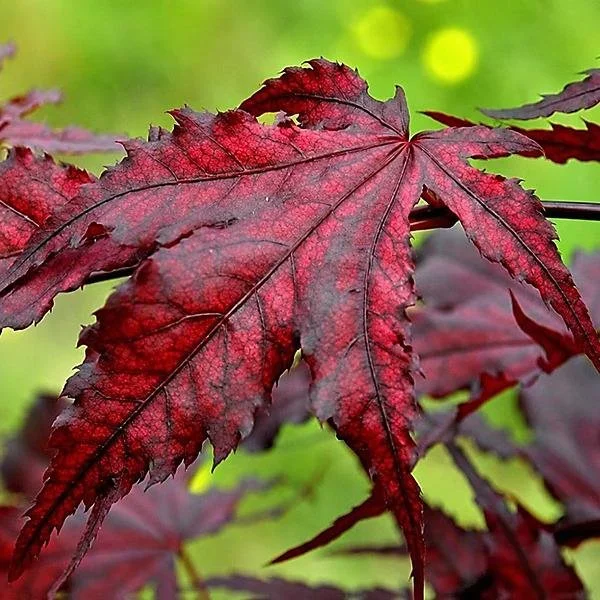
A distinctive Japanese maple known for deeply colored purple foliage and prominent veins. The leaves have a delicate, finely cut appearance while the overall tree forms a graceful specimen.
Size: approximately 10–15 ft. tall × 8–12 ft. wide, though they grow slowly and do not reach max height in our climate. Can be easily kept smaller by pruning.
Bloom: spring; flowers are small and not a primary ornamental feature.
Best feature: Deep purple foliage with contrasting veins.
Plants
*No online purchases available. In person sales only*
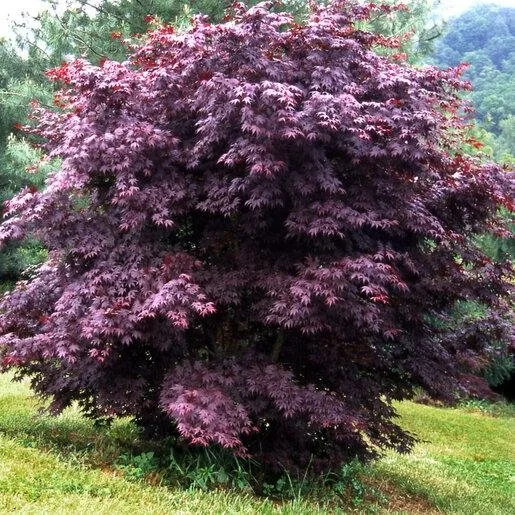
A striking red-leaved Japanese maple with finely divided foliage. The foliage provides strong burgundy-to-purple color and makes this a particularly effective specimen or focal-point tree.
Size: generally a medium-sized Japanese maple, commonly around 15–20 ft. tall and wide, though they grow very slowly and do not reach max height in our climate. Can be easily kept smaller by pruning.
Bloom: spring, with small, inconspicuous maple flowers.
Best feature: Dark burgundy/purple foliage and a strong architectural presence.
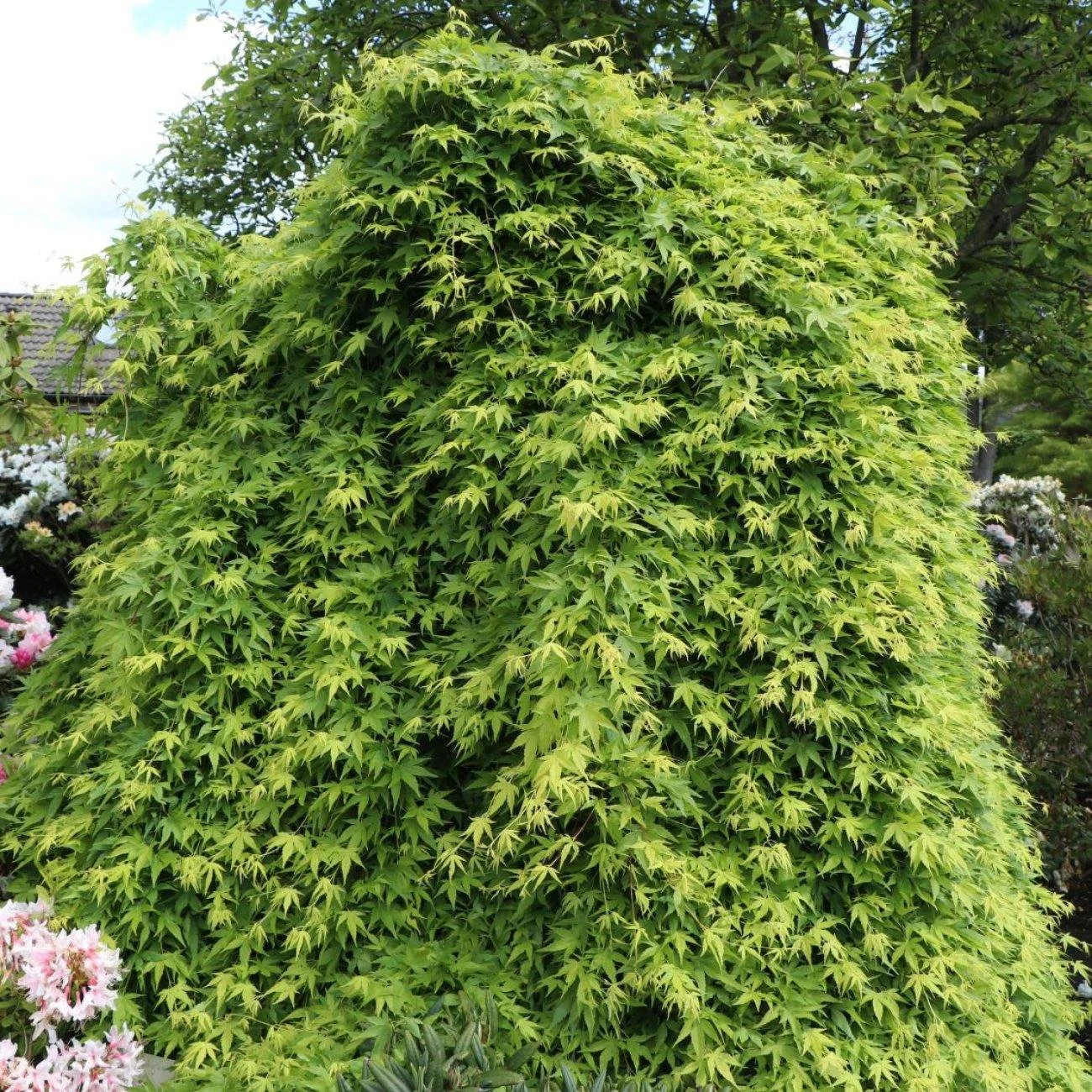
One of the most distinctive forms on our list. ‘Ryusen’ develops strongly weeping/cascading branches, producing a waterfall-like appearance. It can be trained into a small upright tree or allowed to cascade naturally.
Size:4-8 ft Varying largely with width varying substantially according to how it is trained; some specimens can become quite broad. How tall the tree is when it starts weeping is the tallest it will grow
Bloom:spring, with insignificant flowers.
Best feature: Dramatic cascading branch structure and excellent fall color.
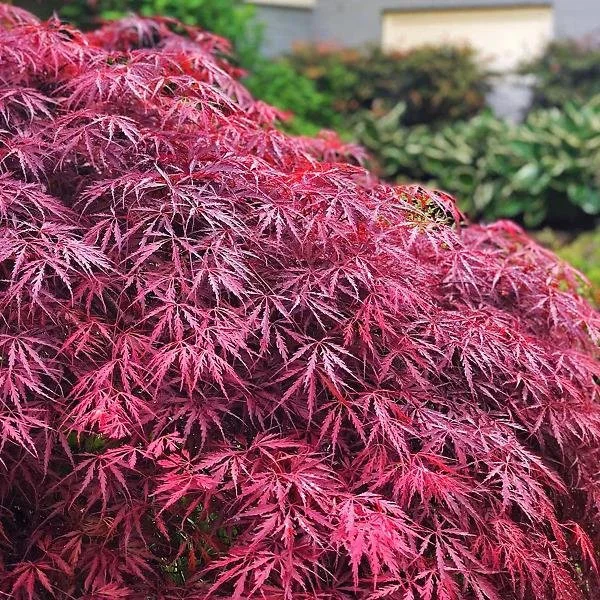
A beautiful weeping/laceleaf Japanese maple with cascading branches and extremely finely divided foliage. New foliage emerges purple-red, becomes deeper reddish-purple during summer, and turns brighter orange-red in fall. It makes an excellent specimen near a patio, entryway, rock garden, or water feature.
Size: approximately 6–8 ft. tall × 8–12 ft. wide. Though they grow slowly and do not grow to max height in our climate.
Bloom time: April–May.
Flowers: Small reddish-purple flowers; attractive up close but not a major feature.
Foliage: Deeply dissected purple-red/laceleaf foliage.
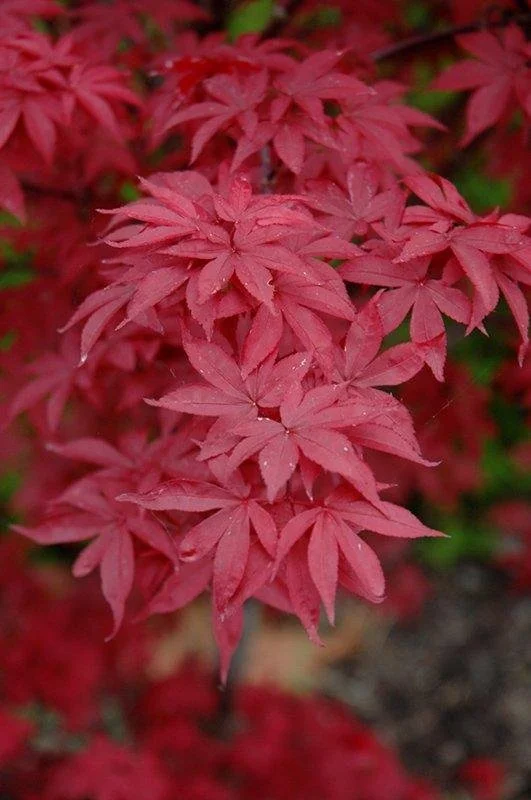
One of the most useful Japanese maples for a narrow planting space. It grows upright and columnar rather than spreading widely. Leaves emerge bright red, deepen to purple-red/burgundy through summer, and become scarlet in fall.
Size: approximately 10–15 ft. tall × 6–8 ft. wide. Though they grow slowly and do not reach max height in our climate. Can be pruned to maintain smaller size.
Bloom time: spring.
Flowers: Tiny, inconspicuous maple flowers.
Foliage: Burgundy-red/purple-red.
Fall color: Brilliant scarlet red.
Best feature: Tall, narrow form—excellent beside a house, walkway, driveway, or in a small garden.
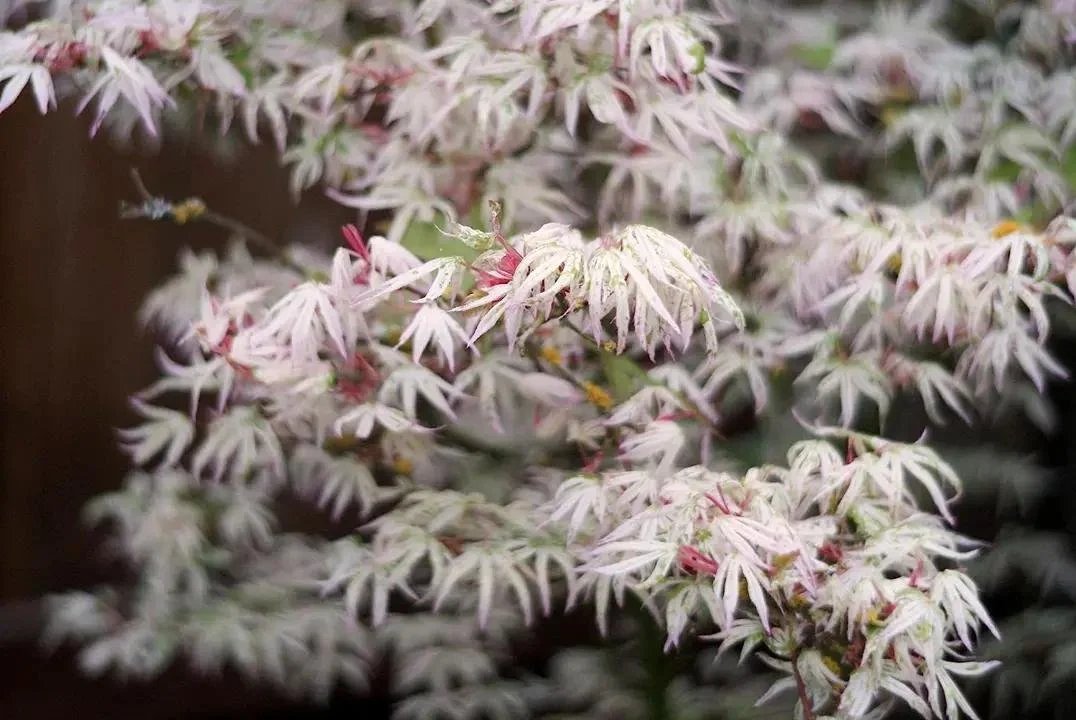
An especially unusual Japanese maple often called “Floating Cloud” maple. The leaves emerge predominantly white with pink tips and gradually develop green coloration heavily mottled and edged with white and pink. The effect can look almost like a cloud of pale foliage. Interestingly, this white transformation tends to happen once every three years!
Size: approximately 8–10 ft. tall × 6–10 ft. wide. Though they grow slowly and do not reach maximum size in our climate.
Bloom time: spring.
Flowers: Inconspicuous.
Foliage: White, pink and green variegation.
Fall: Can develop peach, orange and red tones.
Best feature: Extremely unusual white-and-pink variegated foliage.
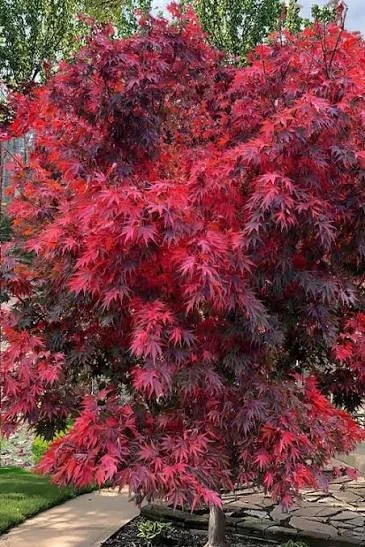
A vigorous hybrid maple combining characteristics of Acer shirasawanum (Full Moon maple) and Acer palmatum. ‘Red Dawn’ develops an upright, rounded-to-vase-shaped form with dramatic purple-red foliage. The spring foliage is particularly striking, while fall brings deep purple and brilliant crimson-red tones.
Size: approximately 15–20 ft. tall × 14–16 ft. wide. Though they grow extremely slowly and do not reach maximum height in our climate. Can be pruned to maintain a smaller size
Bloom time: spring/late spring.
Flowers: Small and relatively inconspicuous.
Spring foliage: Purple-red with lavender tones.
Summer foliage: Olive green with purple undertones.
Fall color: Deep purple and brilliant crimson-red.
Best feature: Large, dramatic specimen maple with outstanding seasonal color.
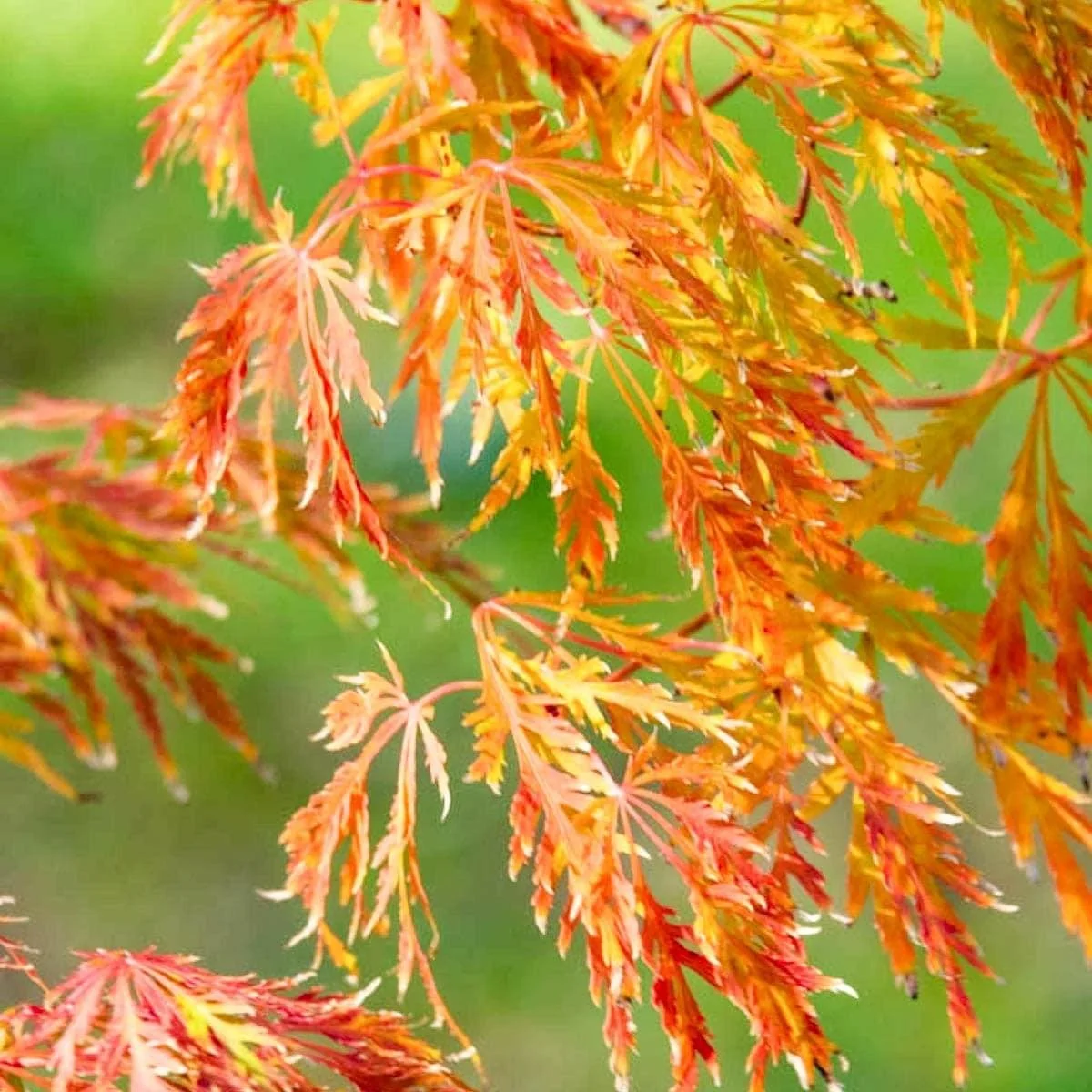
‘Orangeola’ is a beautiful weeping, laceleaf Japanese maple valued for its finely cut foliage and dramatic color changes throughout the growing season. New foliage emerges in shades of orange-red and deepens into burgundy, bronze, and green as the season progresses, before developing brilliant orange-red tones again in fall. Its cascading growth habit makes it particularly attractive when planted where the branches can spill over a wall, slope, container, or the edge of a woodland garden. It is generally best protected from harsh afternoon sun and drying winds, especially in hotter climates. This is an excellent specimen plant for a sophisticated landscape where foliage texture and seasonal color are more important than flowers.
Height: 4–6 ft
Width: 5–7 ft
Flower time: April–May; flowers are small and ornamental rather than showy
Sun/Shade: Part shade to morning sun; protect from intense afternoon sun
Deer resistant
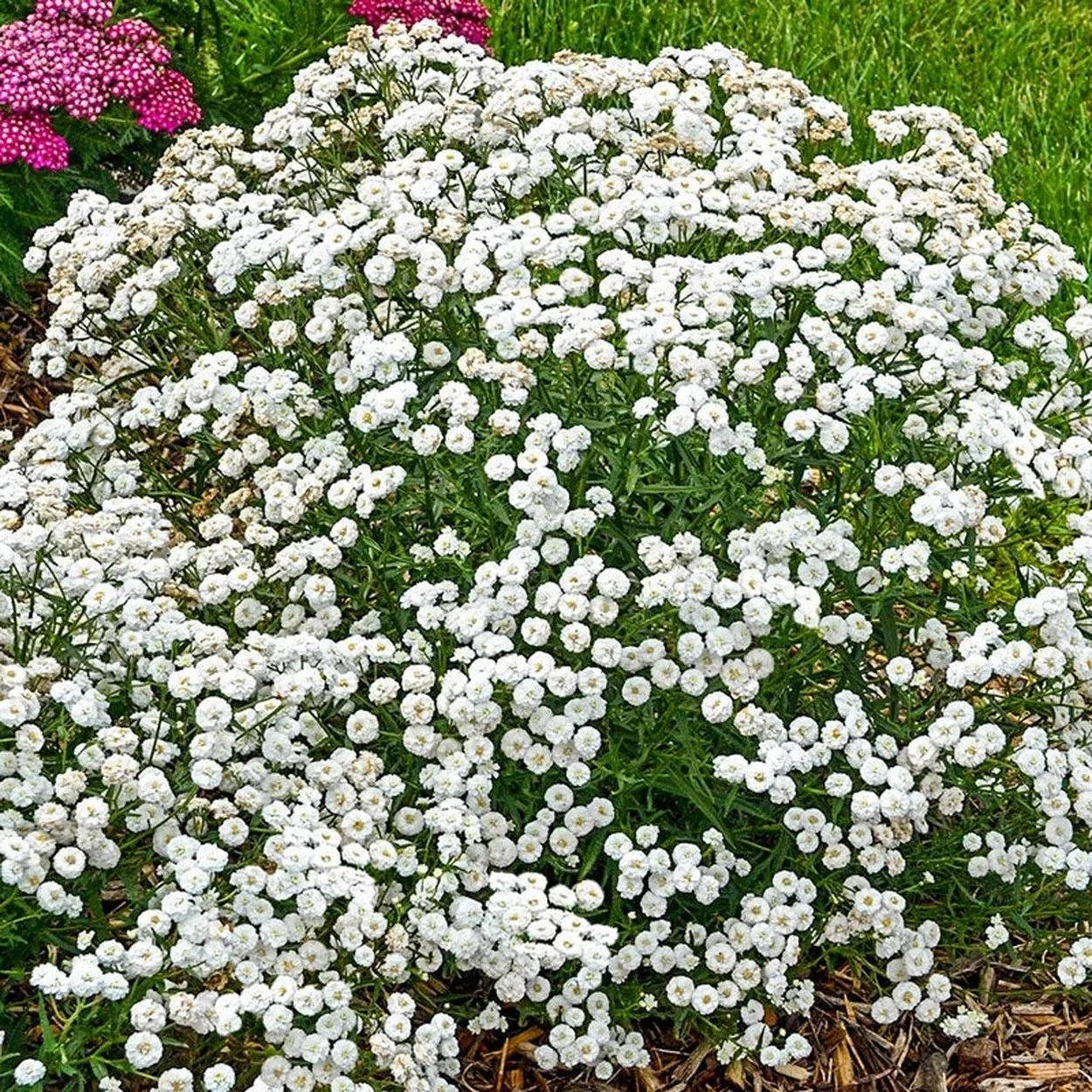
A compact, mounding yarrow with masses of rounded, fluffy white flower clusters. The flowers have a soft, almost baby's-breath appearance and are excellent for cutting and drying. It is a long-blooming pollinator plant.
Size: 18–24 in. tall × 28–30 in. wide.
Bloom time: June-October.
Flower color: White
Foliage: Green, finely textured
Best features: Long bloom period, excellent cut flower, pollinator-friendly, and a soft white color that works well with almost anything.
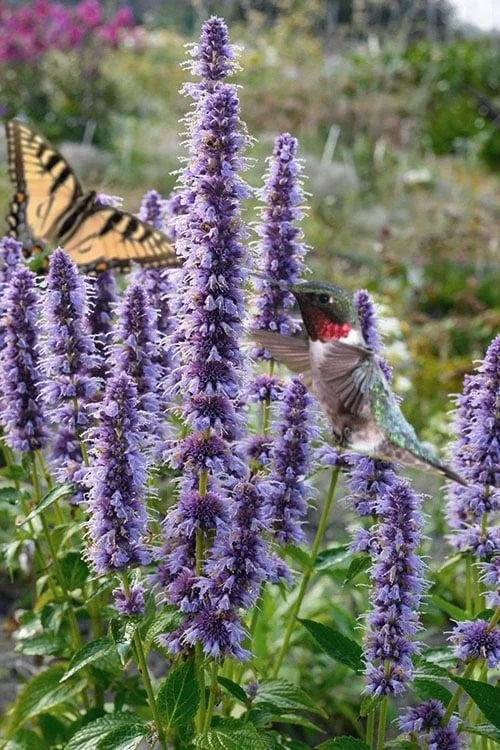
A very reliable, long-blooming perennial with upright spikes of lavender-blue flowers above aromatic green foliage. The foliage has a distinctive licorice/anise scent when crushed. Bees, butterflies and hummingbirds are strongly attracted to the flowers. This plant is the biggest pollinator magnet that ive scene!
Size: approximately 2–3 ft. tall × 1½–2 ft. wide.
Bloom time: July–September, often continuing into early fall.
Flower color: Lavender-blue / violet-blue
Foliage: Aromatic gray-green to green
Sun: Full sun to part shade
Best features: Excellent pollinator plant, drought tolerant once established, fragrant foliage, and an unusually long flowering season.
Garden use: Particularly good in a pollinator garden, perennial border, cottage garden, or near a patio where its fragrance can be appreciated.
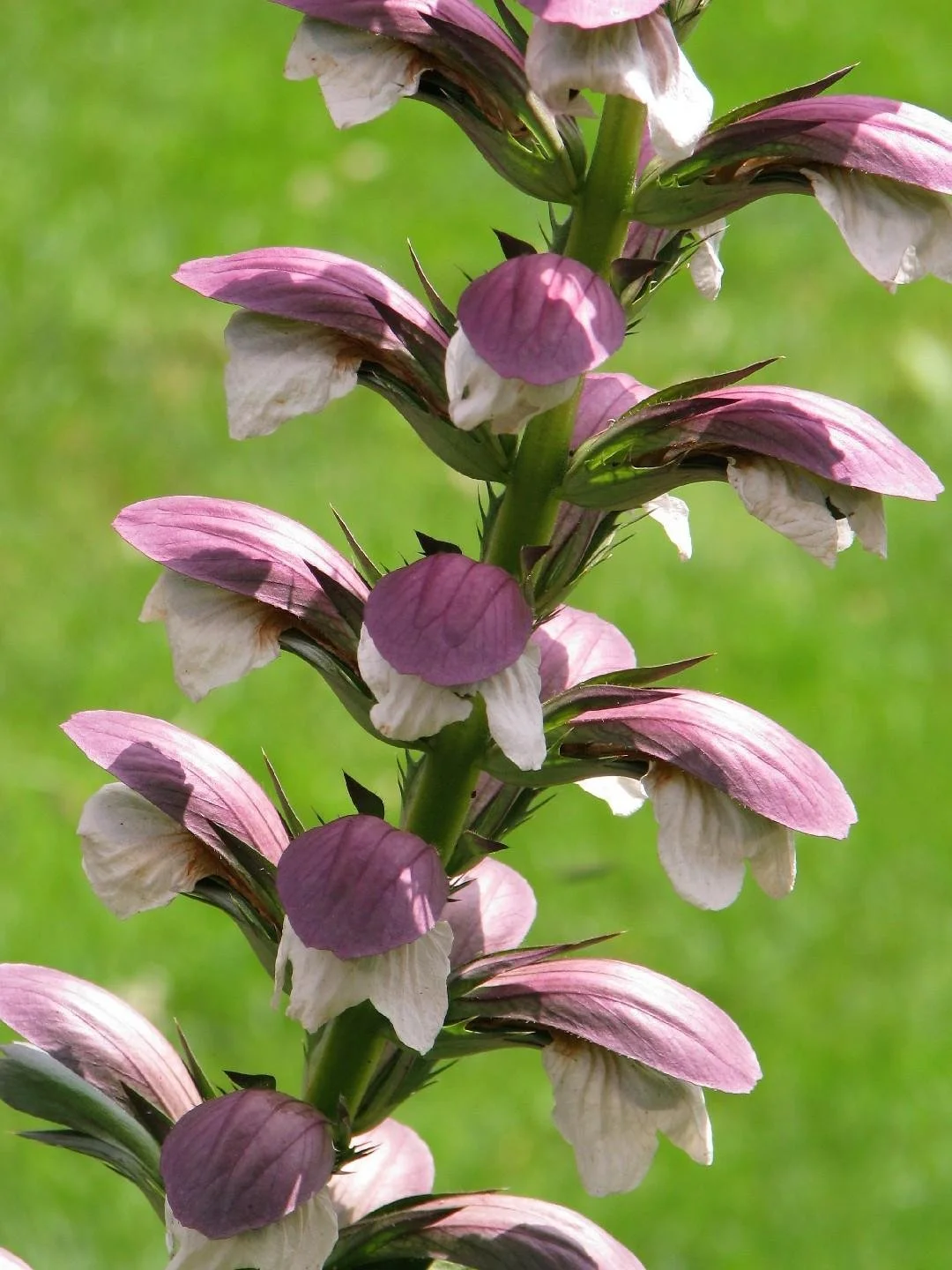
A dramatic architectural perennial grown for both its large, deeply cut, spiny foliage and tall flower spikes. The flowers are white to mauve/purple and are surrounded by distinctive purple-tinged bracts. It creates a very bold, almost tropical-looking effect even though it is a hardy perennial.
Size: approximately 3–4 ft. tall × 2–3 ft. wide.
Bloom time: June–August, extending the season into early summer through late summer.
Flower color: White with mauve/purple bracts.
Foliage: Large, dark green, deeply cut and spiny.
Best feature: Huge architectural leaves and tall, dramatic flower spikes.
Garden use: Excellent as a specimen perennial, in a shaded border, cottage garden, or architectural planting. It is also deer- and rabbit-resistant!
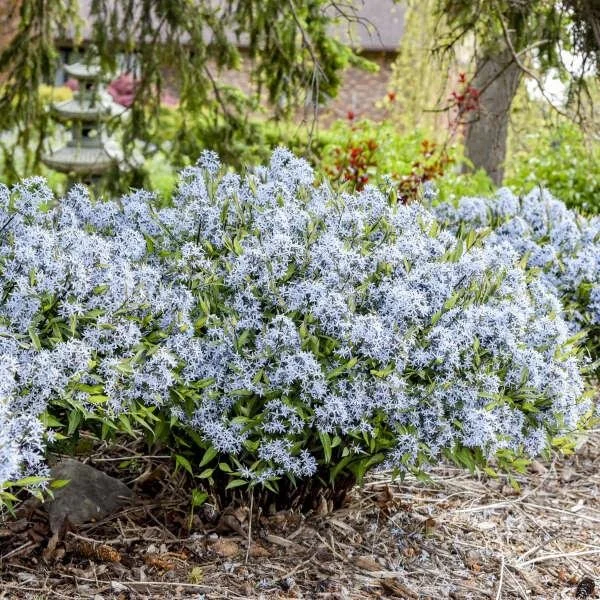
Amsonia ‘Blue Ice’ is a compact, exceptionally attractive Blue Star selection that produces clusters of clear blue, star-shaped flowers in late spring. The flowers are held above attractive narrow foliage, giving the plant a soft, airy appearance while still forming a substantial perennial clump. As the season progresses, the foliage remains useful even after flowering and can develop attractive golden-yellow coloration in autumn. ‘Blue Ice’ is especially useful toward the front or middle of a perennial border and combines beautifully with coneflowers, ornamental grasses, salvias, and other sun-loving perennials.
Height: 18–24 in
Width: 18–24 in
Flower time: May–June
Sun/Shade: Full sun to part shade
Deer resistant
Rabbit resistant
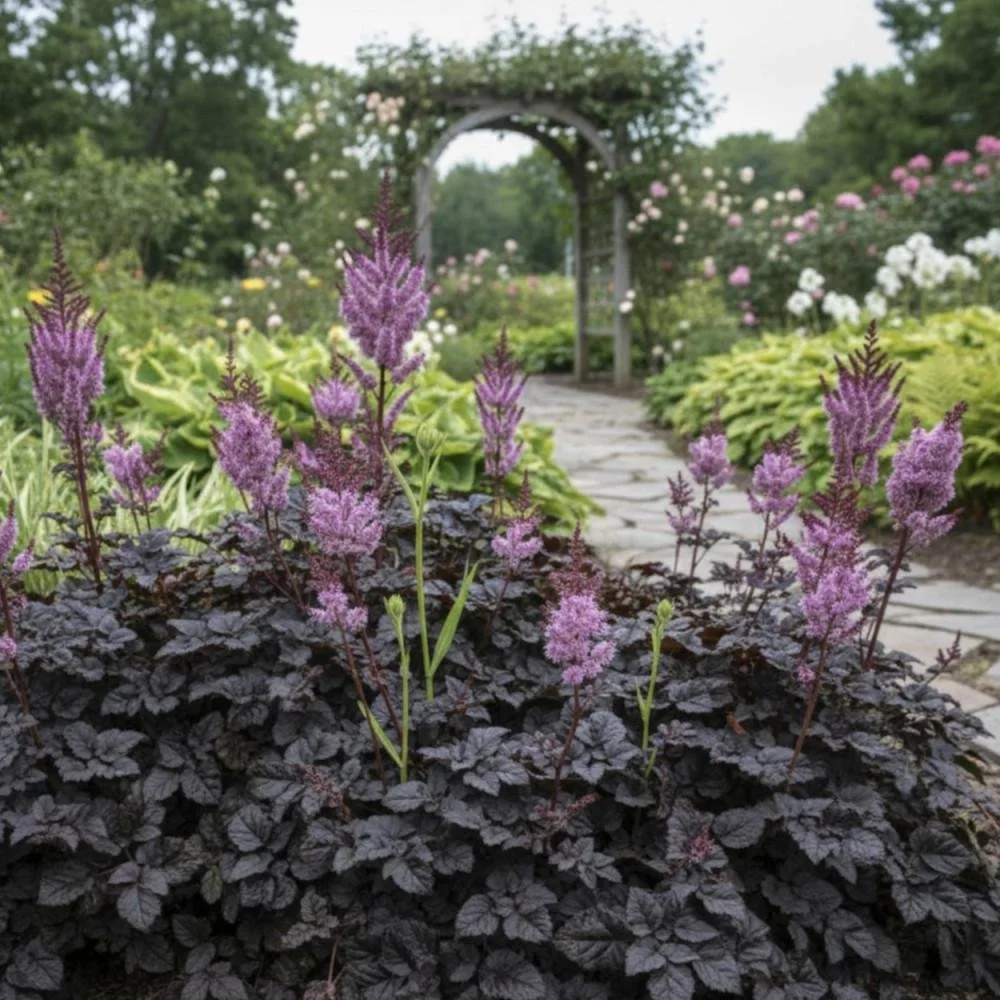
One of the most dramatic astilbes available, combining near-black/chocolate-purple foliage with vivid rosy-purple flower plumes. New foliage emerges yellow-green with a dark margin before becoming much darker as it matures.
Size: 20–22 in. tall × 24–28 in. wide. Flower stalks can reach approximately 28–34 in.
Bloom time: July–August / late summer.
Flower color: Rosy purple / raspberry-purple.
Foliage: Deep chocolate-burgundy to near-black.
Light: Full sun to shade, provided adequate moisture is available.
Best features: Exceptional dark foliage, bright purple flower plumes and strong shade-garden impact.
It is particularly effective when planted beside chartreuse or golden foliage, where the dark leaves create dramatic contrast.
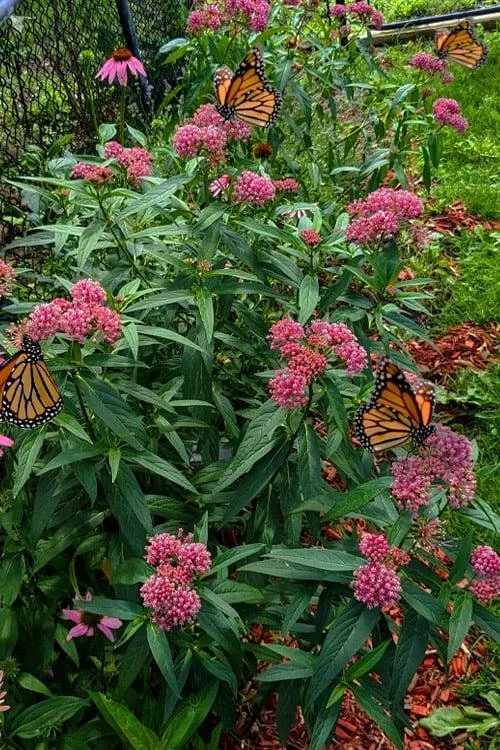
A North American native milkweed with upright stems, narrow lance-shaped leaves and clusters of fragrant pink flowers. It is one of the most valuable plants for a butterfly garden, serving as a host plant for monarch caterpillars while also providing nectar for many pollinators.
Size: typically 3–5 ft. tall × 2–3 ft. wide.
Bloom time: June–August.
Flower color: Pink to rose-pink with white centers.
Foliage: Narrow, green, lance-shaped leaves.
Fruit: Upright/narrow pods containing seeds with silky hairs.
Best features: Monarch host plant, excellent pollinator plant, fragrant flowers and attractive seed pods.
Garden use: Rain gardens, moist perennial borders, butterfly gardens, native plantings and pond edges.
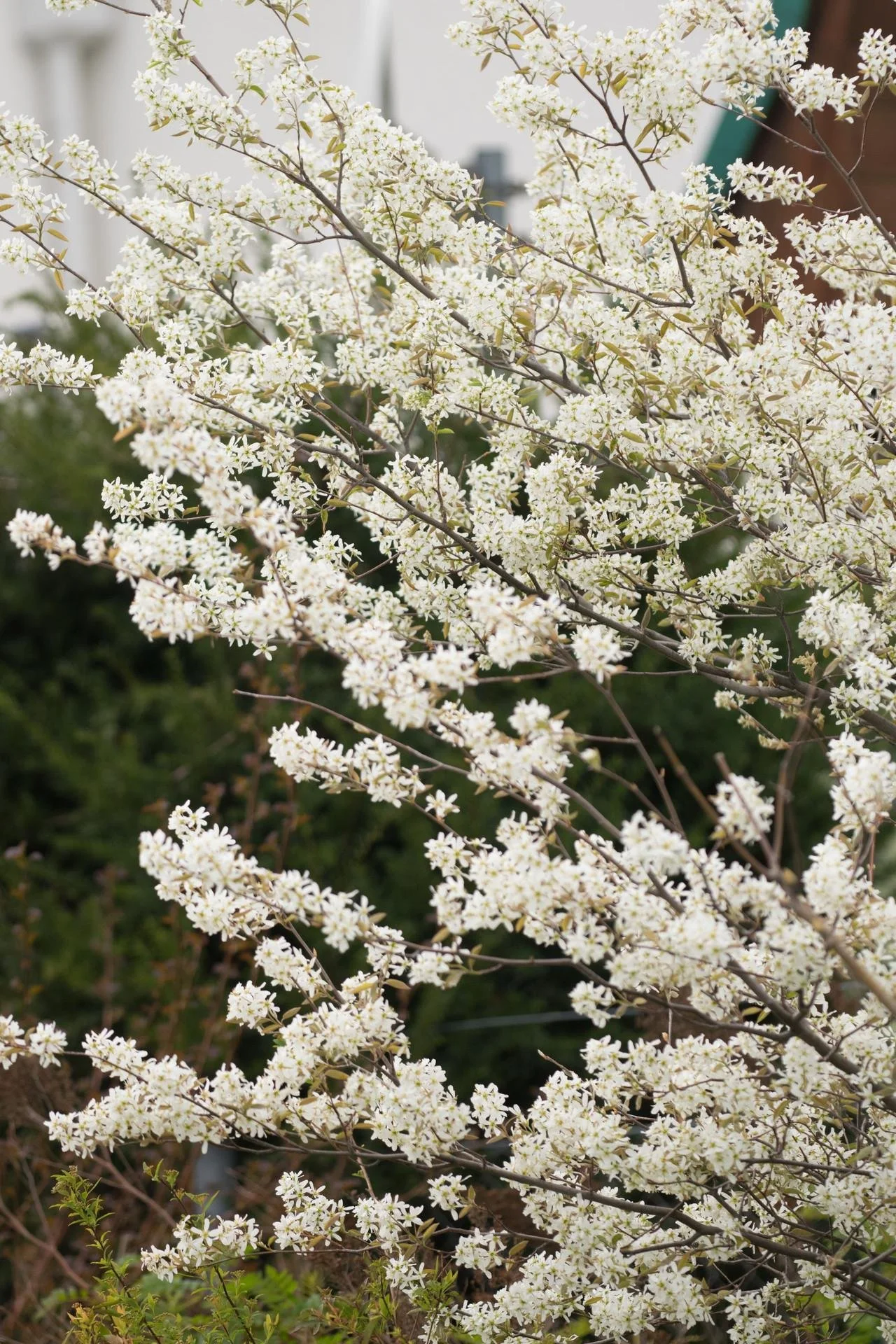
A beautiful small flowering tree with white spring flowers, edible blue-purple berries, and excellent red fall color. Young foliage emerges with a bronze tint before becoming green. It provides several seasons of interest rather than relying on flowers alone.
Size: approximately 20–25 ft. tall × 15–20 ft. wide. Though they do not grow this large in our climate, peaking at around 15ft tall
Bloom time: March–April.
Flower color: White
Fruit: Blue-purple, edible, approximately ⅜ inch. I very much enjoy the berries
Fall color: Brilliant red to red-orange
Best features: Four-season interest, edible fruit, beautiful spring bloom, and exceptional fall color.
It can be grown as either a single-trunk tree or a multi-stemmed small tree, making it useful in naturalistic landscapes as well as more formal gardens.
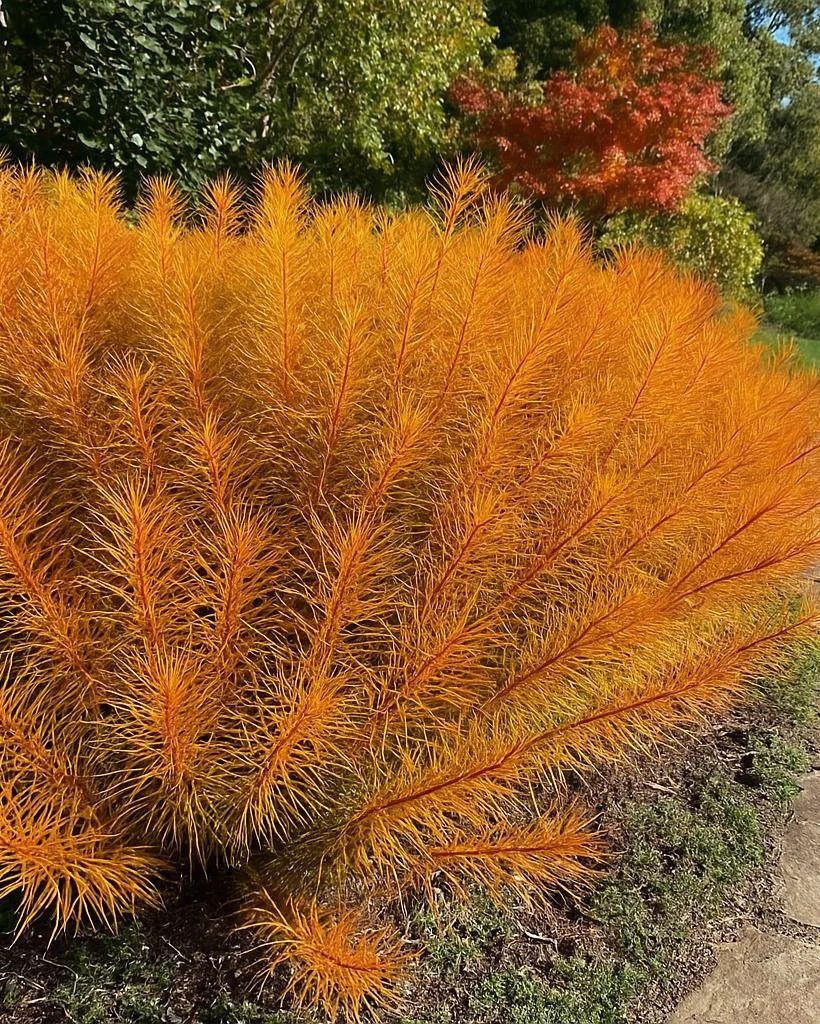
A particularly interesting bluestar because it provides two very different seasonal displays. In spring, narrow foliage is accompanied by pale blue flowers. As the season progresses, the foliage develops a striking golden-caramel/butterscotch color, with reddish stems.
Size: approximately 3 ft. tall × 3–4 ft. wide.
Bloom time: May–June.
Flower color: Pale blue
Summer foliage: Green, narrow and fine-textured
Fall foliage: Golden caramel/orange with reddish stems
Best feature: Exceptional fall foliage—the plant becomes almost a completely different color later in the year.
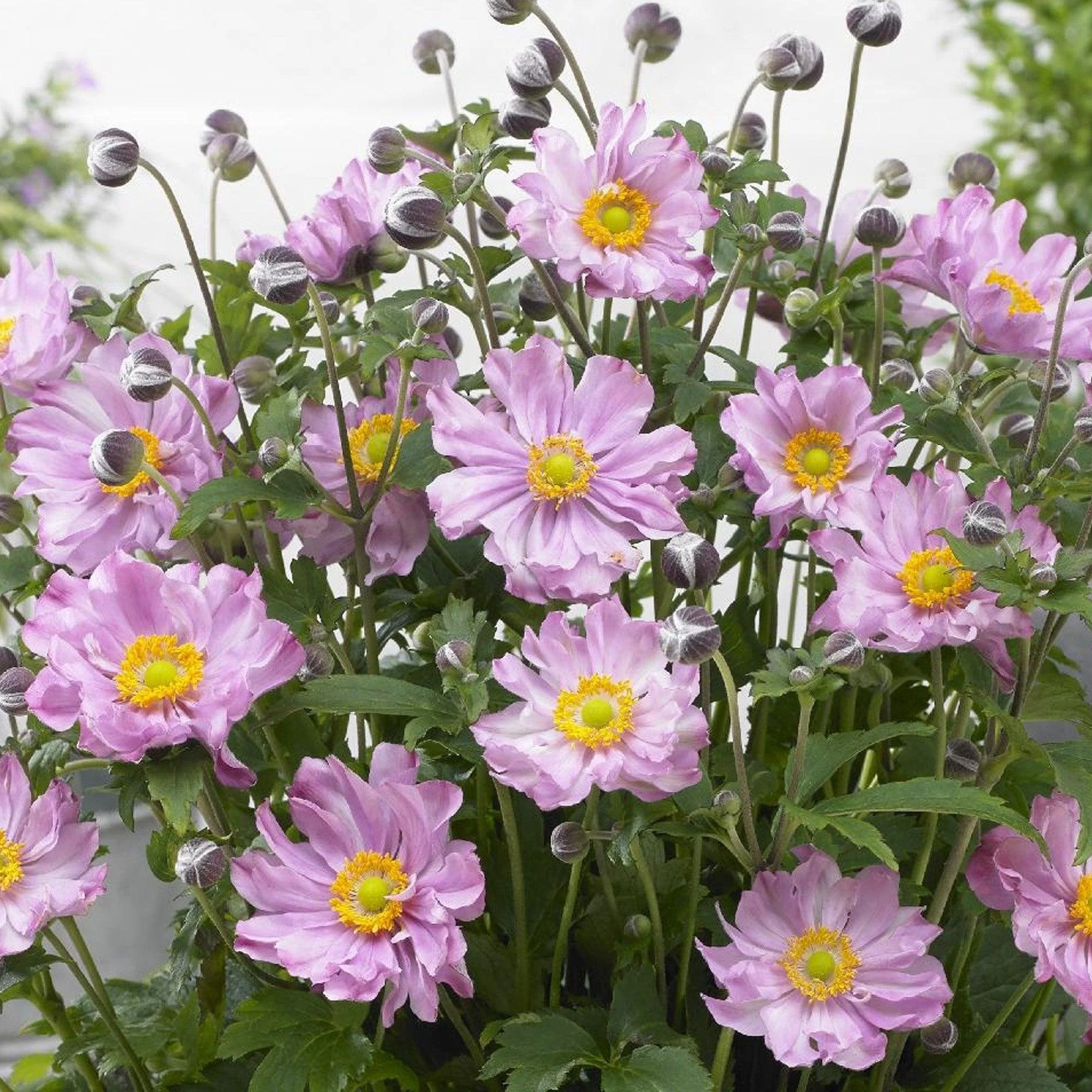
A compact Japanese/fall anemone with double bubblegum-pink flowers held on sturdy stems above dark green foliage. It is especially valuable because it flowers when many summer perennials are beginning to fade. After flowering, fluffy white seed heads provide additional fall interest.
Size: approximately 12–18 in. tall × 18–24 in. wide.
Bloom time: approximately July–September, with some extending into October.
Flower color: Double bubblegum/rose pink
Foliage: Dark green, toothed and deeply divided
Fall interest: White, cotton-like seed heads
Best features: Compact size, very long bloom period, late-season color, and excellent cut flowers.
It is also deer and rabbit resistant and attracts pollinators.
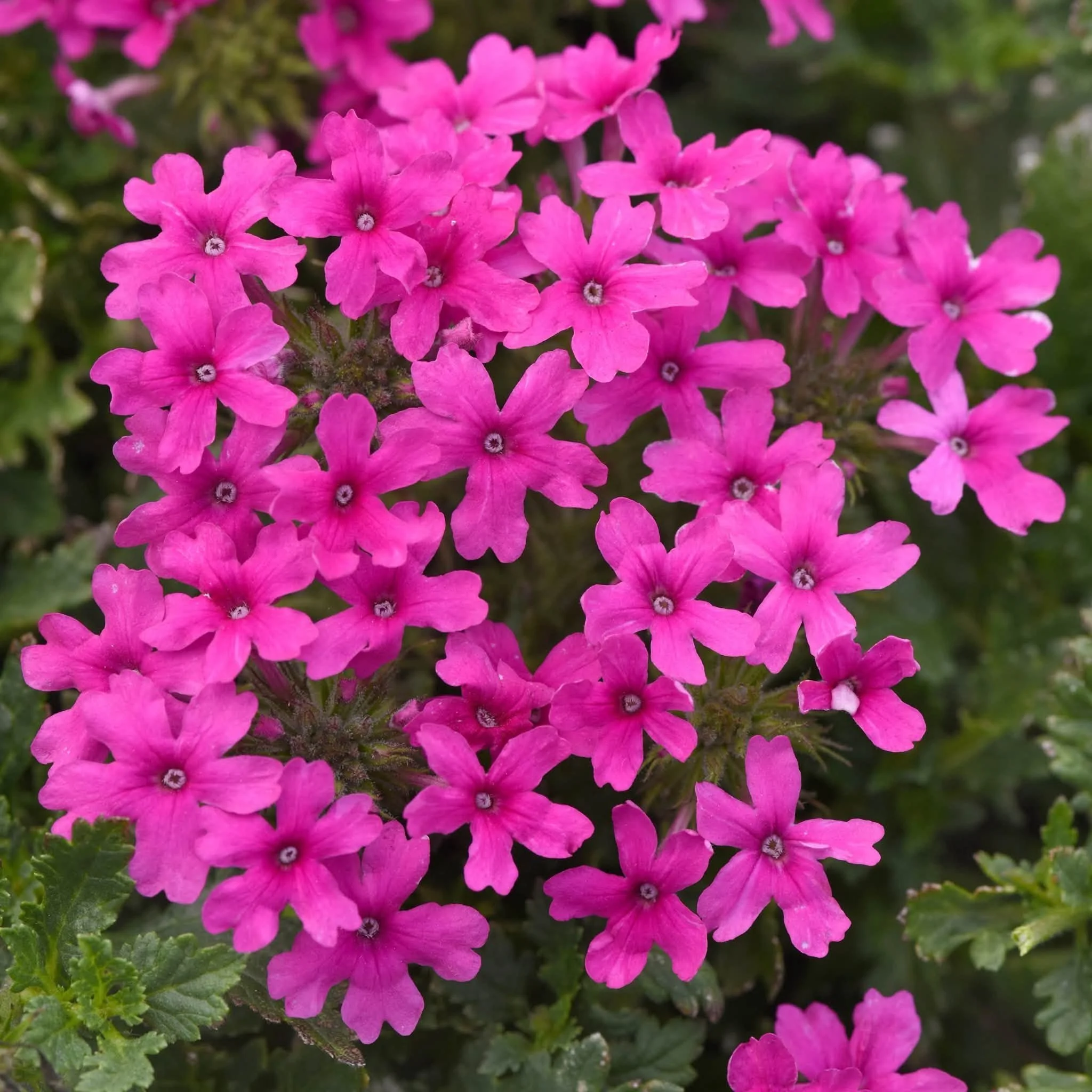
A groundcover with a long blooming season that is heat, humidity, and drought tolerant? How is this not in every garden? ‘Anna’s Pink’ begins blooming in May and keeps on going all the way till frost. Rose Verbena’s sprawling habit makes it a very versatile choice for pathways, aside rock ledges or in containers. Grows quickly to 3x3 and continues to expand, covering the ground entirely with thick foliage and profuse flowering. Rose Verbena (Verbena canadensces) is a herbaceous perennial native to the Midwest, east to Mid-Atlantic states and south to Florida. In nature, it grows along roadsides, sand hills, or other dry, especially sandy soils.
Flower color: Pink
Bloom time:
Mature size: 2×3 (but i’ve seen it much wider!)
Best features: Clusters of Pink flowers and suitability for attracting pollinators. Quick growing along the ground.
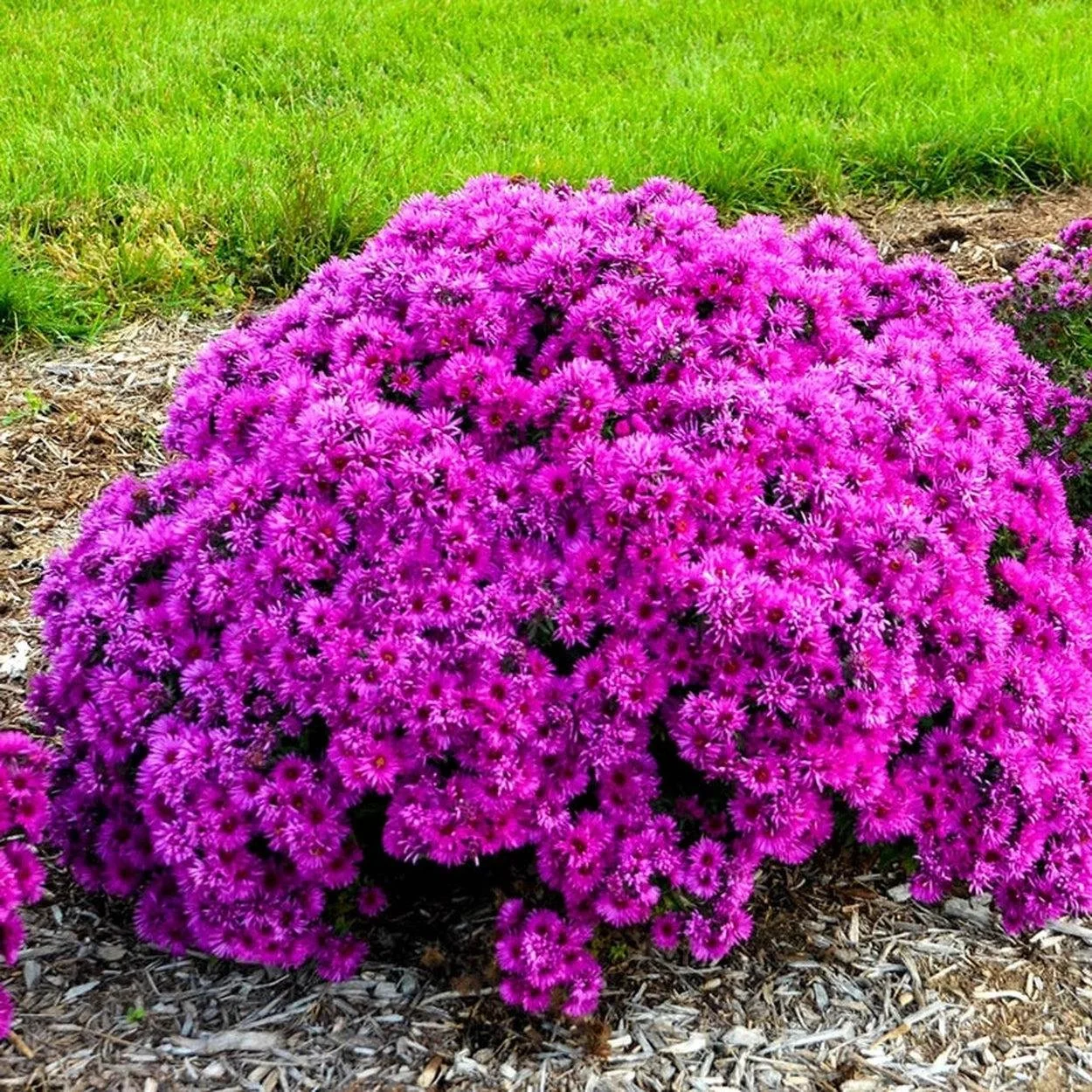
Aster ‘Pink Crush’ provides a strong burst of pink color toward the end of the growing season, when many summer-blooming perennials are beginning to fade. It forms a dense, upright mound covered with numerous daisy-like flowers, making it particularly valuable for extending color into late summer and fall. The flowers are also attractive to pollinators, including bees and butterflies. Its relatively manageable size makes it useful in perennial borders, cottage gardens, pollinator plantings, and mixed beds.
Height: 2–3 ft
Width: 2–3 ft
Flower time: Late summer–fall
Sun/Shade: Full sun
Deer resistant
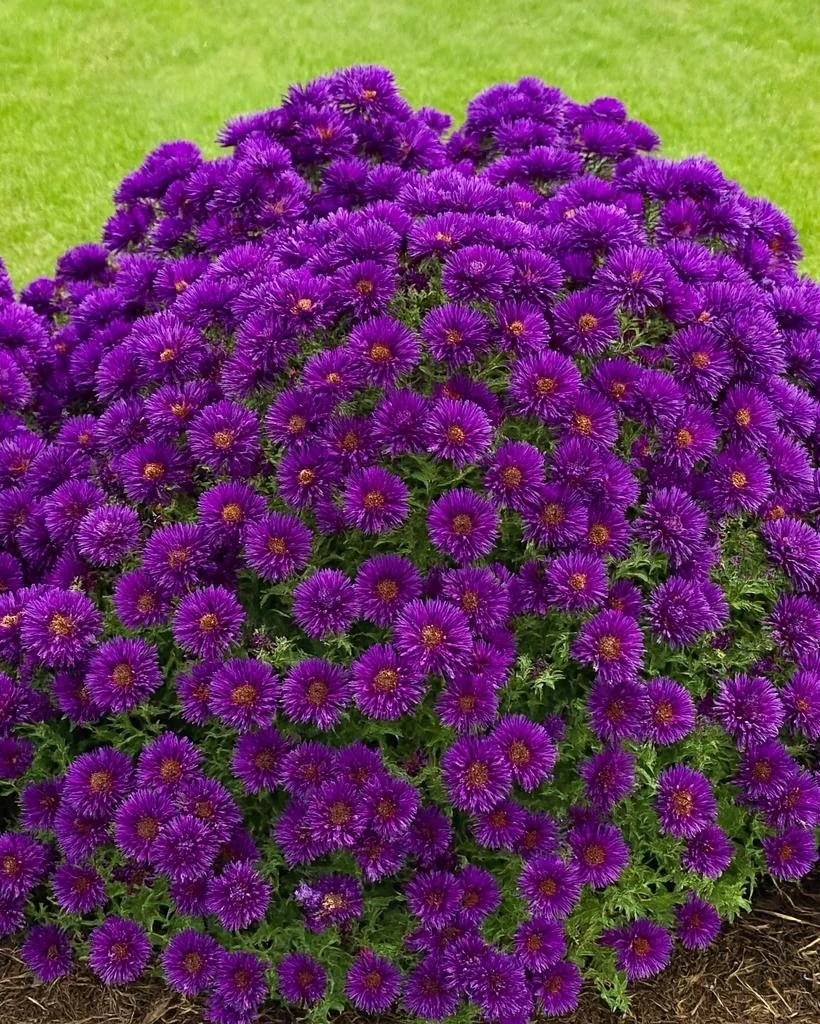
A compact, rounded New England aster that becomes completely covered in rich dark-purple daisy-like flowers in late summer and fall. The dark green foliage creates a strong backdrop for the flowers. It is particularly valuable as a late-season source of nectar for bees and butterflies.
Size: 26–30 in. tall × 40–44 in. wide.
Bloom time: August–November, generally peaking in early to mid-fall.
Flower color: Rich/dark purple with yellow centers.
Foliage: Dark green.
Habit: Rounded, mounded and relatively compact.
Best features: Outstanding fall color, pollinator value and a very full, rounded habit.
Garden use: Excellent in borders, mass plantings, pollinator gardens and fall containers.
The cultivar is a selection of the North American native New England aster
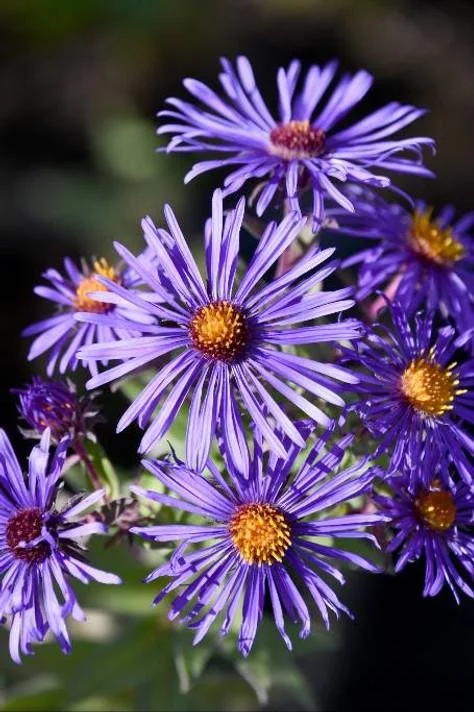
‘Thunderdome’ is a hybrid between New England Aster and Aromatic Aster, combining the deep-purple flowers of New England aster with the bushy habit and aromatic foliage of aromatic aster. It produces masses of daisy-like purple flowers late in the season.
Size: approximately 24–36 in. tall × 24–36 in. wide.
Bloom time: late summer through fall.
Flower color: Bright/deep purple with yellow centers.
Foliage: Aromatic green foliage.
Habit: Bushy, mounding.
Best features: Late-season flowers, pollinator value and strong native-aster genetics.
‘Thunderdome’ is new for 2026
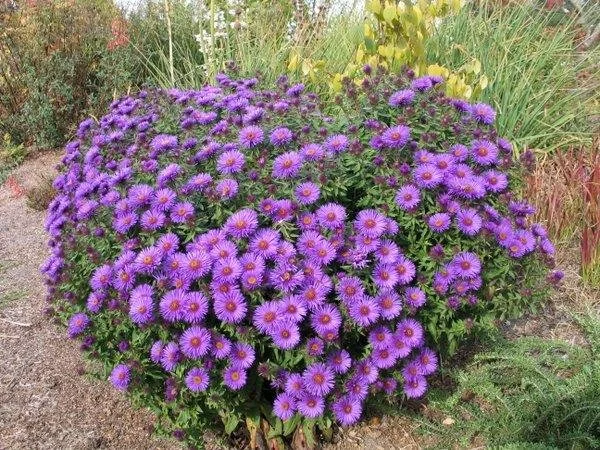
‘Purple Dome’ is a compact New England-type aster that creates a dense mound of rich purple flowers in late summer and fall. Unlike taller asters that can require staking, this selection stays relatively short and naturally forms a rounded shape, making it especially useful toward the front or middle of a perennial bed. When in full bloom, the foliage can be almost completely hidden beneath the masses of purple daisy-like flowers. It is an excellent late-season plant for pollinators.
Height: 18–24 in
Width: 18–24 in
Flower time: August–October
Sun/Shade: Full sun
Deer resistant
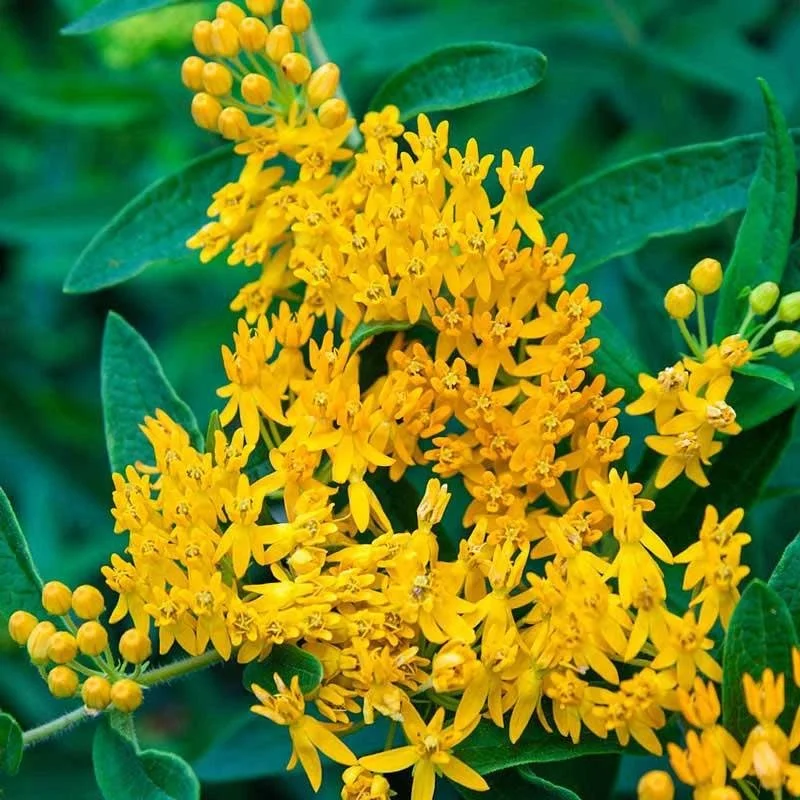
Asclepias ‘Hello Yellow’ is a yellow-flowered form of butterfly weed, offering the same important wildlife value associated with milkweeds while providing a distinctly different color from the familiar orange-flowered forms. Its upright stems are topped with clusters of bright yellow flowers during summer, creating an excellent source of nectar for butterflies and other pollinators. Like other milkweeds, it also plays an important role as a host plant for monarch butterfly caterpillars. Once established, it prefers a sunny, well-drained location and is particularly useful in native gardens, pollinator borders, prairie-style plantings, and naturalized areas.
Height: 18–24 in
Width: 12–18 in
Flower time: June–August
Sun/Shade: Full sun
Deer resistant
Rabbit resistant
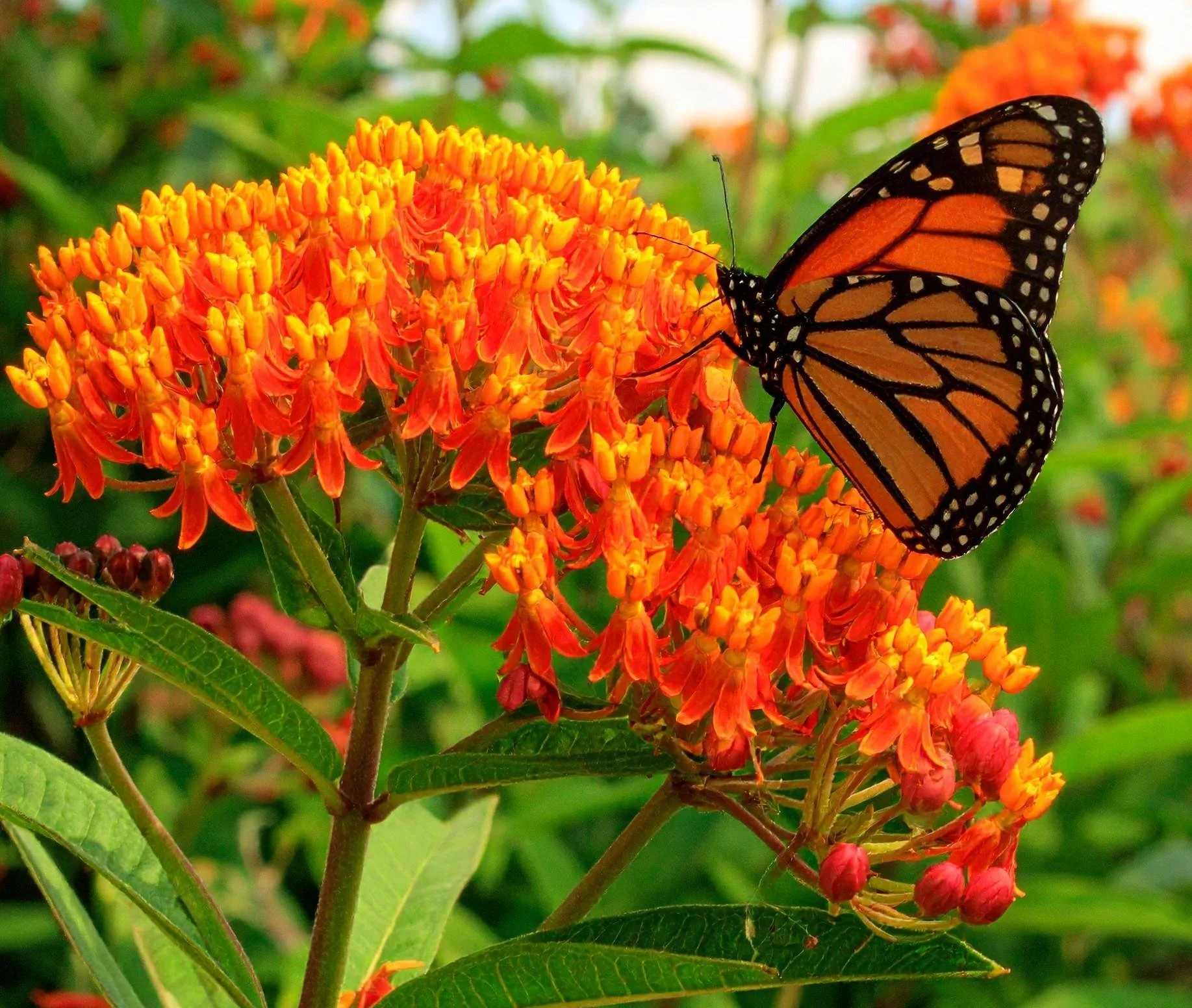
The straight native orange form of Asclepias tuberosa, or commonly called butterfly weed, is a milkweed, and one of the best plants for a sunny native or pollinator garden. Its brilliant orange flower clusters appear in summer above upright stems and narrow green foliage, creating a strong splash of color while providing an important nectar source for butterflies, bees, and other pollinators. It is particularly valuable because milkweeds serve as a host plant for monarch caterpillars. Unlike many moisture-loving perennials, butterfly weed develops a deep taproot and prefers well-drained soil once established. It is an excellent choice for prairie gardens, naturalized areas, pollinator borders, and locations where a tough, drought-tolerant perennial is desired.
Height: 1–2 ft
Width: 1–1½ ft
Flower time: June–August
Sun/Shade: Full sun
Deer resistant
Rabbit resistant
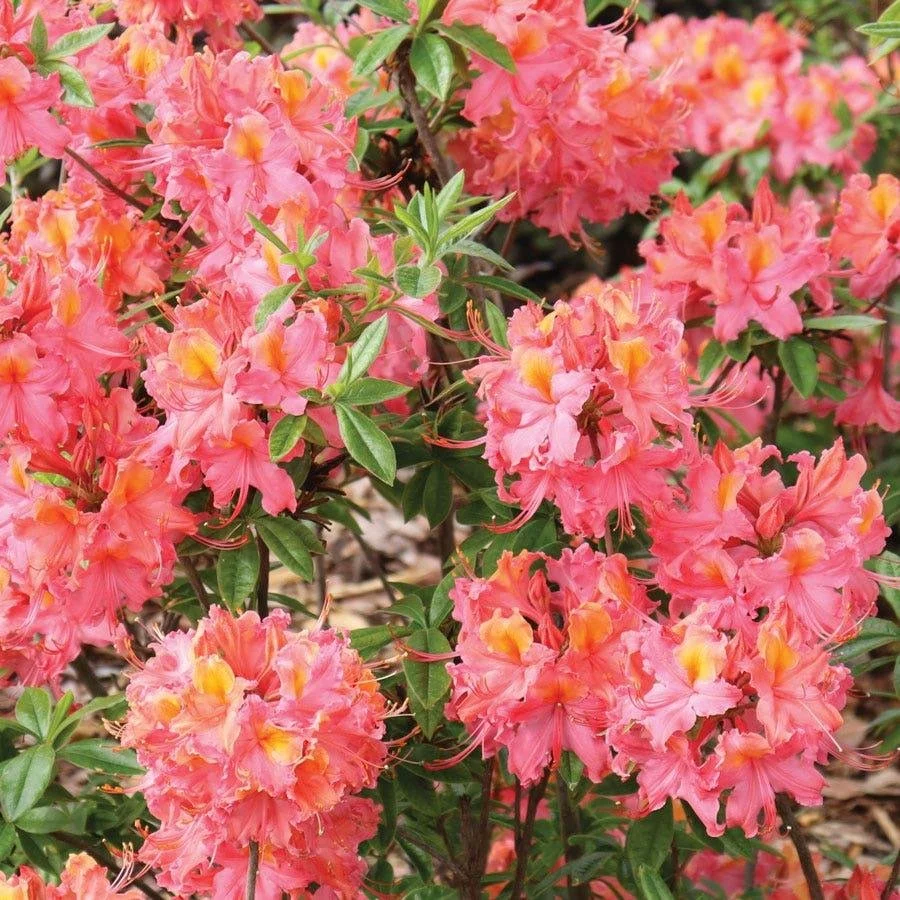
‘Sweet Reward Coral’ is a spring-flowering azalea selected for its warm coral-colored blooms, making it an excellent shrub for adding concentrated color to woodland gardens, foundation plantings, and mixed shrub borders. The flowers provide a strong seasonal display when the plant is in bloom, while the foliage provides a useful green backdrop for the rest of the growing season. Like most azaleas, it performs best in an acidic, organically enriched soil with good drainage and consistent moisture. A location with morning sun and afternoon protection is particularly useful in areas with hot summers. Its relatively refined appearance makes it especially attractive when grouped with other acid-loving plants such as rhododendrons, mountain laurel, ferns, and spring bulbs.
Height: Approximately 4–5 ft
Width: Approximately 4–5 ft
Flower time: Spring
Sun/Shade: Part sun to part shade
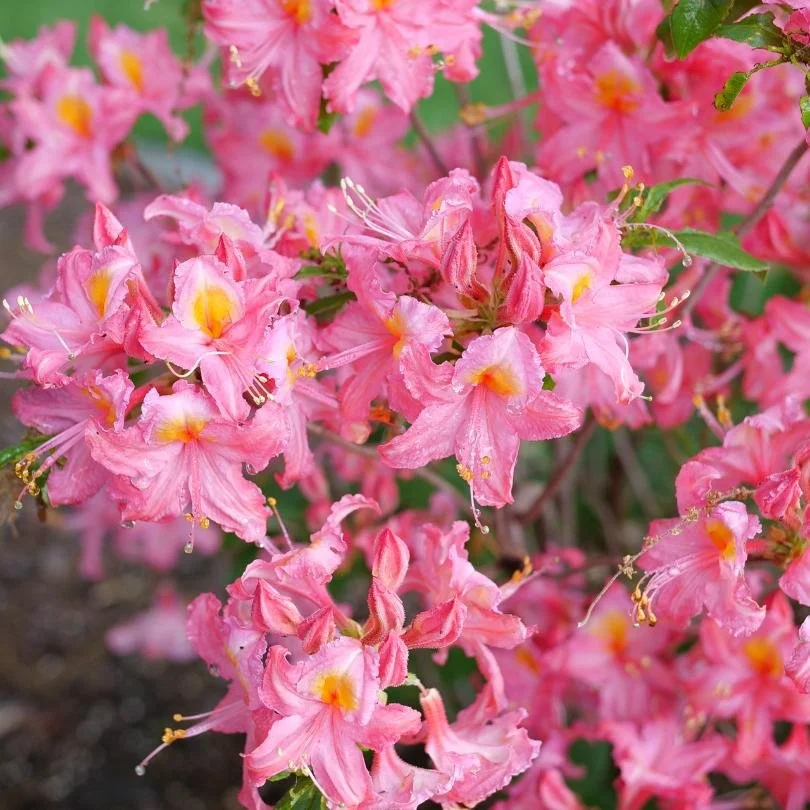
‘Sweet Reward Pink’ provides the same classic woodland-garden character as its coral counterpart but with soft pink flowers that create a gentler spring display. Azaleas are particularly useful for bringing flowering interest into spaces where larger trees or shrubs create filtered light. The combination of spring flowers and attractive foliage makes this a versatile shrub for foundation beds, woodland edges, informal hedges, and mixed shrub borders. It appreciates acidic soil rich in organic matter and generally performs best when its roots remain cool and evenly moist. Mulching around the root zone is helpful, while avoiding excessively wet or poorly drained locations.
Height: Approximately 4–5 ft
Width: Approximately 4–5 ft
Flower time: Spring
Sun/Shade: Part sun to part shade
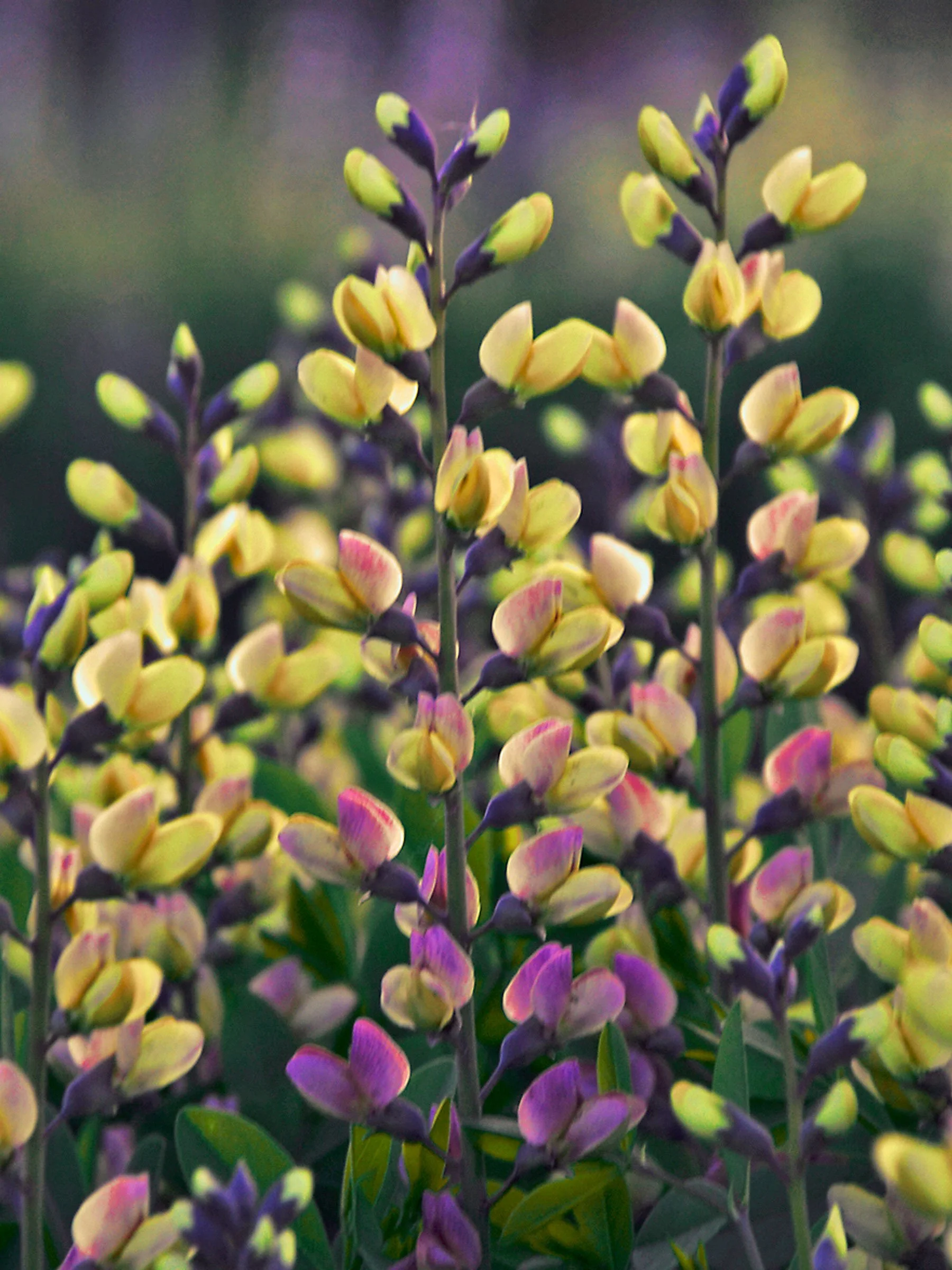
A native false indigo with upright stems and distinctive soft yellow flowers that mature toward pink and purple tones, giving the plant its “Pink Lemonade” name. It forms a substantial, shrub-like clump and has attractive blue-green foliage and ornamental seed pods.
Size: approximately 3–4 ft. tall × 3–4 ft. wide.
Bloom time: May–June.
Flower color: Yellow, aging through pink/purple tones.
Foliage: Blue-green, trifoliate.
Best features: Long-lived, drought tolerant once established, attractive seed pods, and excellent pollinator value.
New For 2026!
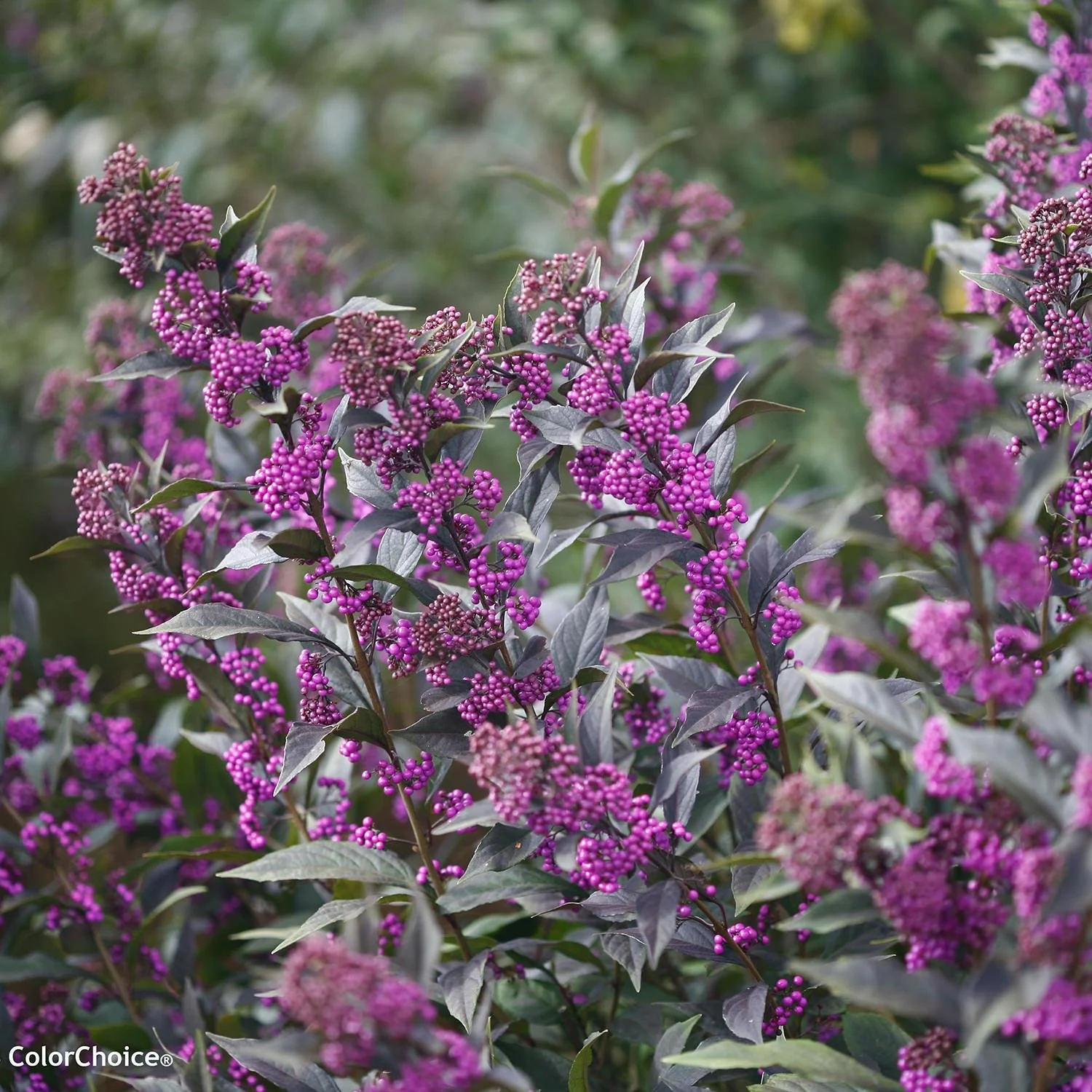
An upright, relatively compact beautyberry with clusters of bright violet-purple berries along the stems. The berries are the main attraction and become especially striking in late summer and fall. Dark foliage and a tidy habit make this cultivar useful even in smaller landscapes.
Size: approximately 4–5 ft. tall × 4–5 ft. wide.
Bloom time: June–July.
Flower color: Small pink/lavender flowers.
Fruit: Brilliant purple berries in late summer and fall.
Foliage: Green, becoming yellowish in fall.
Best feature: Heavy display of vivid purple berries.
The berries are particularly effective after the leaves begin to drop, when the colored fruit stands out against the bare branches.
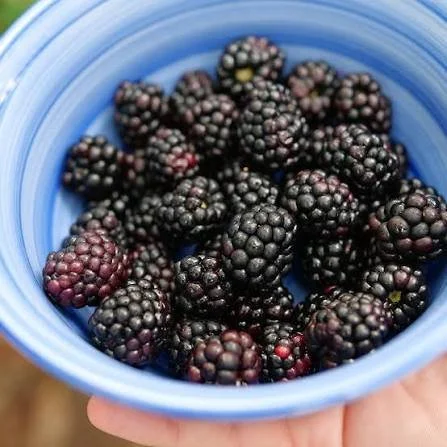
This variety’s big, juicy fruits aren’t just sweet, they boost a unique rich flavor unmatched by other varieties. Thornless, study canes that rarely need staking make for easy care and harvest when berries ripen in mid-summer. Self-fruiting; no pollinator required.
Size: 3-5’ tall and 2-3’ wide. Space 3-4’ apart.
Bloom time: Spring, generally May–June.
Fruit: Black, ripening in summer.
Flower color: White.
Best features: Edible fruit, attractive spring flowers, and wildlife value.
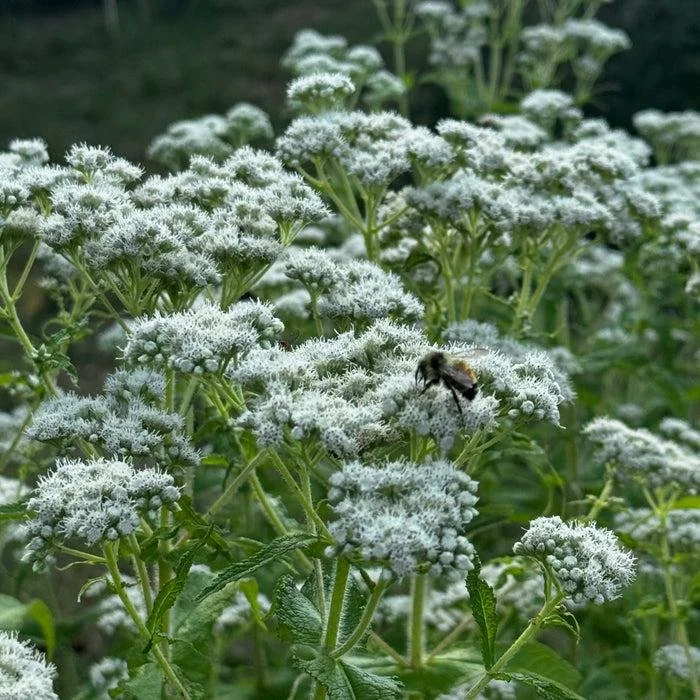
A tall North American native perennial with upright stems and clusters of fluffy white flowers. It is an important late-summer nectar source and attracts bees, butterflies and other insects. The foliage has a distinctive appearance because paired leaves appear to wrap around the stem.
Size: approximately 4–6 ft. tall × 2–4 ft. wide.
Bloom time: July–September.
Flower color: White.
Foliage: Opposite, lance-shaped leaves.
Best features: Excellent native pollinator plant, late-season flowers, and architectural upright form.
Garden use: Particularly good in naturalistic gardens, rain gardens, wet meadows and native perennial borders.
Native
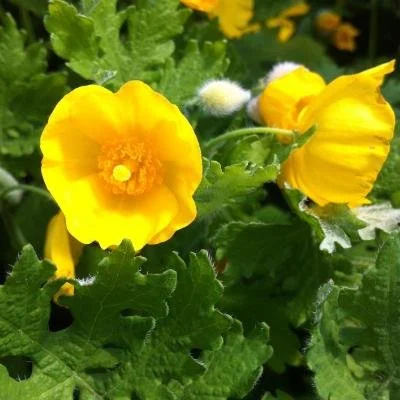
A beautiful woodland perennial with bright yellow, poppy-like flowers held above blue-green, deeply divided foliage. It is especially useful in shady gardens and naturalized woodland plantings.
Size: approximately 1½–2 ft. tall × 1–1½ ft. wide.
Bloom time: April–June, often with intermittent flowering afterward.
Flower color: Bright yellow.
Foliage: Blue-green and deeply lobed.
Best features: Early spring flowers, attractive foliage, and excellent performance in woodland/shade gardens.
Can tolerate almost any sun-shade level
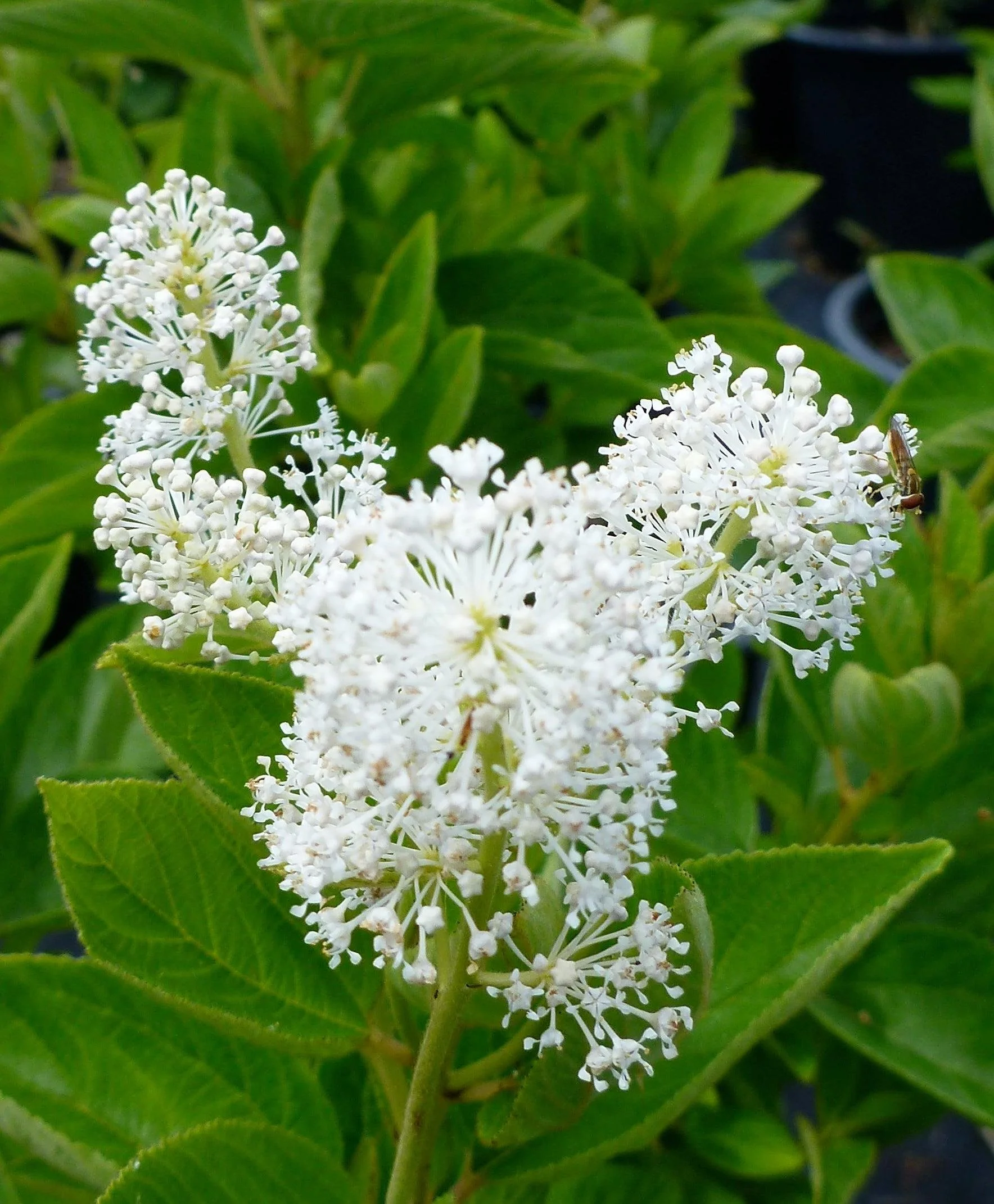
A tough North American native shrub with clusters of fragrant white flowers and dark green foliage. It is particularly useful in sunny, dry locations once established and is an excellent plant for pollinators.
Size: about 3–4 ft. tall × 3–5 ft. wide
Bloom time: June–August
Flower color: White
Foliage: Dark green, glossy
Best features: Fragrant flowers, drought tolerance, pollinator value and excellent suitability for native gardens.
Native
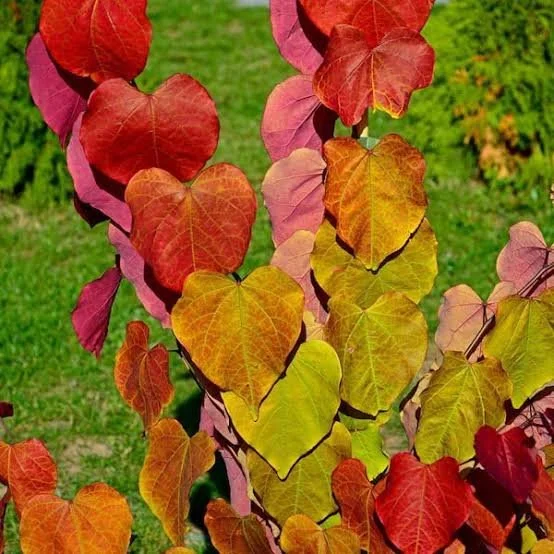
A colorful redbud selection with the classic pink-purple spring flowers of redbud followed by unusually colorful foliage. The leaves emerge in warm tones and transition through green, creating multiple changes of color during the growing season.
Size: approximately 15–20 ft. tall × 15–20 ft. wide Though it typically will not reach near this size in our climate.
Bloom time: April–May
Flower color: Pink to rosy-purple
Foliage: Colorful emerging foliage, becoming green through summer
Fall color: Yellow to orange
Best features: Spring flowers plus colorful foliage, making it useful as a specimen tree.
Redbuds are particularly attractive because flowers can appear directly on older branches and even the trunk before the leaves emerge.
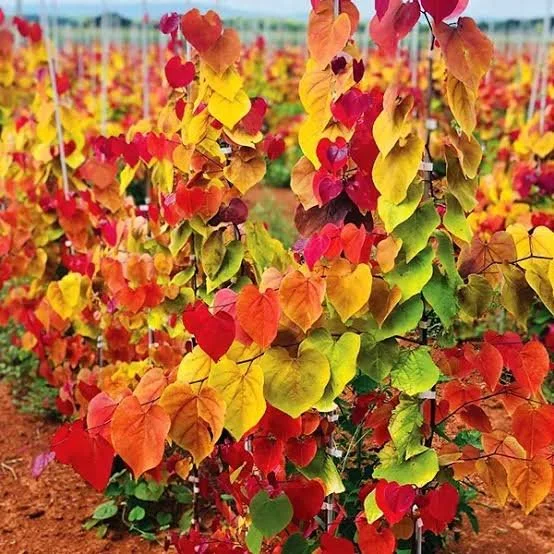
The Flame Thrower Redbud is a tree you'll want to grow even if only for the incredible beauty of its heart-shaped foliage. New leaf growth emerges in a strong burgundy red, then shifts to yellow and finally green as it matures. Because each leaf transitions at its own pace, the branches show a striking mix of four to five colors at once, creating a vibrant, ever-changing display from spring through fall. It's a stunning way to bring bold, seasonal color to your garden or landscape. In early spring, you’ll also enjoy clusters of reddish-purple, pea-like flowers that bloom directly on the branches. They're beautiful on the tree, but we also love clipping a few stems to bring indoors for unique, natural décor.
Height:15 - 20 feet, although it does not grow that big in our climate.
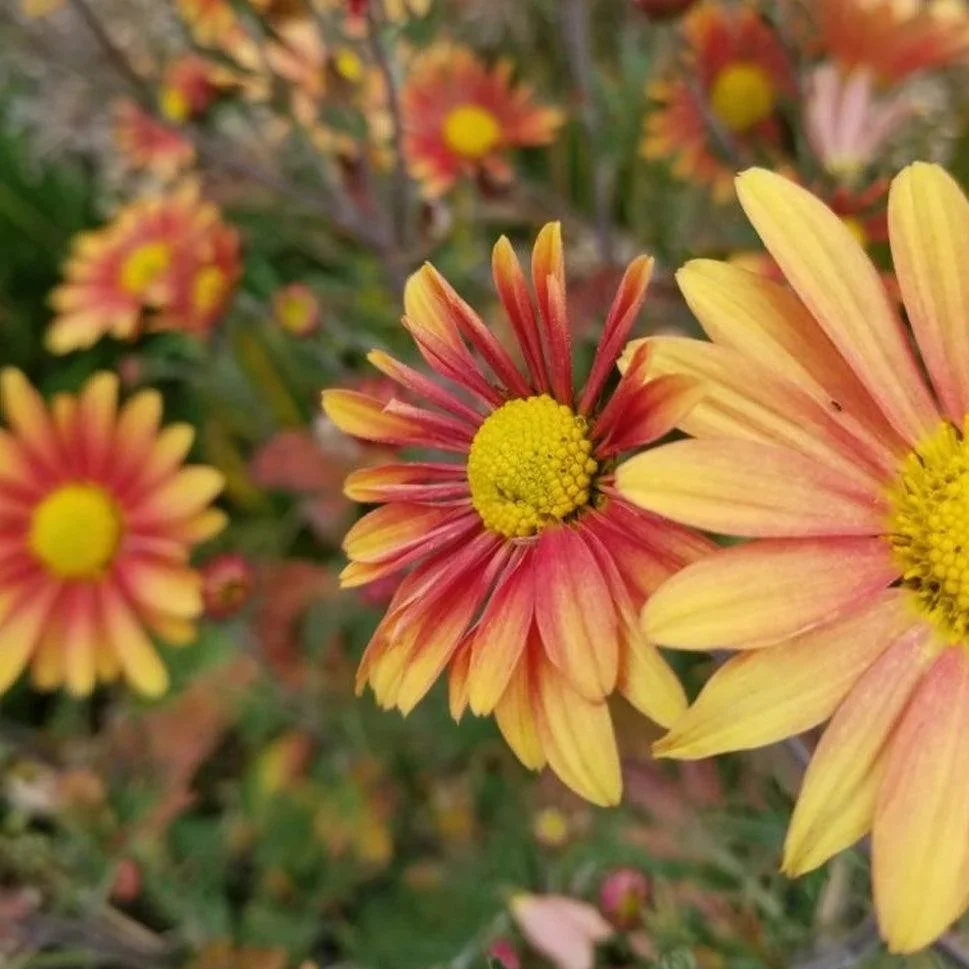
‘Campfire Glow’ is a colorful chrysanthemum with warm, fire-inspired flower tones that bring a late-season burst of color to the garden. Chrysanthemums are especially valuable because they bloom when many earlier perennials are finished, helping carry a border into fall. The compact, branching growth habit works well in perennial beds, containers, cottage gardens, and mixed plantings. For the fullest display, plants benefit from plenty of sunlight and regular moisture during the growing season. Pinching the growing tips earlier in the season can encourage a fuller plant with more flower-bearing stems.
Height: Approximately 18–24 in
Width: Approximately 18–24 in
Flower time: Late summer–fall
Sun/Shade: Full sun
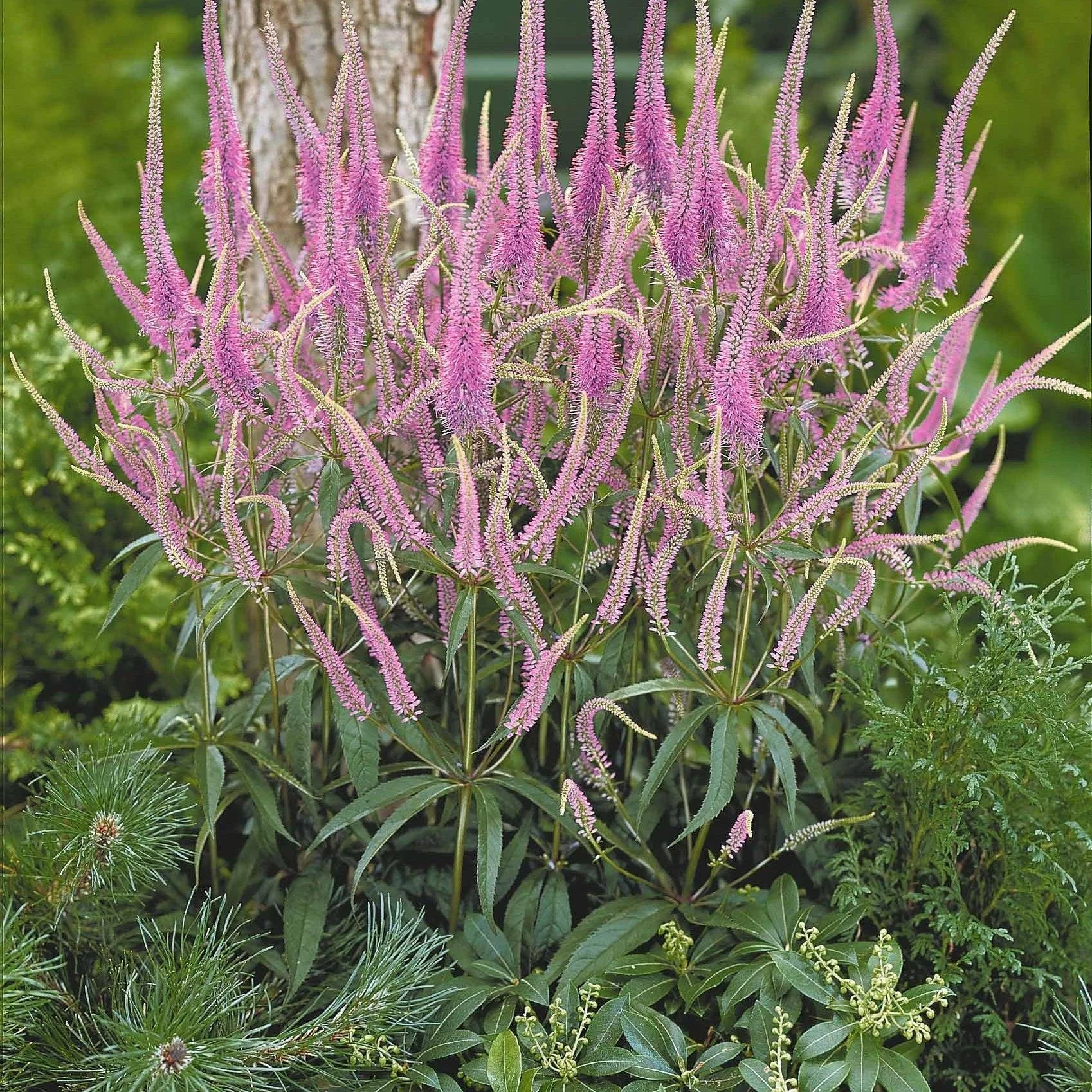
‘Pink Profusion’ is an elegant selection of Culver’s root that produces tall, upright flower spikes covered with small pink blossoms. The vertical form gives the plant excellent architectural value, especially when planted toward the back or middle of a perennial border. It has a natural prairie or meadow-garden character and works particularly well with ornamental grasses and other upright perennials. The flower spikes provide nectar for pollinators and can add considerable movement and texture to a planting.
Height: Approximately 3–5 ft
Width: Approximately 2–3 ft
Flower time: July–August
Sun/Shade: Full sun to part shade
Deer resistant
Rabbit resistant
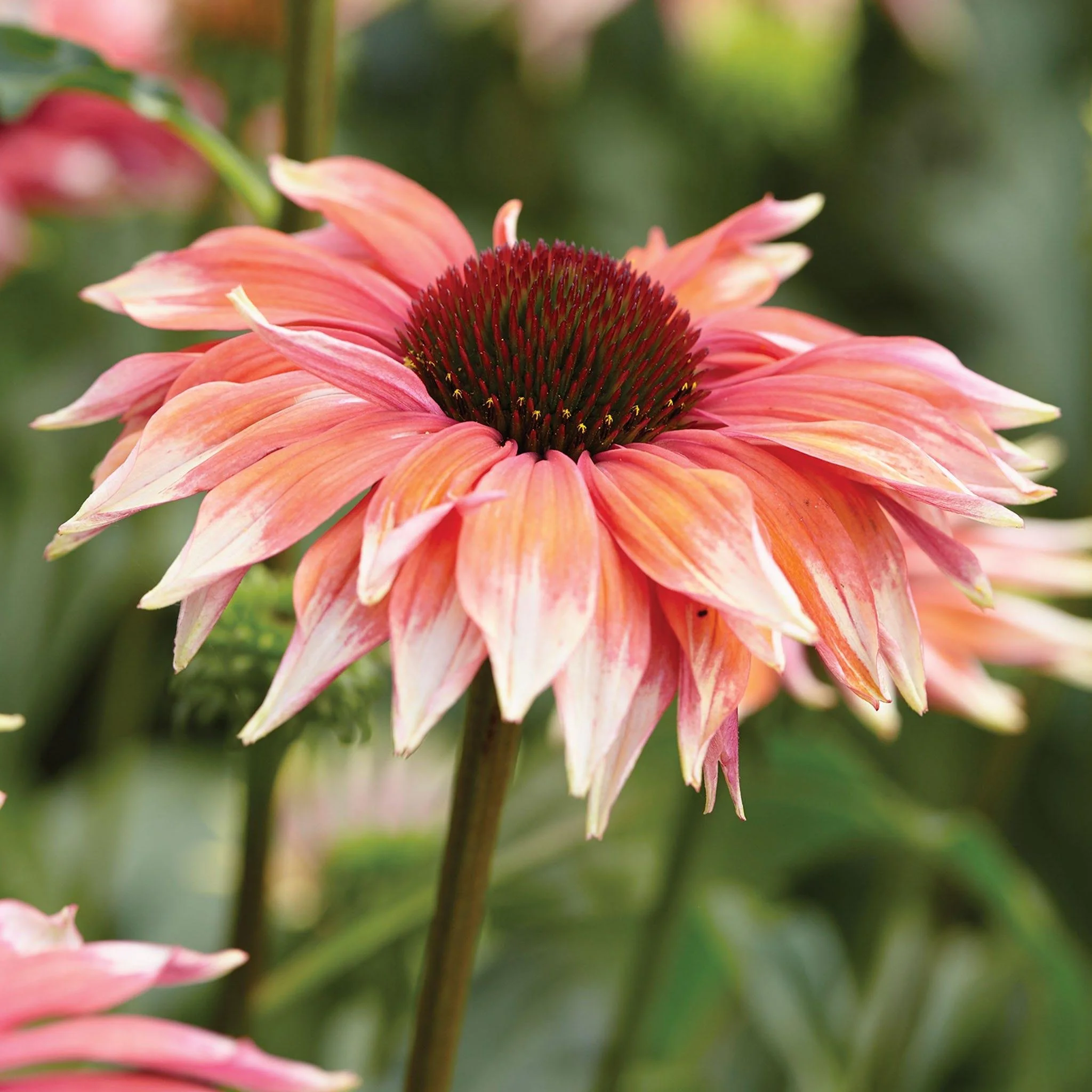
‘Playful Meadow Mama’ is a distinctive coneflower selection that brings the long-lasting performance of Echinacea into a perennial border or pollinator garden. Coneflowers are among the most dependable summer perennials, producing sturdy stems topped with daisy-like blooms that attract butterflies and bees. The flowers also develop prominent central cones that provide additional seasonal interest after the petals fade. This type of coneflower is particularly useful in sunny borders because it combines strong flowering with an upright habit and good heat tolerance. It pairs naturally with ornamental grasses, rudbeckias, salvias, asters, and other prairie-style plants.
Height: Approximately 2–3 ft
Width: Approximately 18–24 in
Flower time: Summer–early fall
Sun/Shade: Full sun
Deer resistant
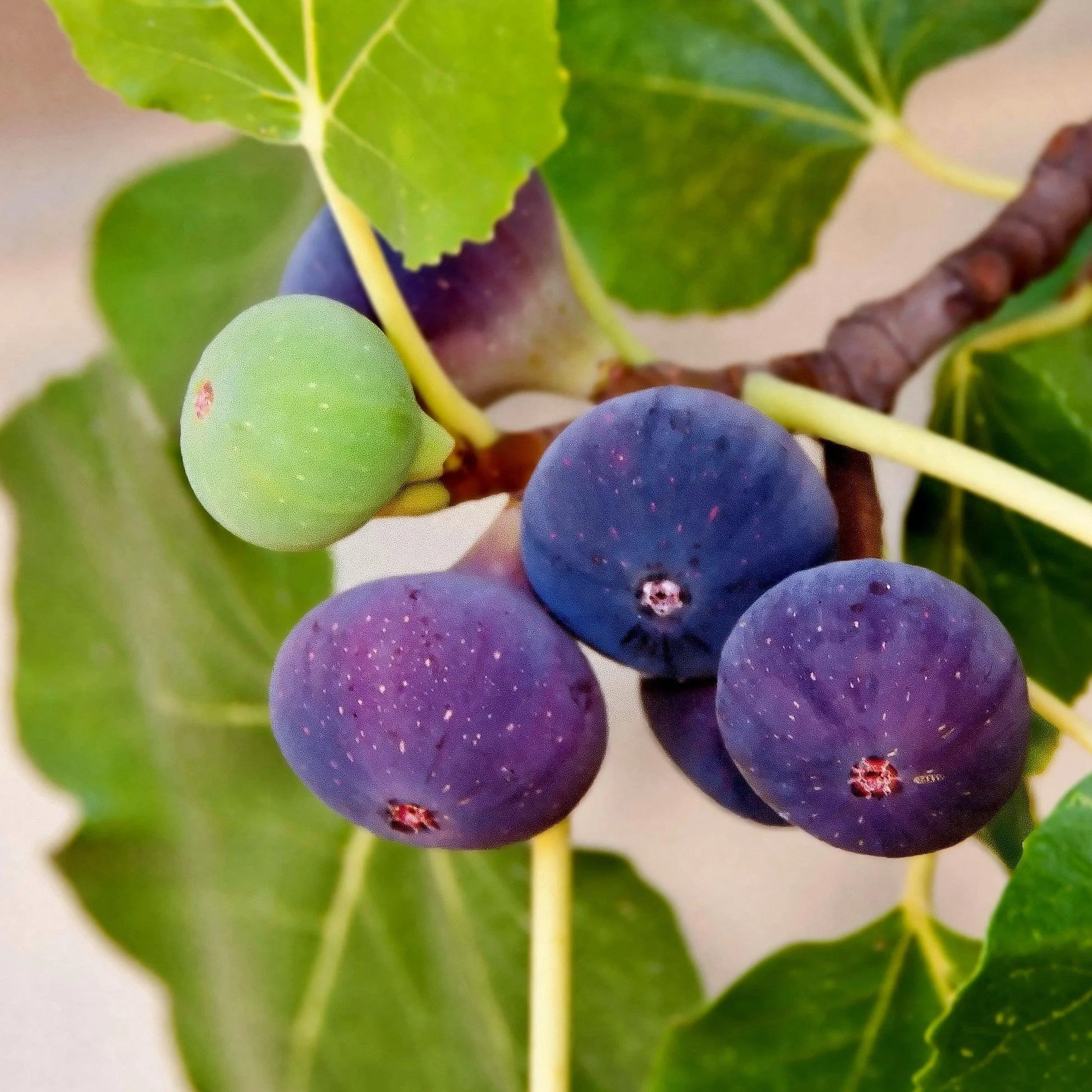
‘Chicago Hardy’ is a popular cold-hardy common fig valued for producing sweet, edible fruit while tolerating colder conditions than many traditional figs. It develops attractive, large, lobed green leaves and can form a naturally branching shrub or small tree. In colder climates it may die back during severe winters and regrow from the roots, yet can still produce fruit because the variety is capable of setting a crop on new growth. Figs perform best in a warm, sunny location with excellent drainage. Planting against a south-facing wall or in another protected microclimate can help extend the growing season and improve fruit production.
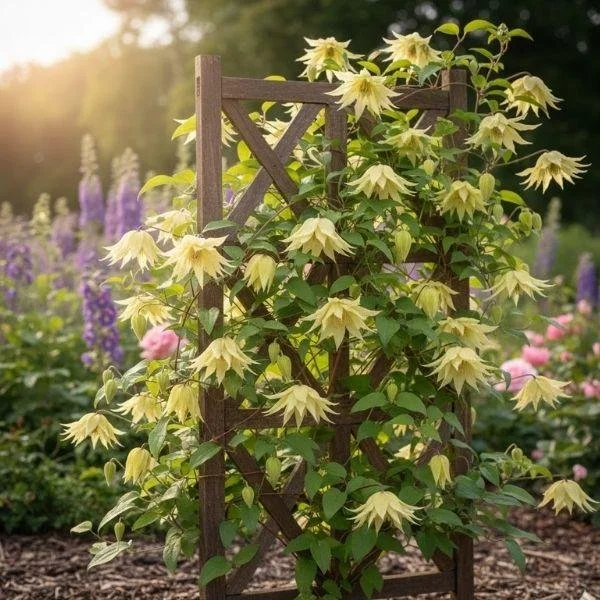
A vigorous flowering clematis grown as a climbing vine. Large flowers are displayed against green foliage, making it particularly useful for covering trellises, fences, arches and other vertical structures.
Size: approximately 6–8 ft. tall, with width determined largely by its support and pruning.
Bloom time: summer, with flowering generally extending through the growing season.
Flower color: Yellow.
Habit: Twining/climbing vine.
Best features: Vertical gardening, abundant flowers and relatively small footprint at ground level.
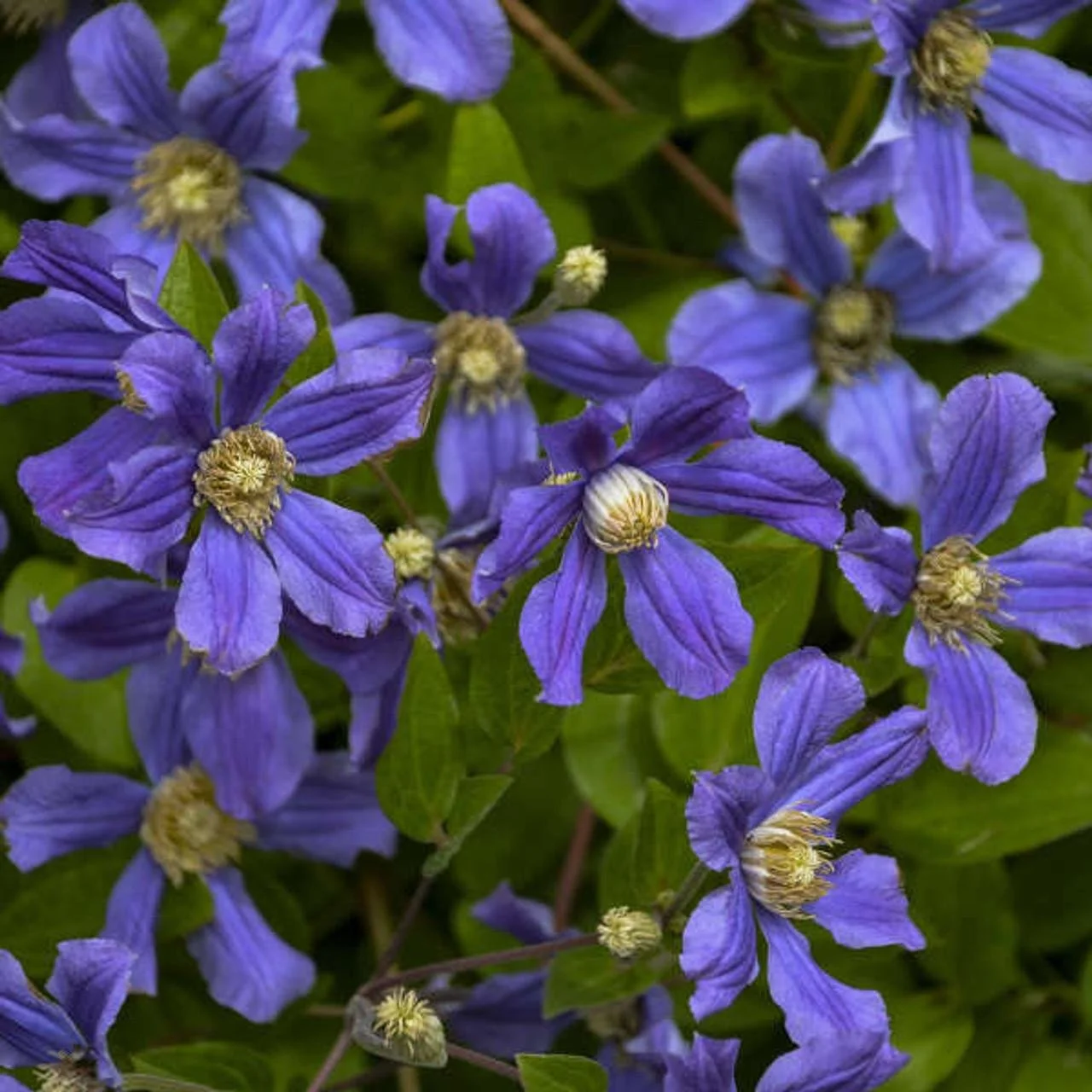
A flowering clematis with attractive blue-violet flowers. Unlike climbing vines, this is a non-climbing, mounding shrub or herbaceous perennial. It reaches about 42 inches tall and 30 inches wide. It does not climb trellises naturally and has a slightly sprawling habit, so it benefits from staking or a light cage. Although the info tag says it blooms only into early June, our experience has been that it blooms decently well into late autumn, even up until the first frost.
Size: about 42 inches tall and 30 inches wide depending on support and pruning.
Bloom time: summer, with the exact peak depending on growing conditions and pruning.
Flower color: Blue-violet/purple
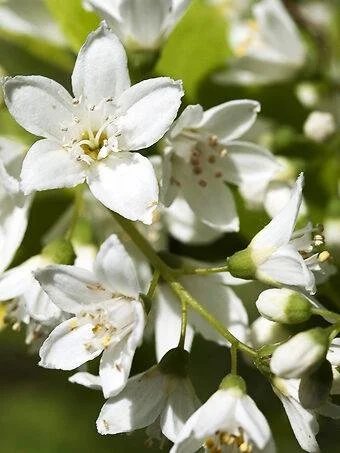
A compact deciduous flowering shrub with clusters of white, pearl-like flowers in spring. Its bright yellow-green foliage provides additional ornamental value after flowering. It is especially useful for brightening shrub borders and mixed perennial plantings.
Size: approximately 2–3 ft. tall × 2–3 ft. wide
Bloom time: May–June
Flower color: White
Foliage: Bright chartreuse/yellow-green
Habit: Compact, mounded
Best features: White spring flowers and bright chartreuse foliage.
It works particularly well as a low shrub in front of taller shrubs or as a colorful accent in a perennial border.
New 2026!
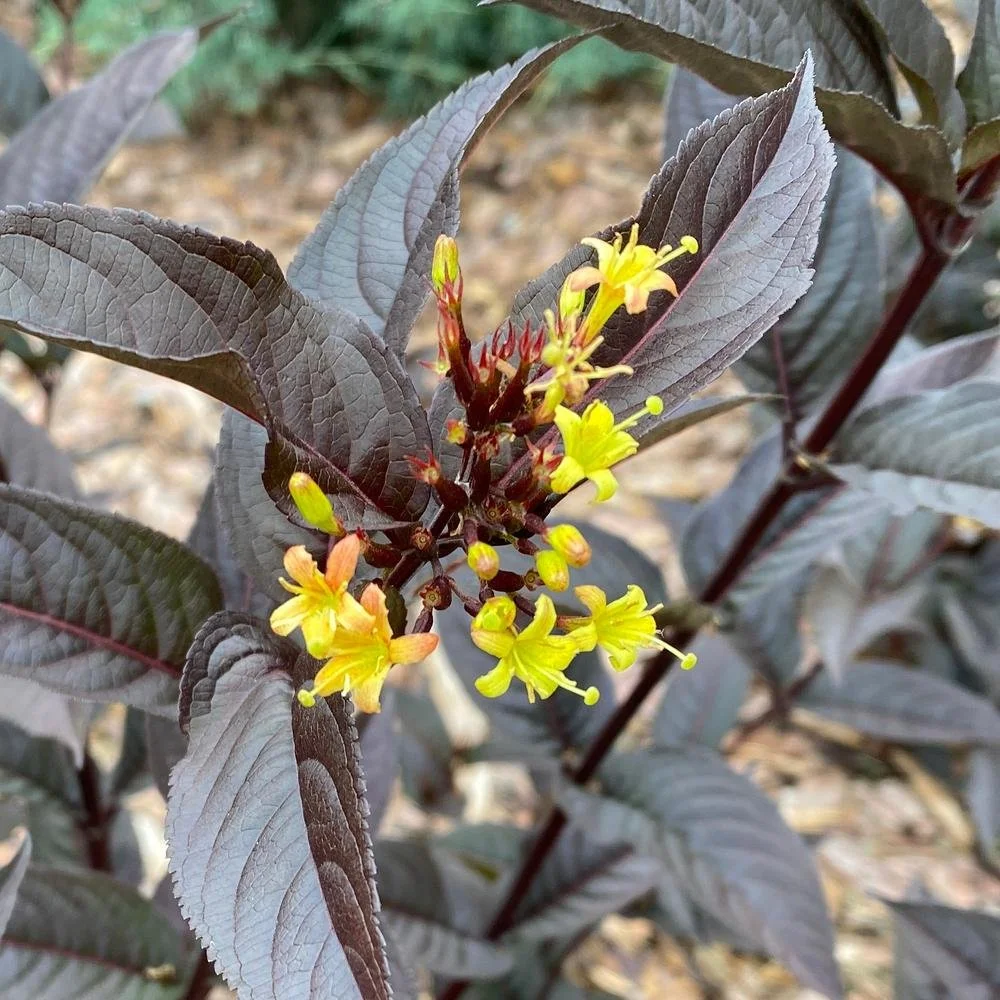
High contrast draws the eye, and Kodiak Jet Black diervilla is just the shrub to provide it. Its foliage is nearly black and remains just the same all growing season. In the summer, the contrast heightens with bright yellow flowers that draw equally colorful pollinators in for a feast. Ideal for native gardens, pollinator patches, and filling border.
Size: About 3–4 ft tall × 3–4 ft wide
Bloom time: Summer
Flowers: Bright yellow
Foliage: Very dark purple-black
Best feature: Dramatic foliage contrast
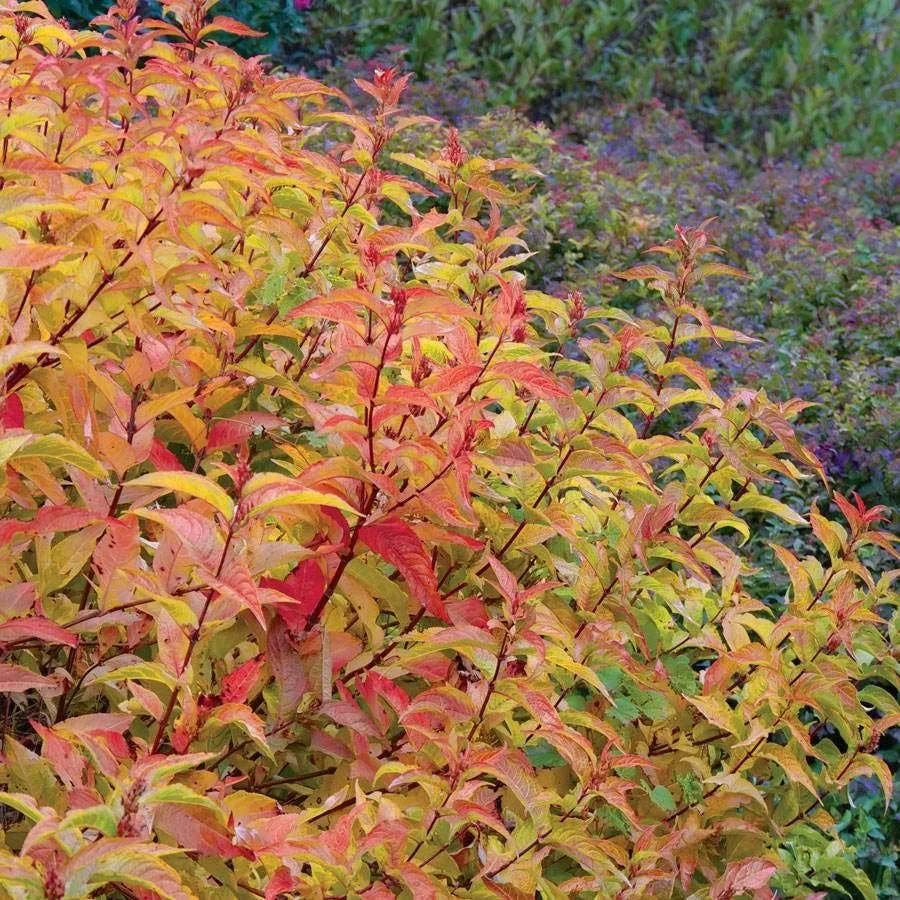
Looking for a durable native plant diervilla that will thrive in sun or as a shade tolerant shrub, and is drought-tolerant? A deer-resistant shrub, too? You’ve got it! This Diervilla shrub pushes fall color to the limits with its glowing orange fall foliage. It lights up the fall landscape, making it an ecofriendly alternative to burning bush. Bright yellow flowers in early summer add to its appeal. A durable native plant diervilla that thrives in sun or shade, it is a drought-tolerant shrub, a deer-resistant shrub, and can even grow in dry shade. This is an excellent landscape plant that will succeed even in challenging sites as a shade tolerant shrub.
Top three reasons to grow Kodiak Orange diervilla:
A dry shade tolerant shrub (though color is best with at least some sun).
Never without yellow flower clusters in the summer as a deer-resistant shrub.
Orange new growth and glowing orange-red fall foliage as a drought-tolerant shrub
Size: About 3–4 ft tall × 3–4 ft wide
Bloom time: June–July / early to mid-summer
Flowers: Pale to bright yellow
Sun: Full sun to shade
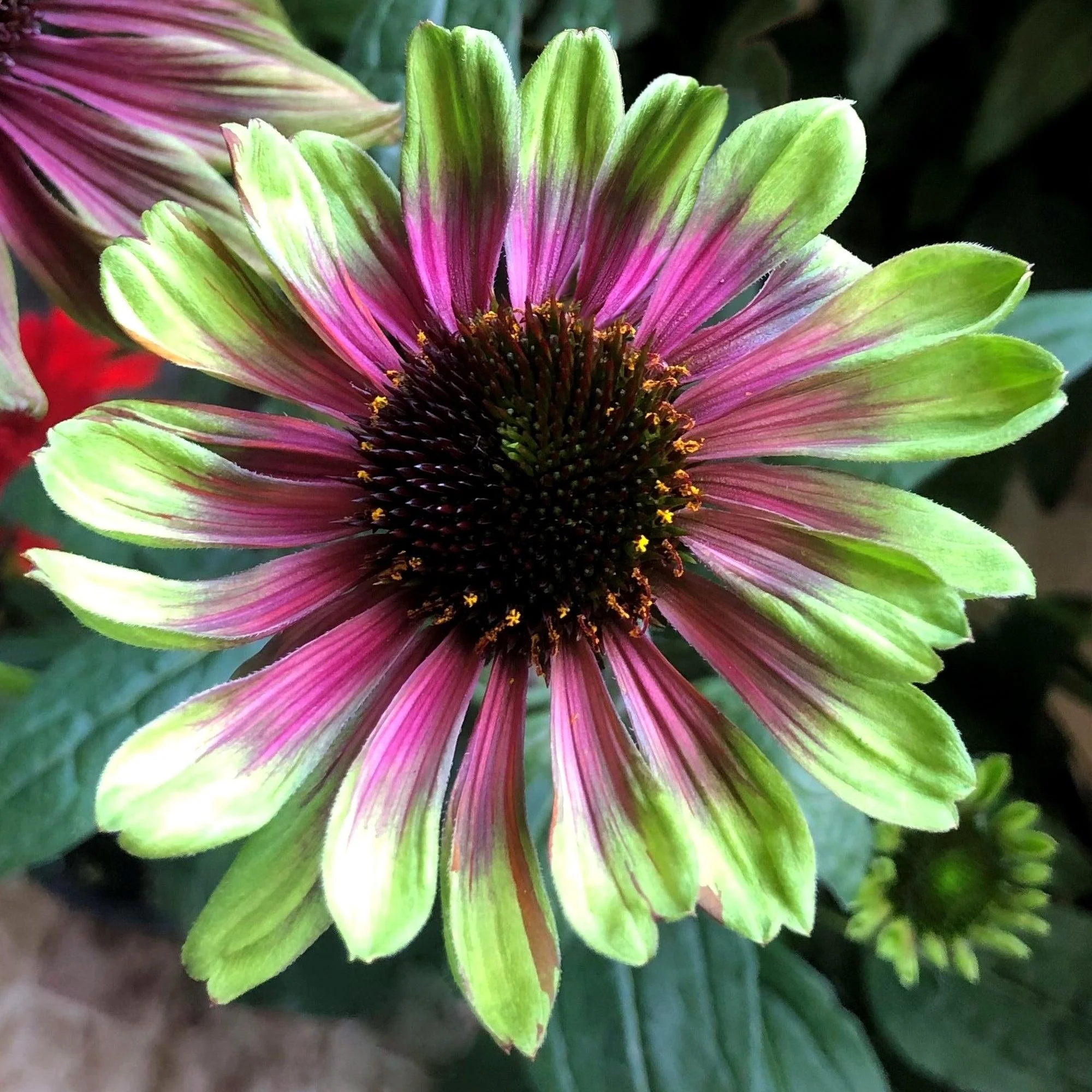
A striking compact coneflower whose flowers resemble watermelon slices: rich pink or rose-red centers with petals tipped in lime/pistachio green. It produces many flowers over a long summer season.
Size: Approximately 19–24 in. tall × 16–20 in. wide
Bloom time: July–October
Flowers: Pink/red with green-chartreuse petal tips
Pollinators: Excellent pollinator plant
Sun: Full sun
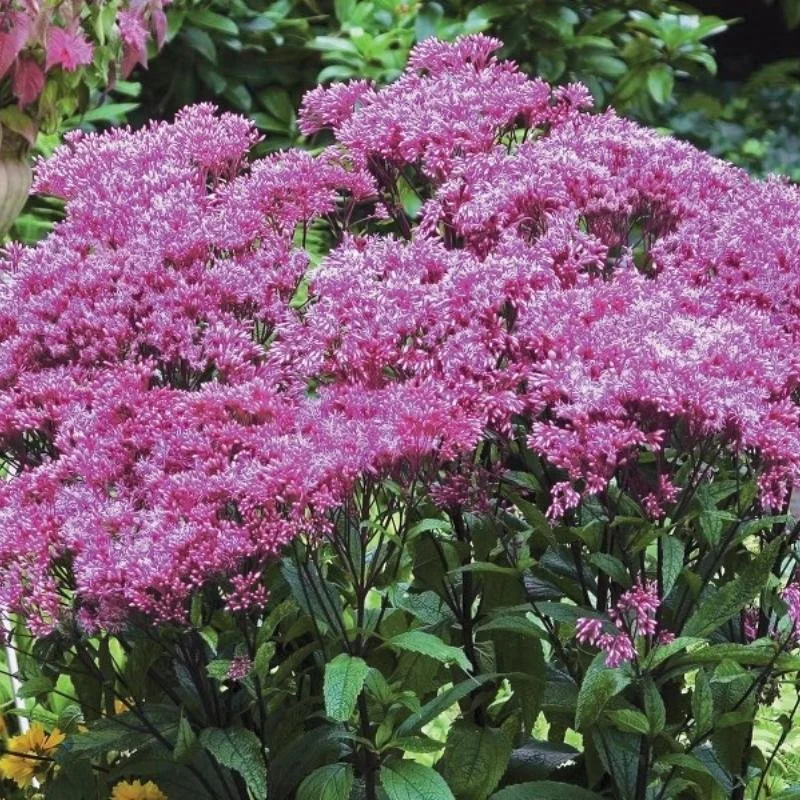
A true miniature cultivar of Joe Pye weed (Eupatorium dubium) that grows only 12 to 14 inches tall, making it significantly more compact than the 3-foot 'Little Joe' or the towering 6-to-8-foot wild species. Forms a dense, rounded shape with airy, dusty-pink flower panicles that are a magnet for bees. A wonderful problem-solver for wet areas, tolerating soggy soils. Herbaceous perennial.
Size: Approximately 2–3 ft tall × 2 ft wide
Bloom time: Late summer into fall
Flowers: Pink
Pollinators: Bees and butterflies
Sun: Full sun
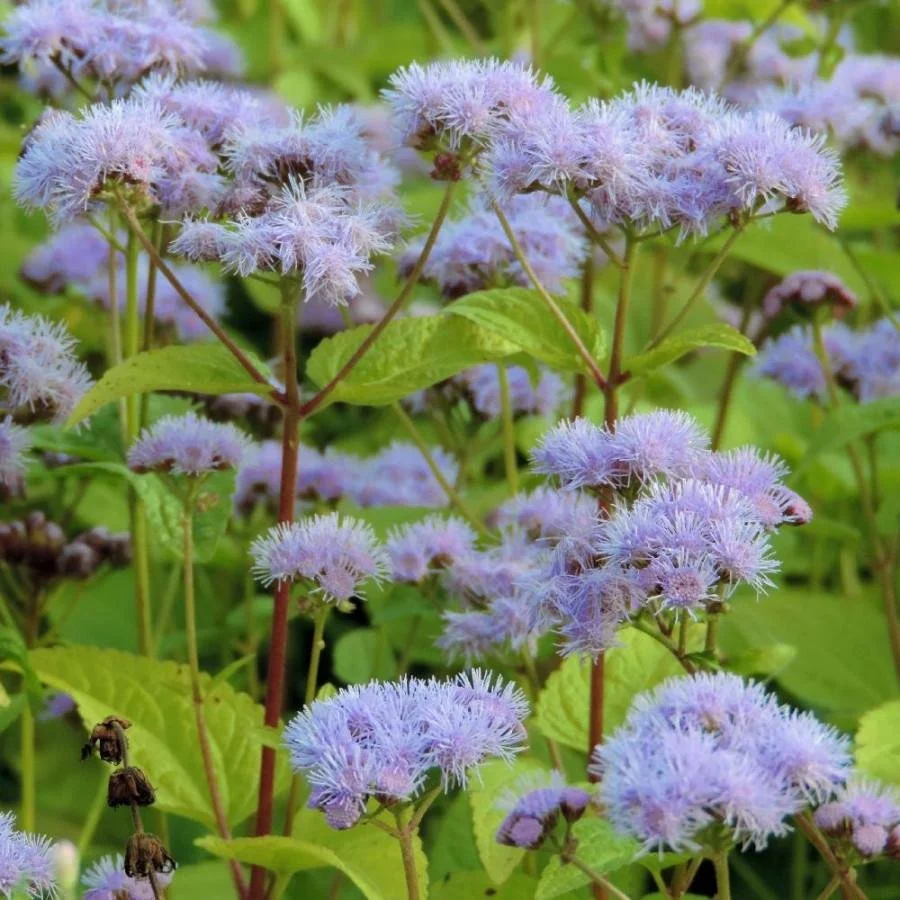
Resembling a lovely blue-purple fog when found in dense stands, the disk flowers form in clusters of 35-70 at the tops of stems in late summer and autumn, attracting late-season butterflies. It will spread so should be planted with caution in small landscape situations. Insects that feed on Eupatorium species (Bonesets) may also use Mistflower as a host plant. Mistflower reaches up to two feet in height with downy, purplish, branching stems in moist or low savanna settings. Its opposing, large-toothed leaves are oval to triangular.
Size: About 2–3 ft tall × 2 ft wide
Bloom time: September–October
Flowers: Powder blue to lavender
Pollinators: Valuable late-season nectar source
Native: Yes
Sun: Sun to part shade\
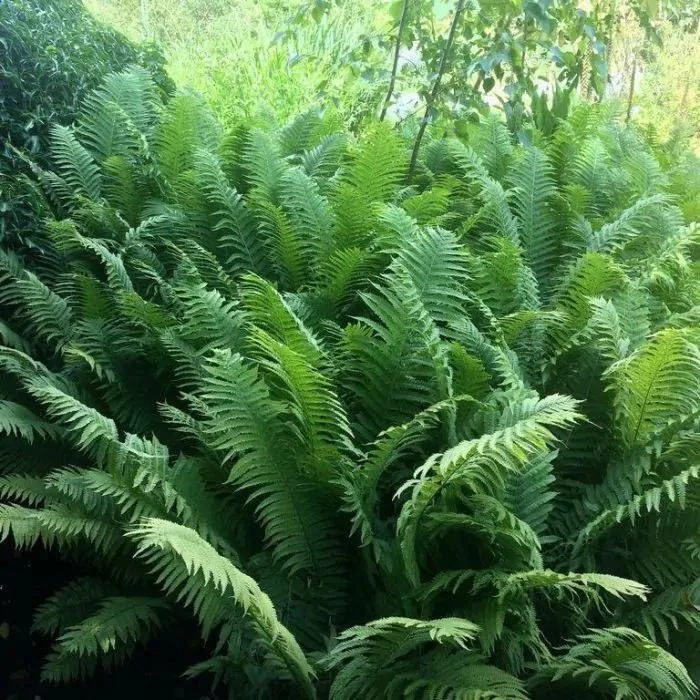
Ostrich fern produces large, upright, finely divided green fronds that resemble ostrich feathers, hence the name. The sterile green fronds emerge in spring as curled fiddleheads and gradually unfurl into a large vase-shaped crown.
Unlike many ferns, it produces two distinctly different types of fronds:
Sterile fronds — the large, beautiful green "ostrich plume" foliage.
Fertile fronds — much shorter, darker, stiff brown structures that develop separately in the center of the plant and carry the spores.
Size
Typical cultivated size: roughly 4–6 ft tall
Fronds can reach around 4 ft long
Shade
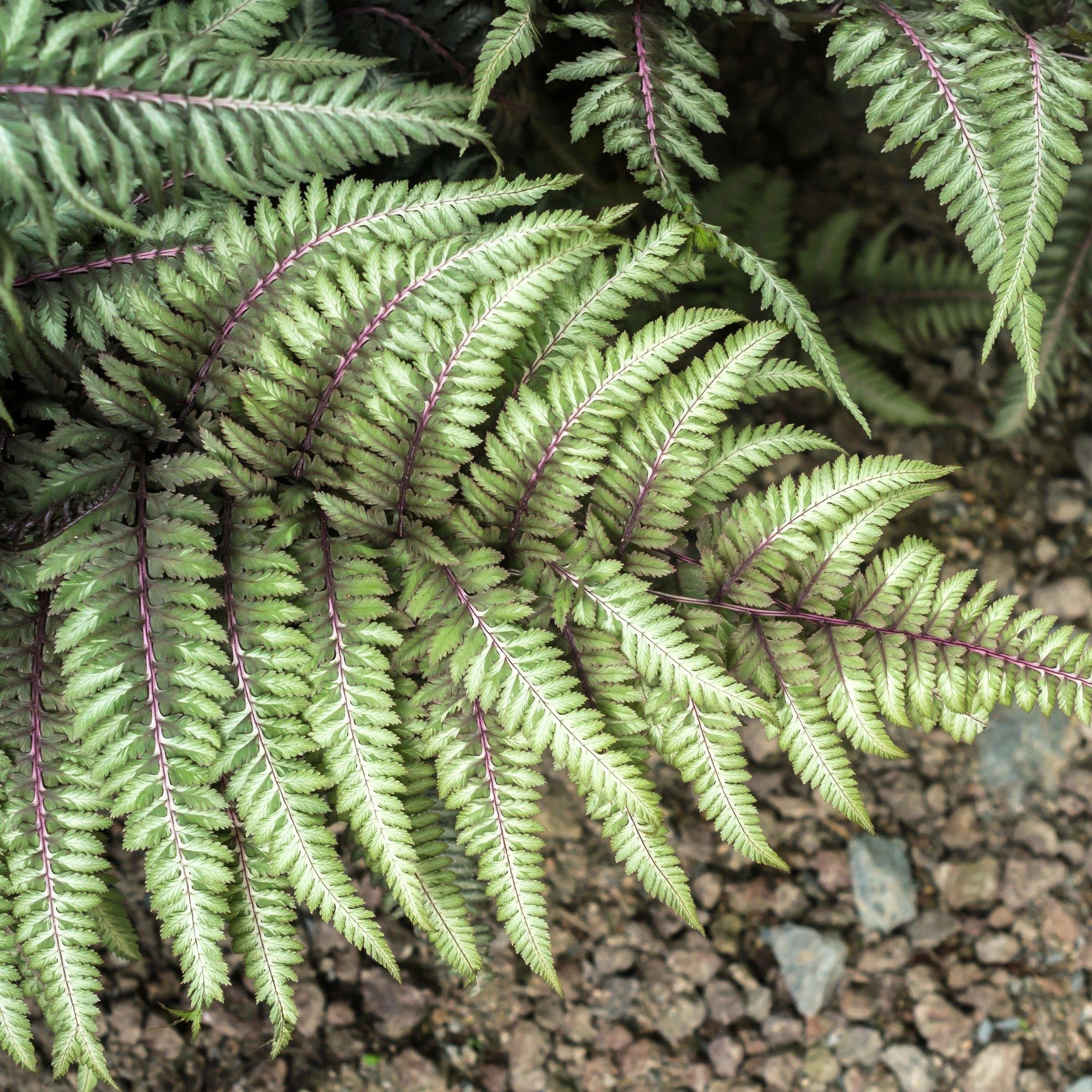
Athyrium ‘Godzilla’ is a spectacular giant Japanese painted fern prized for its enormous, finely divided fronds and dramatic presence in the shade garden. It develops a broad, spreading clump that can become quite impressive with age, making it an excellent choice for filling larger areas beneath trees or among other woodland plants. The foliage combines silvery-green tones with darker veins and stems, giving the plant considerably more visual interest than an ordinary green fern. It does not depend on flowers for its appeal; instead, its architectural foliage provides texture and contrast from spring through fall. It is particularly effective planted with hostas, heucheras, woodland grasses, Solomon’s seal, and other shade-loving perennials.
Height: 3–4 ft
Width: 3–5 ft
Flower time: None; grown for foliage
Sun/Shade: Part shade to full shade
Deer resistant
Rabbit resistant
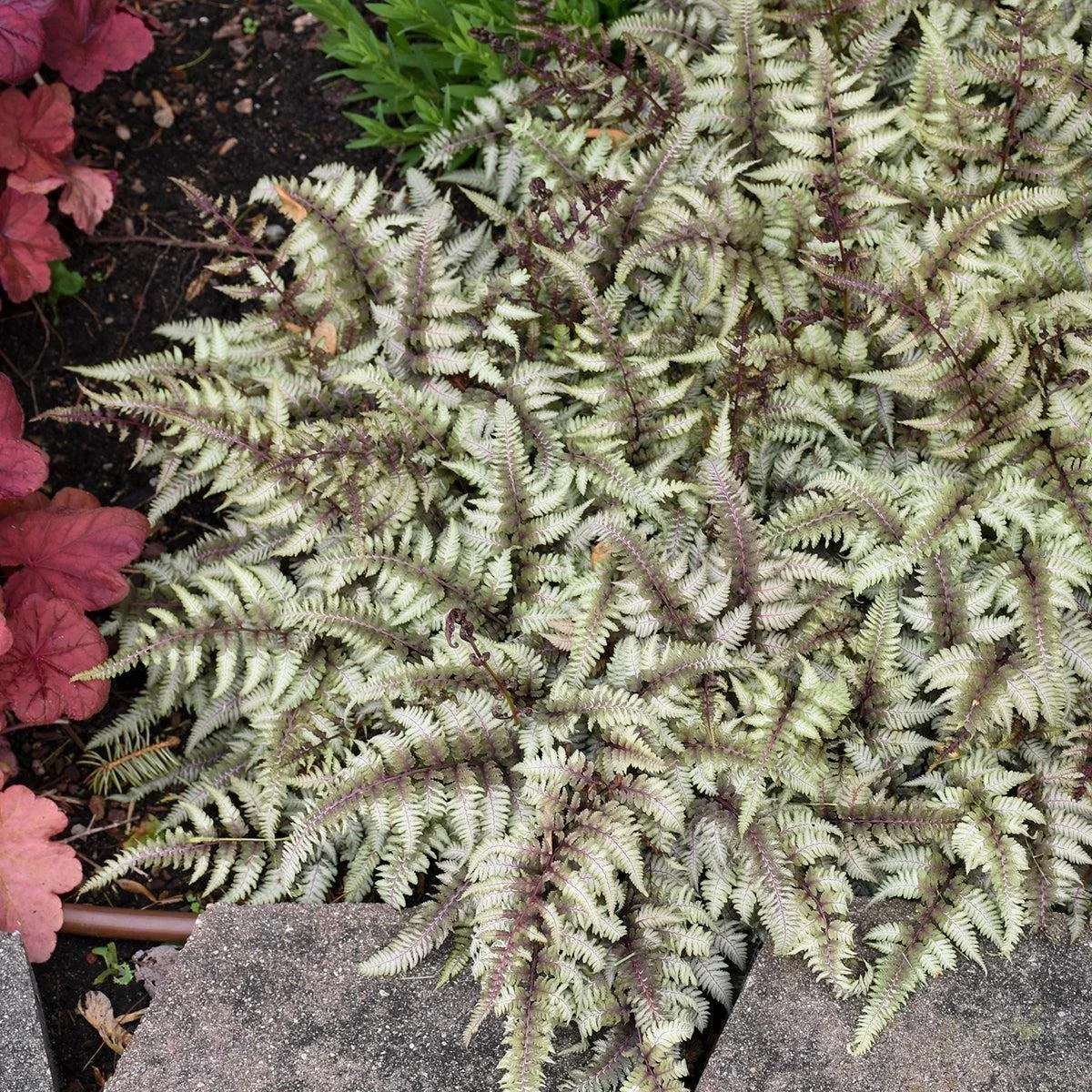
‘Crested Surf’ is a Japanese painted fern, so it has the characteristic soft, silvery-gray foliage associated with that group, with purple/eggplant-colored tones along the midribs and stems. What makes ‘Crested Surf’ different is the unusual double-crested tips on the fronds. Rather than ending in a simple point, the ends have a ruffled, almost miniature-coral appearance.
The overall plant forms a graceful vase-shaped clump, making it particularly useful toward the front or middle of a shade border.
Height: approximately 18–24 inches
Spread: approximately 24–36 inches
Shade
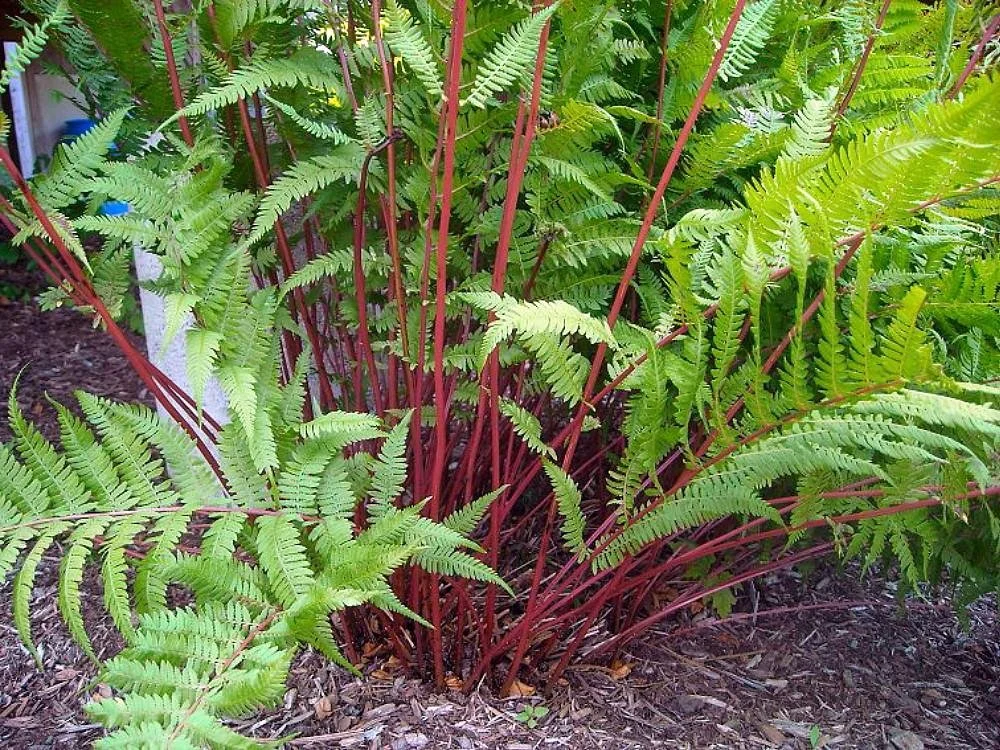
The fronds are soft green and finely divided, but they emerge on striking burgundy-red stems. The red becomes particularly noticeable against dark soil. The stems also become more intensely colored as the plant matures.
The fronds arch outward from the center, giving the plant a graceful, somewhat fountain-like appearance.
Height: about 30–36 inches
Width: about 18–24 inches
Shade
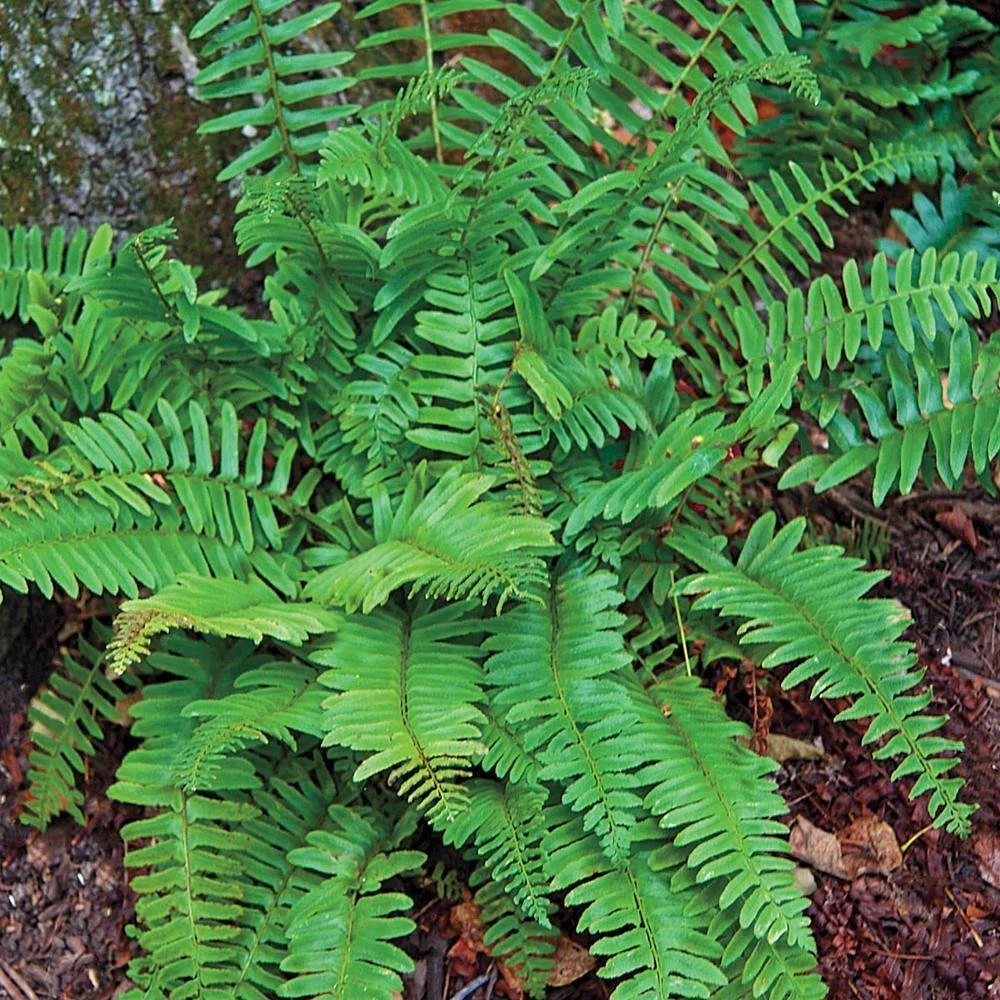
Christmas fern is a dependable native evergreen fern that provides year-round structure in the shade garden. Its leathery, dark-green fronds remain attractive through winter, making it especially useful beneath trees and shrubs where many other perennials disappear completely after frost. The individual fronds have a distinctive holly-like appearance, which contributes to its common name. It works beautifully in woodland gardens, along shaded paths, on slopes, and in naturalized plantings. Once established, Christmas fern is relatively low-maintenance and can tolerate dry shade better than many other ferns, although it performs best with adequate organic matter and moisture.
Height: 1½–2 ft
Width: 1½–2 ft
Flower time: None; grown for evergreen foliage
Sun/Shade: Part shade to full shade
Deer resistant
Rabbit resistant
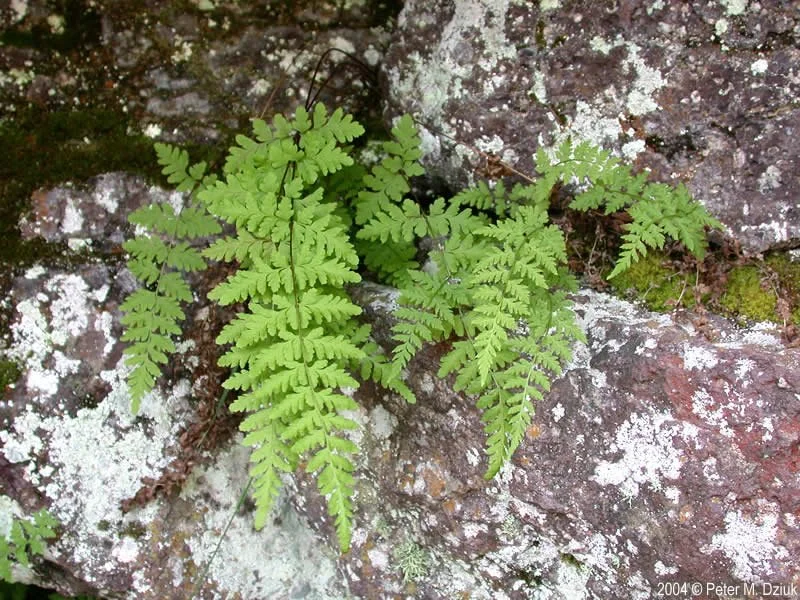
The brittle bladderfern (Cystopteris fragilis), also known as the fragile fern, is a widespread perennial fern with delicate, easily broken fronds and bladder-like spore covers. [1, 2]
Height: 8 to 12 inches (0.2 to 0.3 meters)
Spread: 1 to 2 feet wide in a clumping habit
Full Shade
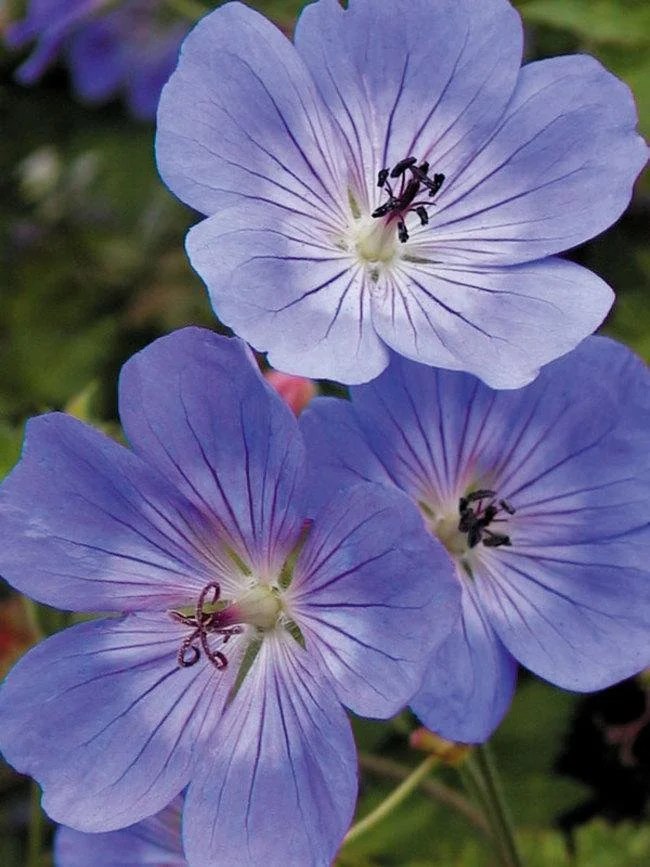
Rozanne’ is one of the best-known long-blooming hardy geraniums and is valued for its exceptionally long flowering season. It forms a spreading mound of deeply cut green foliage, above which it produces large violet-blue flowers with distinctive lighter centers. Unlike many perennials that give you a short burst of flowers and then stop, ‘Rozanne’ can begin flowering in late spring and continue through much of the summer and into early fall. It is also quite adaptable, tolerating both full sun and partial shade, although flowering is strongest with more sunlight.
Height: 18–20 inches
Width: 24–36 inches
Flower time: Late spring through summer, often into early fall
Sun/Shade: Full sun to partial shade; flowers best with more sun
Deer resistant
Rabbit resistant
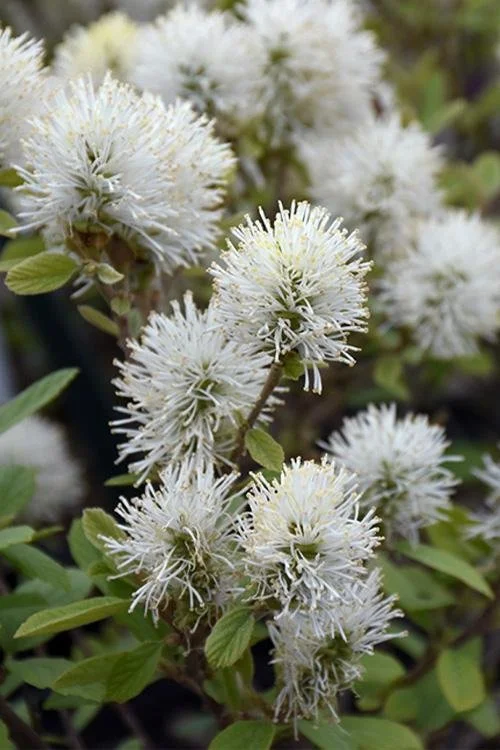
This is a small deciduous native shrub, and it is one of the more interesting plants on the entire list because it provides three distinct seasons of interest.
In spring, it produces masses of unusual creamy-white bottlebrush flowers. These aren't conventional round shrub flowers—the blooms are cylindrical spikes made up of many fine stamens, giving them a fuzzy bottlebrush appearance. They are also fragrant. This is deliberately bred to be a much smaller Fothergilla, making it considerably easier to fit into a residential perennial border. After flowering, the plant develops attractive small blue-green leaves.
Then comes the big show: fall color. The foliage can transition through combinations of red, yellow, orange, and reddish-purple.
Height: approximately 2–2½ ft
Width: approximately 2–4 ft
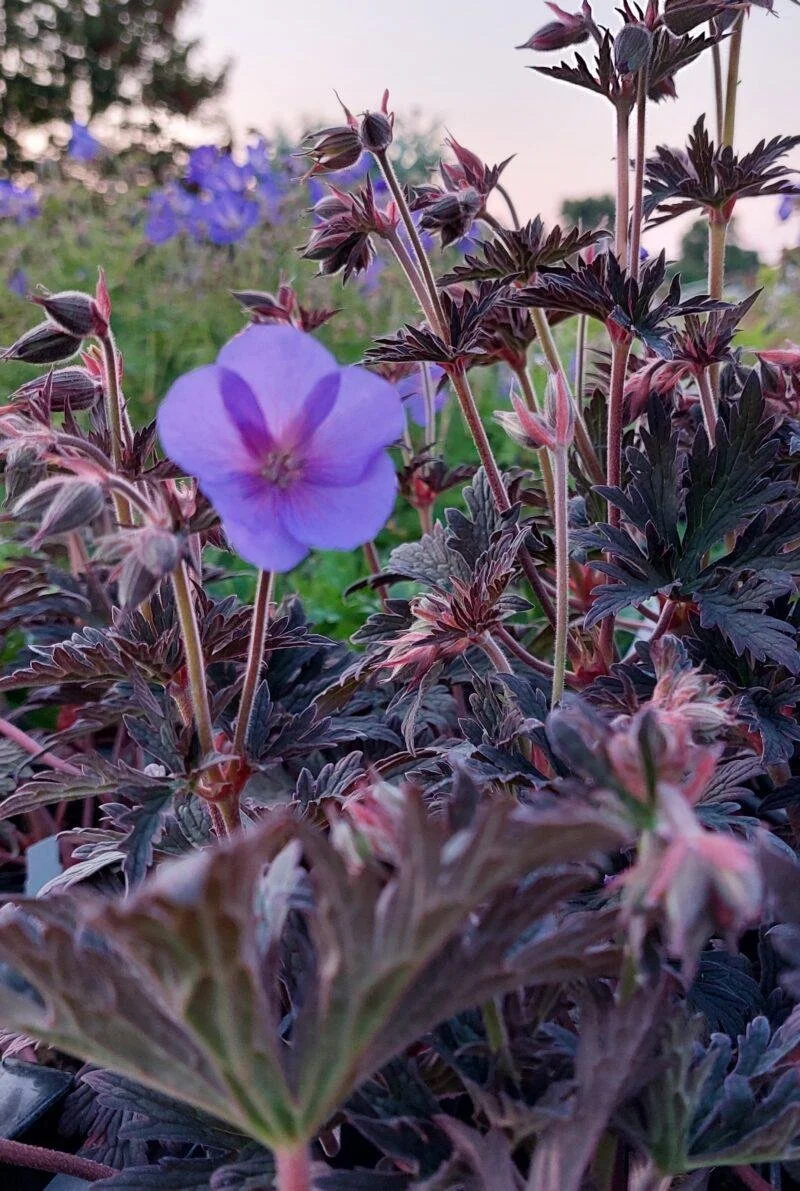
‘Boom Chocolatta’ is a particularly striking hardy geranium because the foliage is almost as ornamental as the flowers. It forms a compact, mounded plant with dark bronze-to-chocolate leaves that provide strong contrast against ordinary green perennials. Above the foliage, it produces vivid blue-purple flowers, creating one of the more dramatic foliage-and-flower combinations on our plant list. The bronze foliage remains attractive from spring until frost, while the flowers appear through summer.
Height: 24–26 inches
Width: 28–30 inches
Flower time: Summer
Sun/Shade: Part sun to full sun
Deer resistant
Rabbit resistant
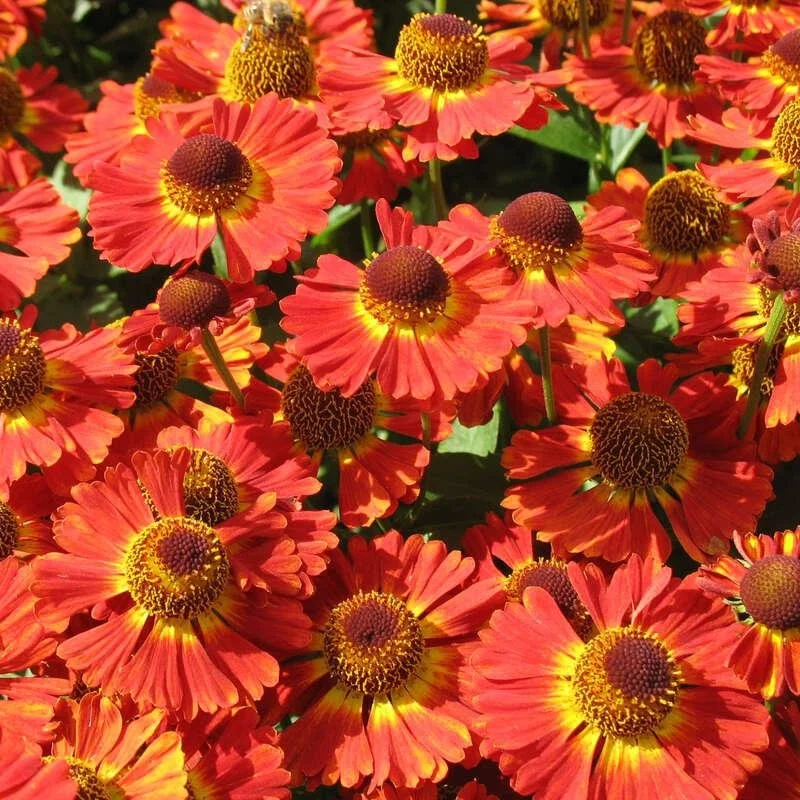
Helenium ‘Salsa’ is a colorful late-summer sneezeweed that brings warm tones and strong vertical flower presence to the perennial border. Its daisy-like flowers surround raised central cones, creating a classic prairie-garden appearance while providing valuable nectar for pollinators. The plant is particularly useful for extending the flowering season after many early-summer perennials have finished. For the strongest growth and flowering, provide full sun and reasonably consistent moisture; removing spent flowers can also encourage a longer display.
Height: Approximately 2–3 ft
Width: Approximately 18–24 in
Flower time: July–September
Sun/Shade: Full sun
Deer resistant
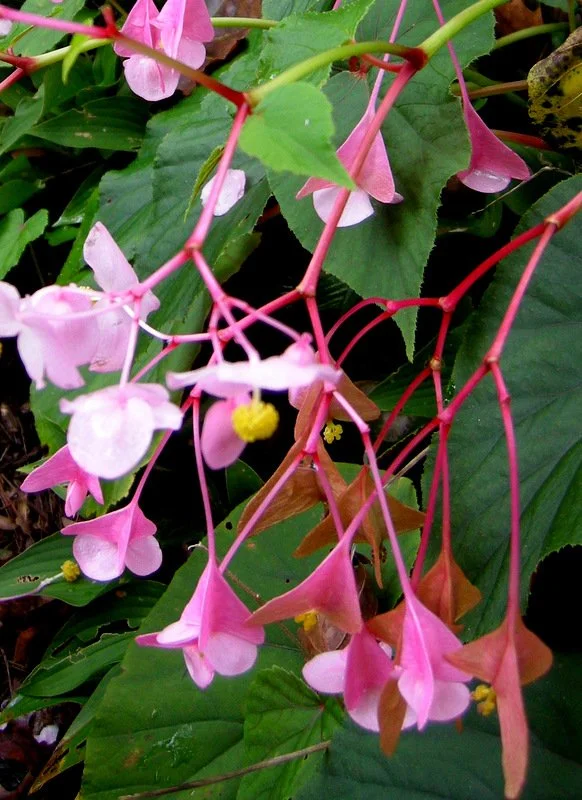
Hardy begonia is an excellent choice for a shady garden where you want flowers late in the season, when many shade perennials are beginning to wind down. It forms a rounded, somewhat spreading mound of attractive green leaves, often with reddish coloring on the undersides and stems. Its loose clusters of soft pink, fragrant flowers appear from summer into early fall and are visited by pollinators. One of its best qualities is its ability to grow in deep or dappled shade, where many flowering plants struggle. It prefers soil that stays consistently moist and rich in organic matter. Hardy begonia is also capable of producing small bulbils in the leaf axils that can help it spread and return reliably.
Height: 18–36 inches
Width: 18–24 inches
Flower time: Summer through early fall, especially late summer–September
Sun/Shade: Partial shade to deep shade
Deer resistant
Rabbit resistant
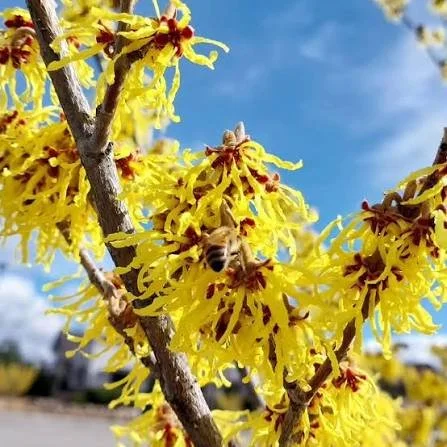
Vernal witch hazel is a particularly valuable shrub because it provides flowers at a time when very little else is blooming, being one of the very first pollen sources for pollinators. Its small, fragrant flowers appear along the bare branches in late winter or very early spring, with narrow ribbon-like petals ranging from yellow to orange-red. The flowers can be surprisingly showy against the winter landscape, and the shrub develops attractive green foliage after flowering. In autumn the leaves can turn yellow to orange-red before dropping. It is a tough native shrub that can handle both sun and partial shade, although flowering is best with more sun. It prefers consistent moisture but can tolerate a range of soils, and it can sucker and gradually form a colony if allowed to spread.
Width: 8–15 feet
Flower time: February–March
Sun/Shade: Full sun to partial shade; flowers best in full sun
Deer resistant
Rabbit resistant
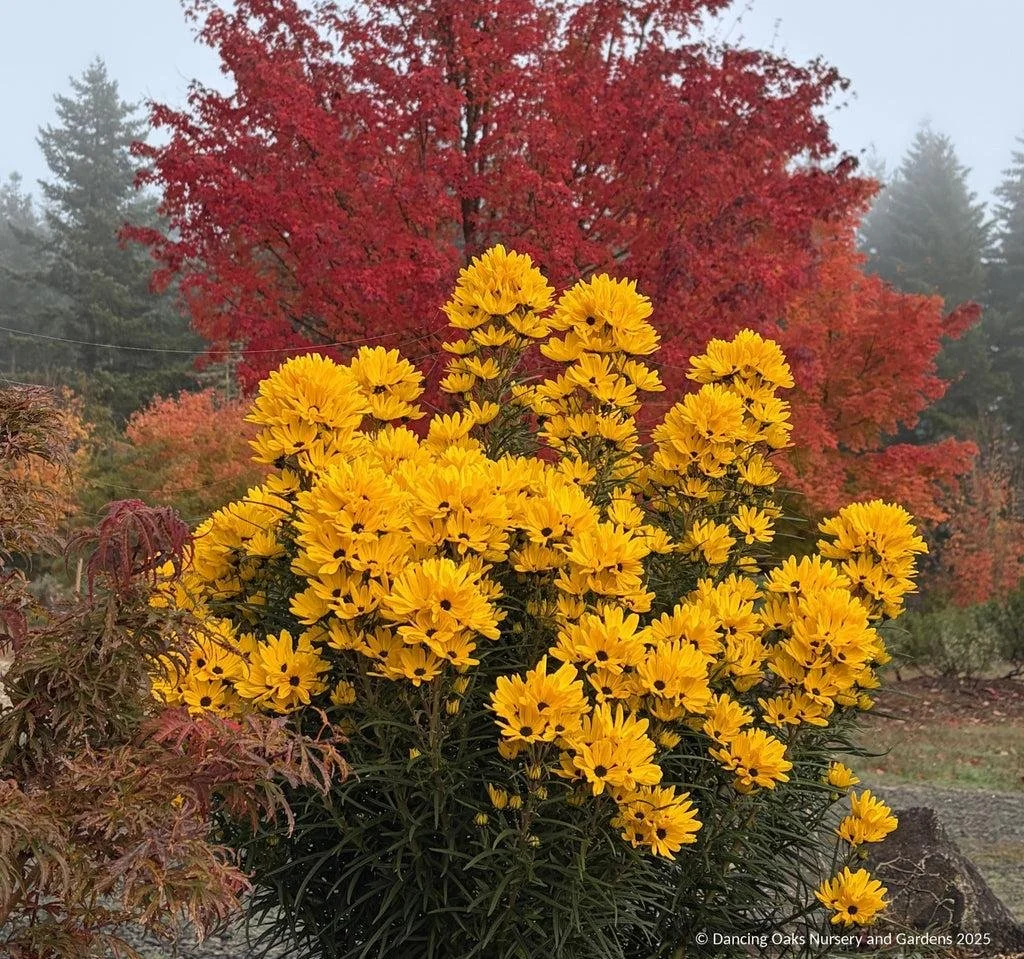
‘Autumn Gold’ is a compact perennial sunflower that gives you an enormous amount of fall color from a surprisingly small plant. During spring and summer it forms a dense mound of narrow, dark green foliage that can almost look like a small shrub. Then, beginning in late summer and continuing through fall, the plant becomes covered with bright golden-yellow sunflower-like flowers with dark centers. The flowers are especially valuable for extending color into September, October and sometimes toward November or hard frost. It is drought tolerant once established and attracts bees, butterflies, birds and other wildlife. Unlike many tall perennial sunflowers, this selection remains compact enough that it generally does not need staking.
Height: 24–26 inches
Width: 20–26 inches
Flower time: September through November or hard frost
Sun/Shade: Full sun
Deer resistant
Rabbit resistant
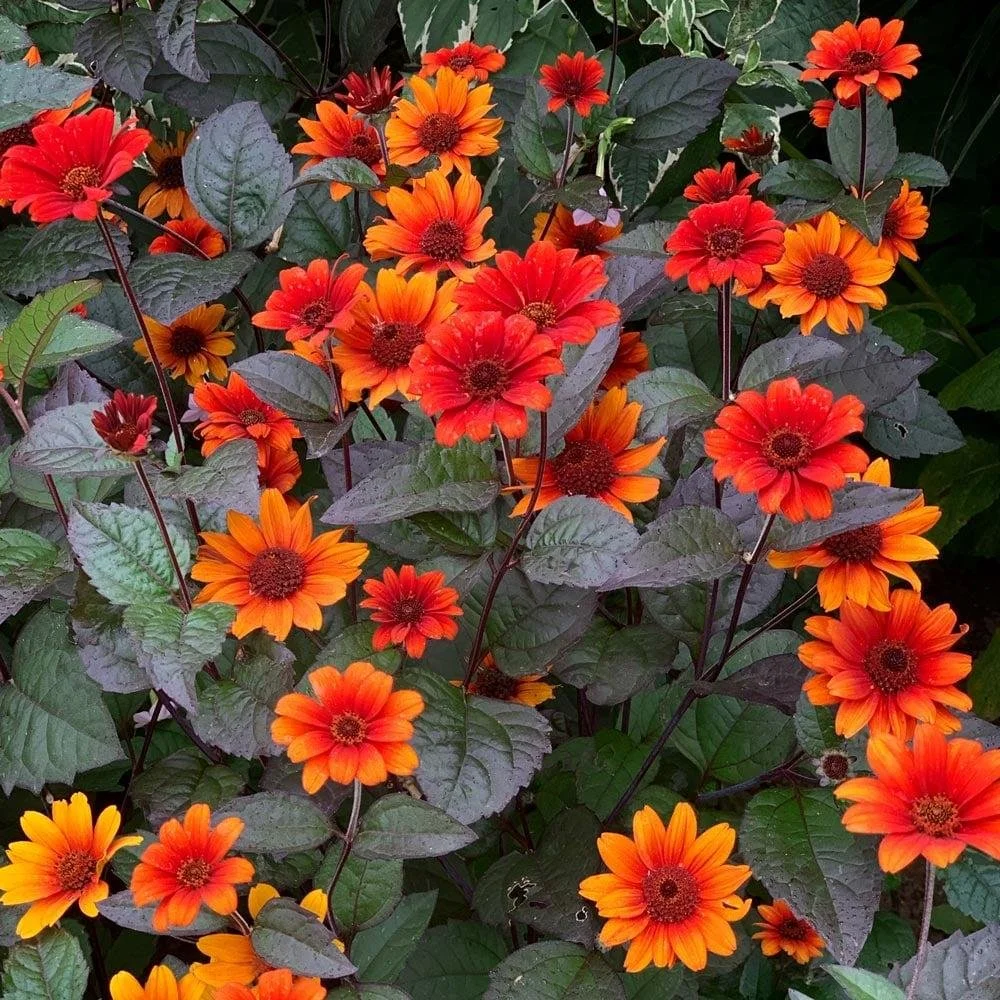
‘Bleeding Hearts’ is a particularly interesting false sunflower because it combines dark green to purplish foliage with flowers that begin deep orange-red and mature toward golden orange. The contrast gives the plant a much richer appearance than the ordinary yellow-flowered forms of Heliopsis. It forms a substantial upright clump and produces flowers continuously through much of midsummer and into fall, often until the first frost. It is a strong pollinator plant and is well suited to the middle or back of a sunny perennial border, where its height gives it presence without becoming a huge, floppy plant. It tolerates some drought once established.
Height: 36–40 inches
Width: 36–40 inches
Flower time: Midsummer through first frost
Sun/Shade: Full sun to part shade
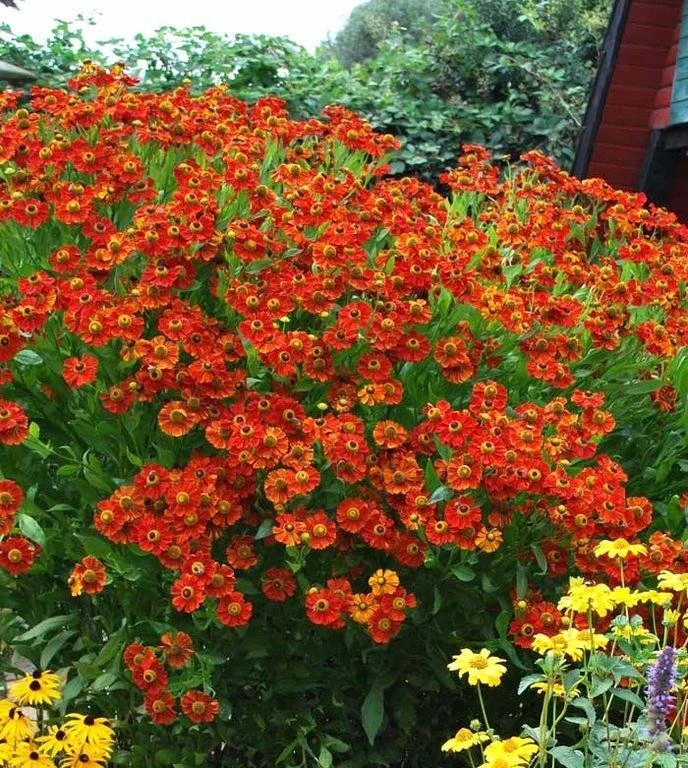
‘Fuego’ is a compact, exceptionally colorful sneezeweed that is particularly valuable because it flowers when the garden is moving toward late summer and fall. The flowers are daisy-shaped and combine fiery orange, red and yellow, usually with a darker brown center, giving the plant a warm, almost sunset-like appearance. Unlike older sneezeweeds that can become tall and require staking, ‘Fuego’ was selected as a much shorter, well-branched plant that works toward the front or middle of a perennial border. It likes moisture and performs best in full sun, especially in soil that does not become excessively dry. It is native in origin, attracts bees and butterflies.
Height: 18–24 inches
Width: 18–24 inches
Flower time: July–September, extending into early fall
Sun/Shade: Full sun
Deer resistant
Rabbit resistant
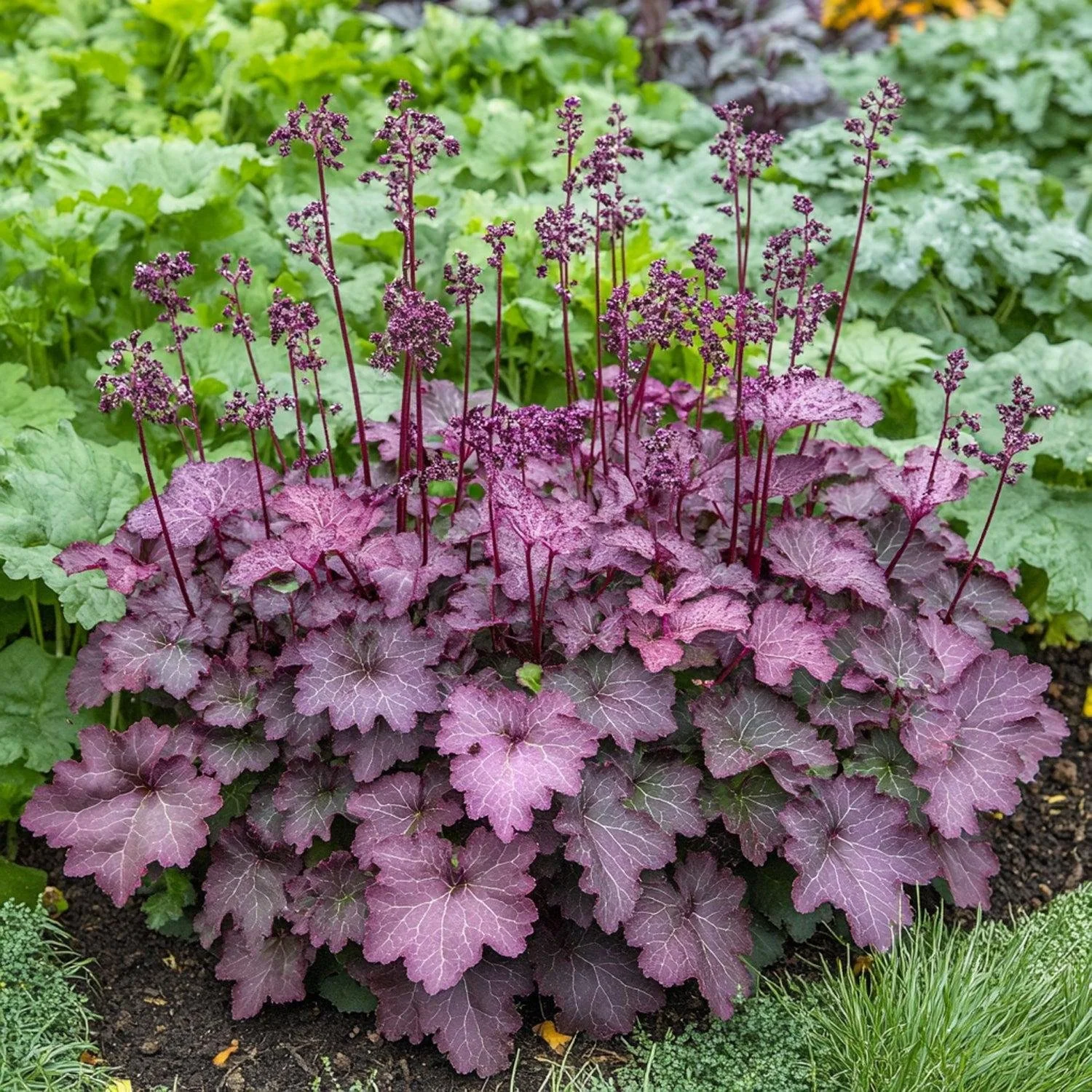
‘Palace Purple’ is one of the classic dark-leaved coral bells, grown primarily for its rich purple, bronze and mahogany foliage rather than its flowers. The rounded, maple-shaped leaves form a compact mound that provides strong color from spring through fall, and in favorable climates the foliage can remain evergreen. In early summer, slender flower stems rise above the mound and carry airy sprays of small creamy-white flowers. It is unusually versatile for a foliage plant, tolerating everything from shade to fairly sunny conditions, although part shade generally gives the best combination of rich foliage color and protection from leaf scorch. It works especially well along paths, in front of shrubs, in woodland gardens and mixed with silver, gold or green-leaved plants.
Height: 8–18 inches
Width: 12–18 inches
Flower time: Early summer, usually June
Sun/Shade: Full sun to shade; part shade is ideal
Deer resistant
Rabbit resistant
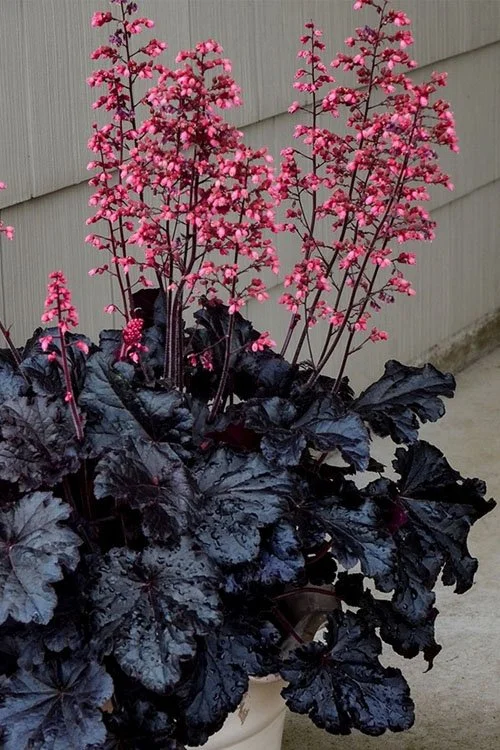
‘Timeless Night’ is grown primarily for its exceptionally dark, almost black foliage, making it one of the strongest foliage-contrast plants on your list. The leaves form a neat rounded mound and have a glossy appearance that makes the dark coloration particularly noticeable. Small flowers are produced on tall, slender stems above the foliage, but they are relatively subtle compared with the leaves, so this is best thought of as a foliage plant with flowers rather than a flowering plant with decorative foliage. It is especially effective when planted beside chartreuse plants or golden grasses, silver foliage or lighter green ferns. Like other coral bells, it prefers well-drained soil and generally performs best in part shade, although it can take more sun in cooler conditions.
Height: Approximately 10–14 inches
Width: Approximately 16–20 inches
Flower time: Late spring–summer
Sun/Shade: Part shade to shade; can tolerate more sun with adequate moisture
Deer resistant
Rabbit resistant
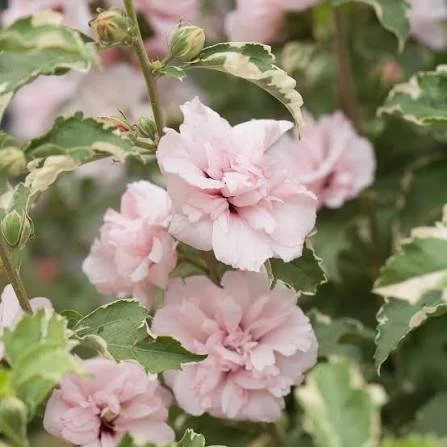
Sugar Tip’ Rose of sharon is a hardy Shrub that combines large, soft pink flowers with unusually attractive variegated foliage. The leaves are green with creamy-white edges, giving the plant ornamental interest even before it begins flowering. It prefers consistently moist soil and full sun and is particularly impressive when planted where its late-summer flowers can be seen from a distance.
Height: 4–5 feet
Width: 4–5 feet
Flower time: July–September
Sun/Shade: Full sun; part shade reduces flowering
Deer resistant
Rabbit resistant
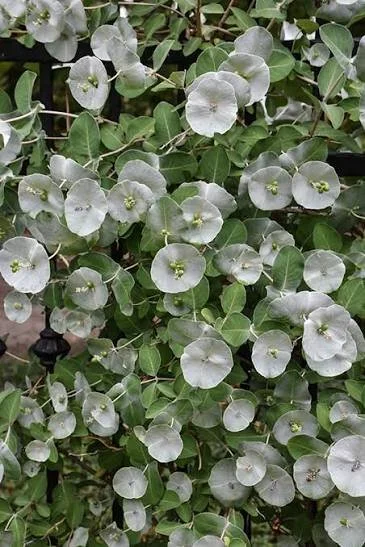
‘Kintzley’s Ghost’ is a deciduous native honeysuckle vine that is especially unusual because of its silvery-white structures surrounding the flowers and its extremely interesting story, see below*. In early summer, small yellow flowers appear in clusters, and the surrounding leaf-like bracts gradually become silvery white, giving the impression of little ghostly flowers scattered along the vine. Later, small red berries can develop. Unlike invasive Asian honeysuckles, this is a native North American species and is useful for covering a trellis, fence, arbor or other vertical structure. It is a vigorous climber. It prefers sun to part shade and reasonably well-drained soil.
Height: 8–12 feet
Width: 3–6 feet, depending on support
Flower time: May–June
Sun/Shade: Full sun to partial shade
Deer resistant
Rabbit resistant
*The Story of Kintzley’s Ghost Honeysuckle*
Kintzley’s Ghost is a striking native North American honeysuckle (Lonicera reticulata), known for its unique foliage, flowers, and the rich history behind its discovery.
Origins in the 1880s
In the 1880s, William “Ped” Kintzley, a Civil War veteran, worked in the greenhouses at Iowa State University (then Iowa State College). He found a rare honeysuckle variety, a natural sport, in the wild and propagated it himself. He never commercialized it, instead giving plants to members of the Kintzley family across the area as gifts. He was so proud of his discovery that he requested it be planted on his grave.
Rediscovery in 2001
We might never have known about Kintzley’s Ghost had it not been for a Colorado plantsman, Scott Skogerboe, who was driving down a side street in Fort Collins in 2001. He stopped, having spotted a beautiful plant that looked like a eucalyptus with a blue-green hue and rounded leaves, thriving in the harsh Northern Colorado climate. He knocked on the door, and the elderly gentleman living in the home described the plant as a family heirloom and told him the story of his grandfather, William Kintzley. (What are the chances that Scott would knock on the door of the grandson?!) Scott was able to take cuttings and propagated this unique vine, selling it online for a number of years. Eventually, Proven Winners bought the propagation rights from Scott (I imagine he was paid a tidy sum!).
Botanical Features
‘Kintzley’s Ghost’ is a moderate climber, typically 8–12 feet tall with a spread of 3–6 feet. Each season, it begins like any other honeysuckle, with typical dusty green leaves. In late spring, flower buds pop out like saucers. These rounded bracts look a lot like eucalyptus, but the yellow flowers at the center feed native pollinators, including bees, butterflies, and hummingbirds! Red berries form in the fall, but won’t become a nuisance like other honeysuckles. Due to its size and interesting seasonal changes, it makes an incredible specimen. It has dusty blue-green leaves that develop into large, saucer-like silvery-white bracts, holding their color through summer and into fall. It is drought-tolerant and deer ignore it.
Cultural Significance
The plant’s name honors William Kintzley, and its rediscovery brought it to national attention through the Plant Select program. It is now cultivated for its ornamental value, cut flower use, and as a specimen vine or groundcover. ‘Kintzley’s Ghost’ is both a botanical curiosity and a living link to a forgotten greenhouse discovery, preserved and celebrated through the dedication of a few family members and the keen eye of a modern plantsman. And, yes, this namesake plant is thriving on William "Ped” Kintzley’s grave!
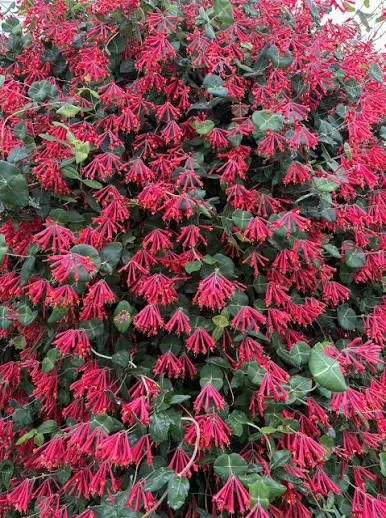
‘Major Wheeler’ is a vigorous native trumpet honeysuckle vine grown primarily for its spectacular display of tubular red-to-orange-red flowers. The flowers are especially attractive to hummingbirds, which is one of the main reasons this cultivar is so popular. Unlike Japanese honeysuckle, it is a native Lonicera sempervirens selection and is not the invasive honeysuckle that is often found naturalized in woodland edges. It climbs by twining rather than clinging, so it needs a trellis, fence, arbor or other support. The flowers can begin in late spring and continue intermittently through summer, giving it a much longer period of interest than many woody vines. It performs best with its foliage and roots kept relatively cool while the vine receives plenty of sun.
Height: 6–10 feet
Width: 3–6 feet
Flower time: May–September, with strongest flowering in summer
Sun/Shade: Full sun to partial shade; best flowering in sun
Deer resistant
Rabbit resistant
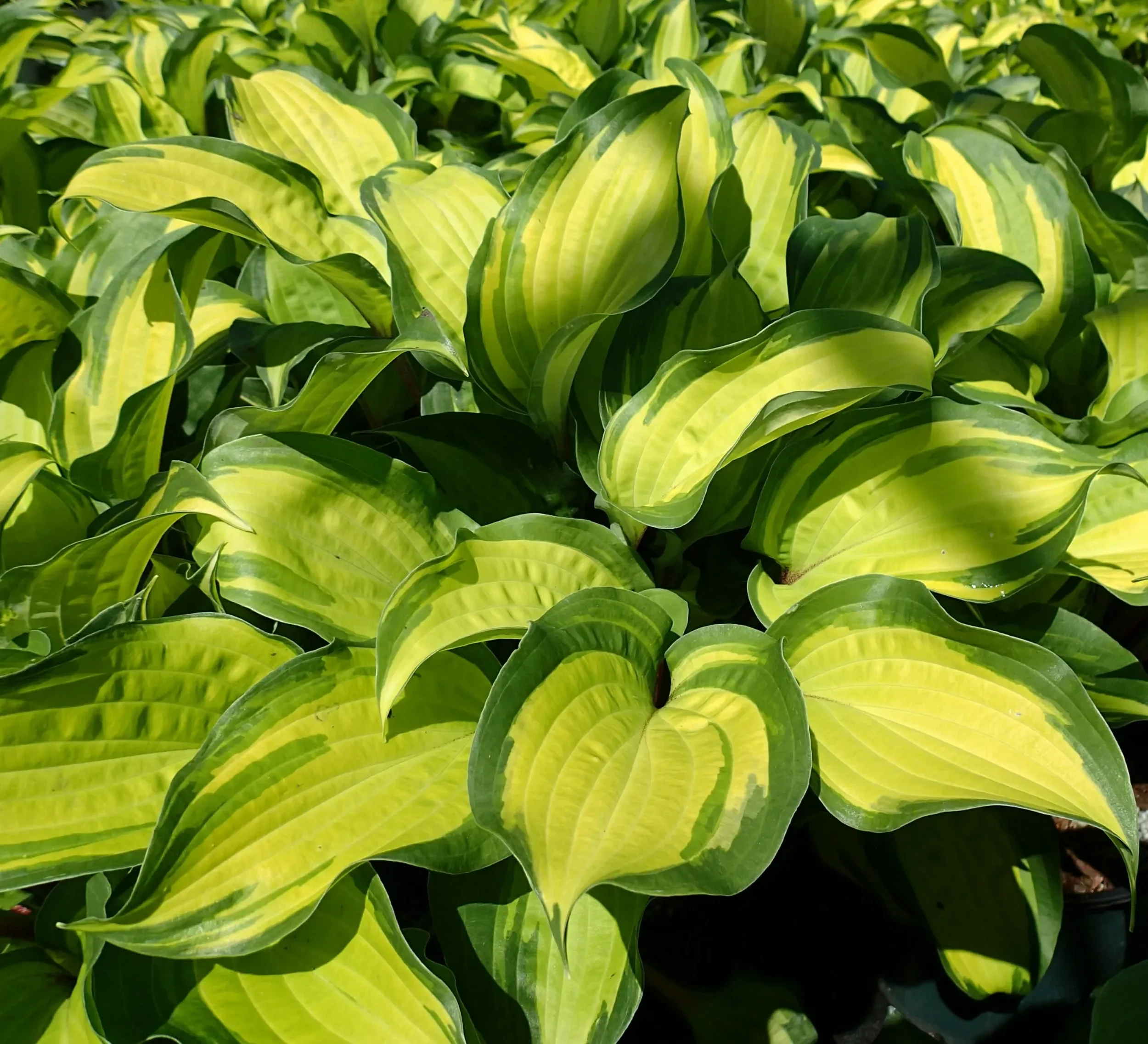
‘Island Breeze’ is a striking hosta with bold, variegated foliage that provides strong visual interest in shaded gardens. The leaves have a green center surrounded by brighter yellow to creamy margins, with the coloration becoming especially attractive as the plant develops through the season. Like other hostas, it forms a dependable foliage mound and works beautifully along woodland paths, under trees, or in shaded perennial borders. Lavender-toned flowers appear on upright stalks in summer, but the foliage is the main attraction. Can be divided in early spring berfore sprouts leaf out.
Height: About 1½–2 ft
Width: About 2–3 ft
Flower time: July–August
Sun/Shade: shade
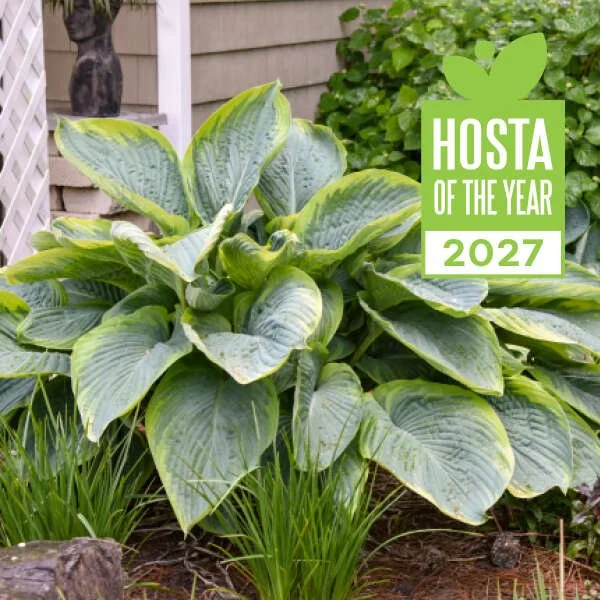
2027 Hosta of the year!
‘Wu-La-La’ is a large, dramatic hosta prized for its substantial blue-green to green foliage and impressive presence in a shade garden. It develops broad leaves that can create a lush, tropical-looking effect even though it is a hardy perennial. The plant is particularly effective as a specimen or as a backdrop for smaller shade plants. Its pale lavender flowers rise above the foliage in summer, providing an additional seasonal display.
Height: About 2–3 ft
Width: About 4–5 ft
Flower time: July–August
Sun/Shade: Part shade to full shade
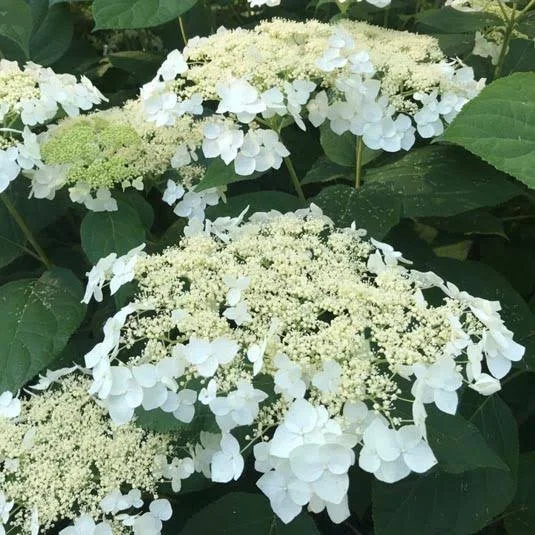
'Haas' Halo' earned a top five-star rating in the Mt. Cuba Center native hydrangea study because its large lacecap blooms attract an exceptional number of pollinating insects
‘Haas Halo’ is an unusual smooth hydrangea with large, lacecap-style flower heads made up of numerous small fertile flowers surrounded by larger white florets. The blooms can create a broad, airy display above the green foliage and are especially attractive to pollinators. Unlike the enormous mophead flower clusters of some hydrangeas, ‘Haas Halo’ has a more naturalistic, open appearance that works well in woodland-inspired borders and mixed shrub plantings. It is a North American native species selection and can be cut back in late winter or early spring because it flowers on new growth.
Height: About 3–5 ft
Width: About 3–5 ft
Flower time: June–August
Sun/Shade: Full sun to part shade
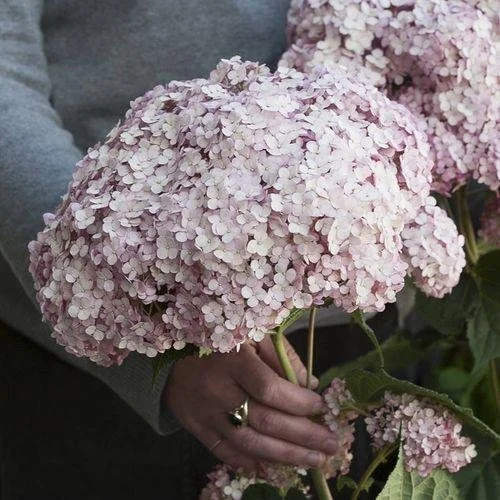
‘Incrediball Blush’ is a large-flowered smooth hydrangea that produces rounded flower heads in a soft blush-pink tone. The sturdy stems help support the substantial blooms, making it useful for a shrub border, foundation planting, or mass planting where a strong summer flower display is desired. As the flowers mature, their color can shift toward softer tones, giving the shrub an extended period of interest. Like other Hydrangea arborescens cultivars, it flowers on new wood, so annual pruning can be done without sacrificing the following season's blooms.
Height: About 4–5 ft
Width: About 4–5 ft
Flower time: June–September
Sun/Shade: Full sun to part shade
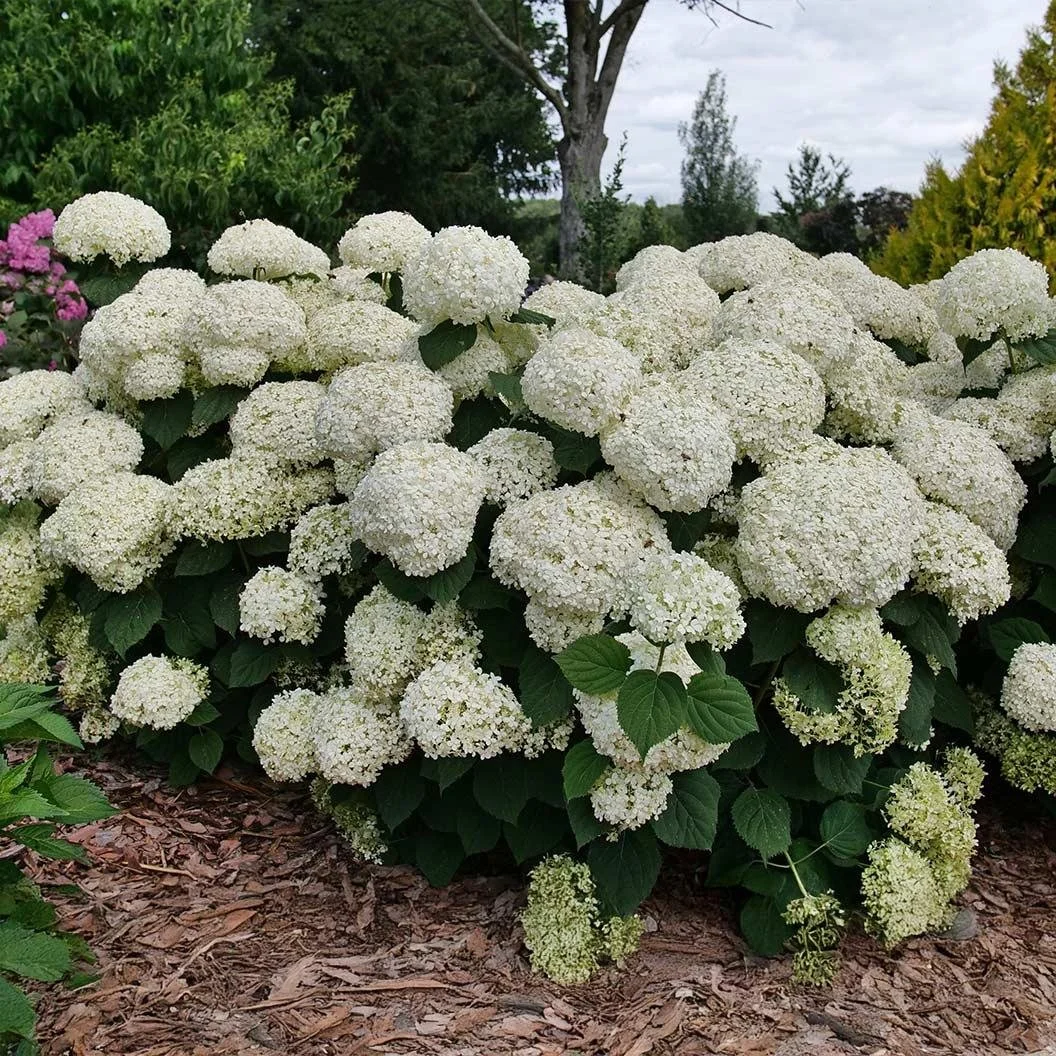
‘Incrediball Storm Proof’ is a strong-stemmed smooth hydrangea bred to better support its enormous, rounded flower heads. The blooms begin greenish and develop into large white spheres that create a particularly dramatic summer display. Its sturdier stems help reduce the tendency of large-flowered hydrangeas to flop under the weight of the blooms or after rain, making it a dependable choice for perennial borders and shrub plantings. It flowers on new wood, so it can be pruned in late fall or early spring and still produce flowers that season.
Height: About 4–5 ft
Width: About 4–5 ft
Flower time: June–September
Sun/Shade: Full sun to part shade
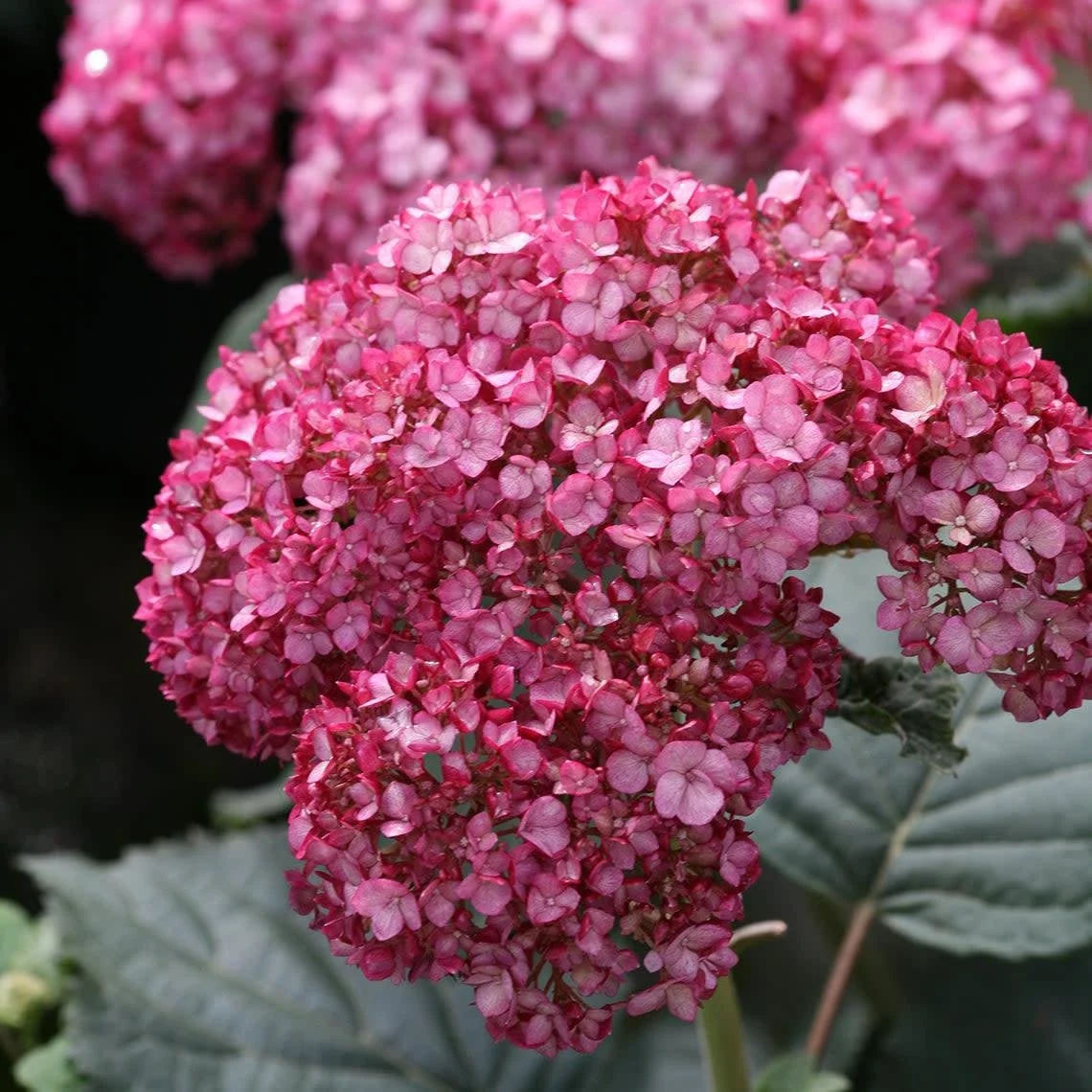
‘Invincibelle Ruby’ is a smooth hydrangea with rich ruby-pink flowers that provide a stronger color statement than the traditional white-flowered forms. The rounded flower heads emerge in summer and can deepen in color as they mature, while the green foliage provides a simple backdrop. It is useful in mixed borders, foundation plantings, and mass plantings where a long summer flowering season is desired. Because it flowers on new growth, it is relatively forgiving about pruning and generally comes back strongly each year.
Height: About 3–5 ft
Width: About 3–5 ft
Flower time: June–September
Sun/Shade: Full sun to part shade
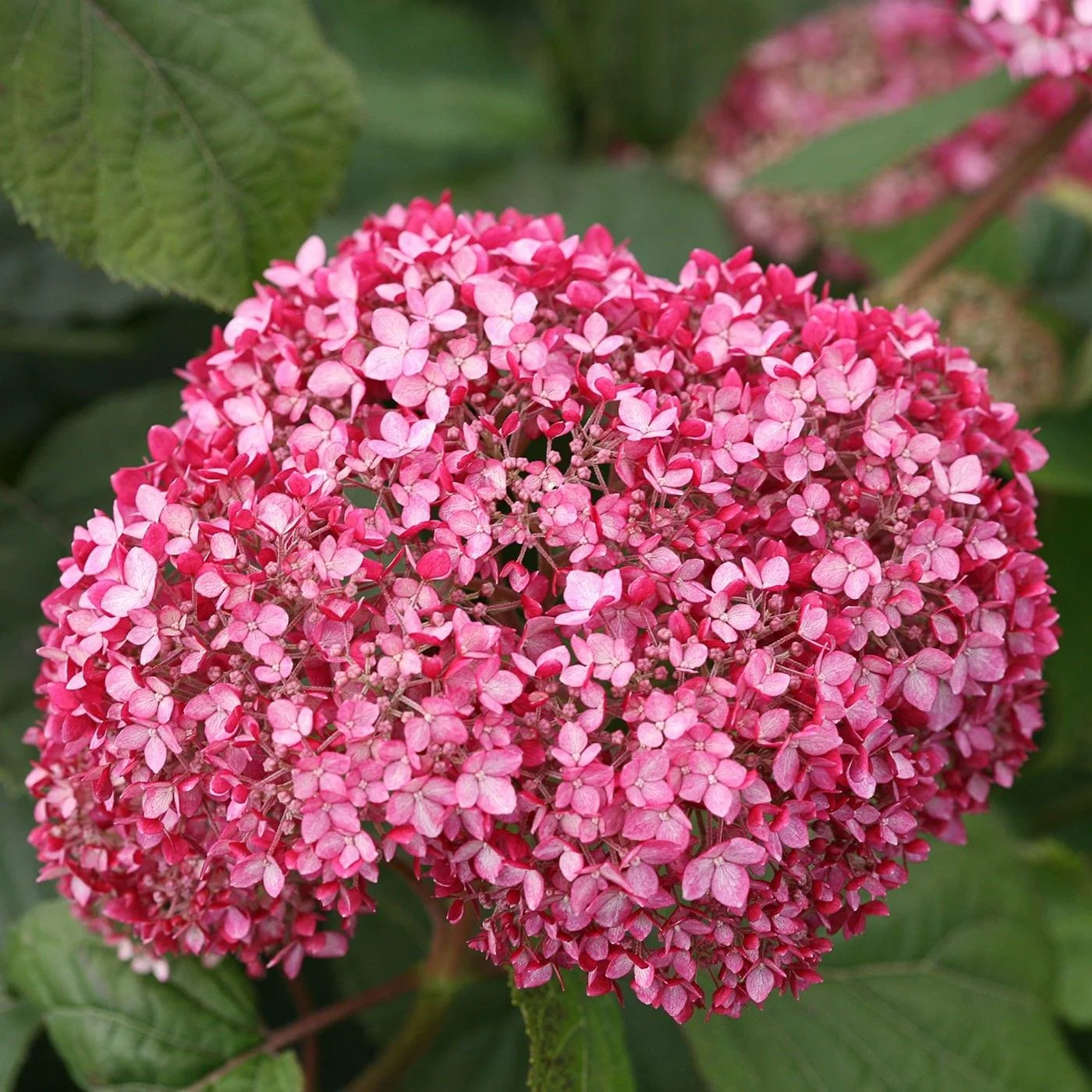
‘Invincibelle Spirit II’ is a pink-flowering smooth hydrangea with large rounded flower clusters held above attractive green foliage. Its blooms begin in a deeper pink tone and can soften as they age, providing a long-lasting summer display. The cultivar is particularly useful when you want the traditional full hydrangea flower form but prefer pink rather than white. Like the other Hydrangea arborescens selections in this section, it flowers on new wood, making it suitable for gardens where winter pruning is desirable.
Height: About 3–5 ft
Width: About 3–5 ft
Flower time: June–September
Sun/Shade: Full sun to part shade
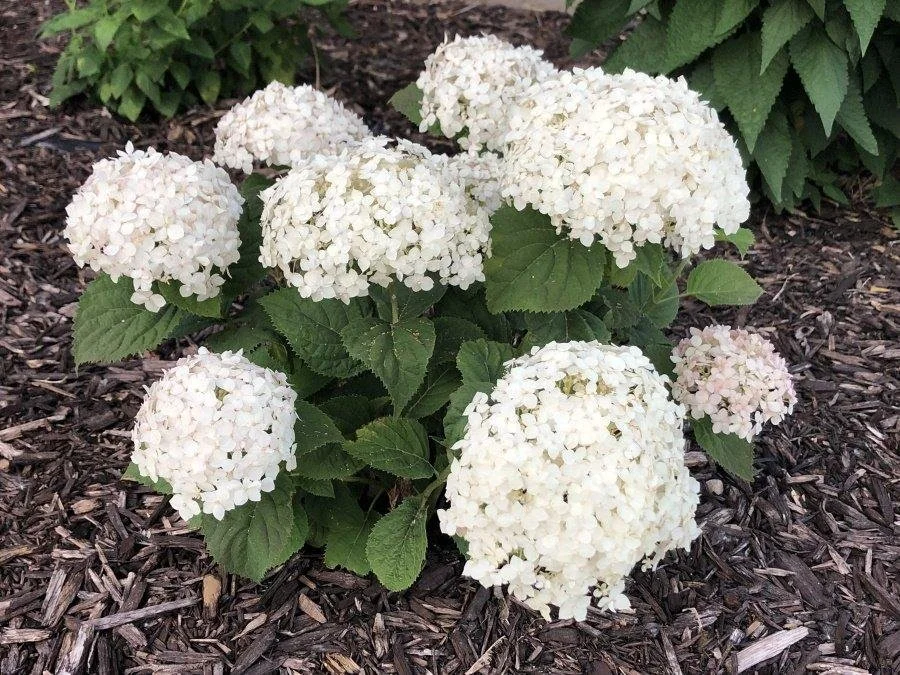
‘Invincibelle Wee White’ is a compact smooth hydrangea designed for smaller gardens and spaces where full-sized hydrangeas would be too large. It produces rounded white flower heads over a relatively short, tidy plant, making it particularly useful toward the front of a shrub border or perennial bed. The flowers can take on subtle greenish tones as they age, extending their ornamental value beyond the peak bloom period. Its compact habit also makes it useful for foundation plantings and containers.
Height: About 1–2 ft
Width: About 2–3 ft
Flower time: June–September
Sun/Shade: Full sun to part shade
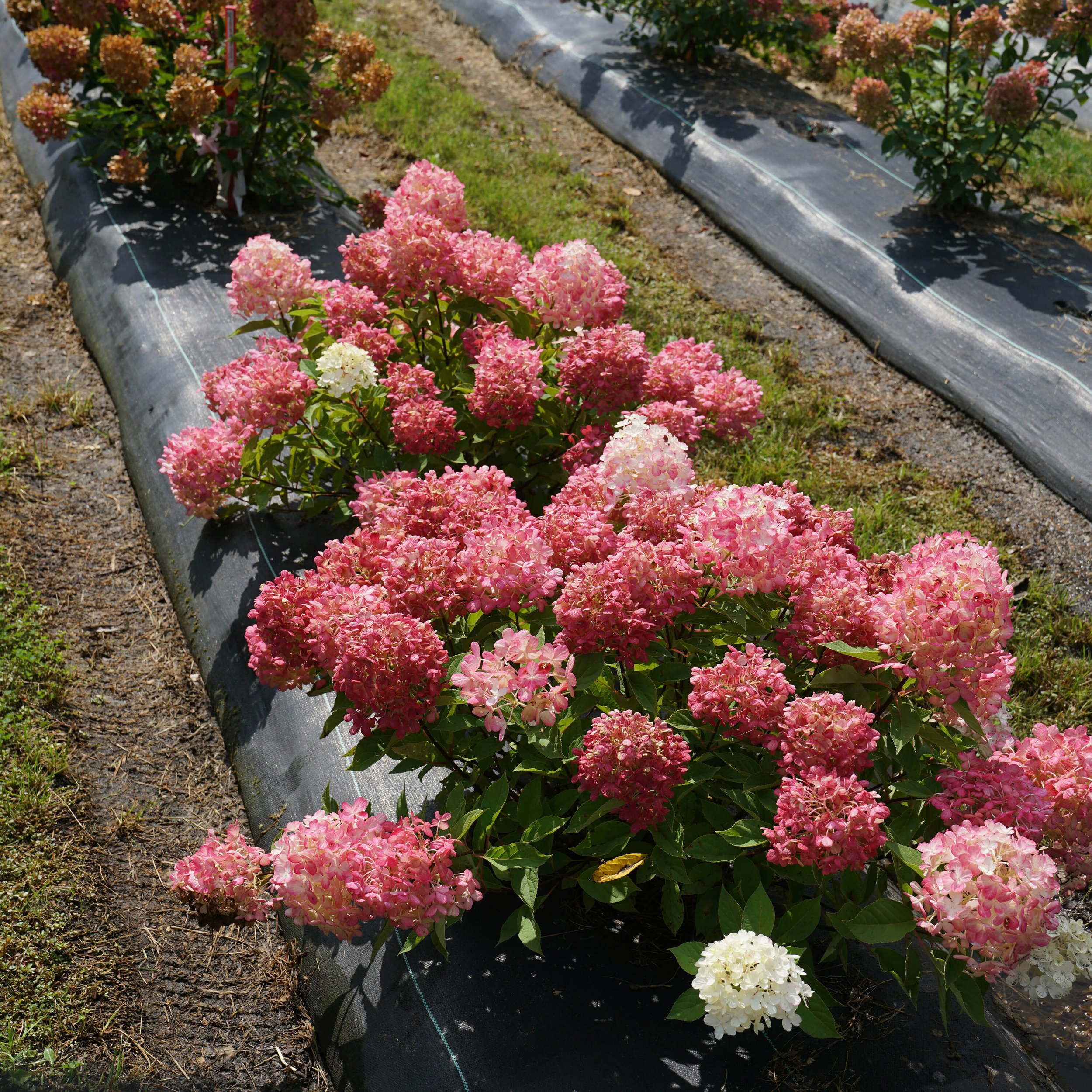
‘Fire Light Tidbit’ is a compact panicle hydrangea that offers the characteristic cone-shaped flowers of Hydrangea paniculata on a much smaller plant. Its flower heads emerge light-colored and develop warmer pink to reddish tones as the season progresses, creating a changing display through summer and early fall. The compact size makes it particularly useful for smaller landscapes, perennial borders, and foundation plantings. Like other panicle hydrangeas, it flowers on new wood and is one of the more sun-tolerant hydrangea types.
Height: About 2–3 ft
Width: About 2–3 ft
Flower time: July–September
Sun/Shade: Full sun to part shade
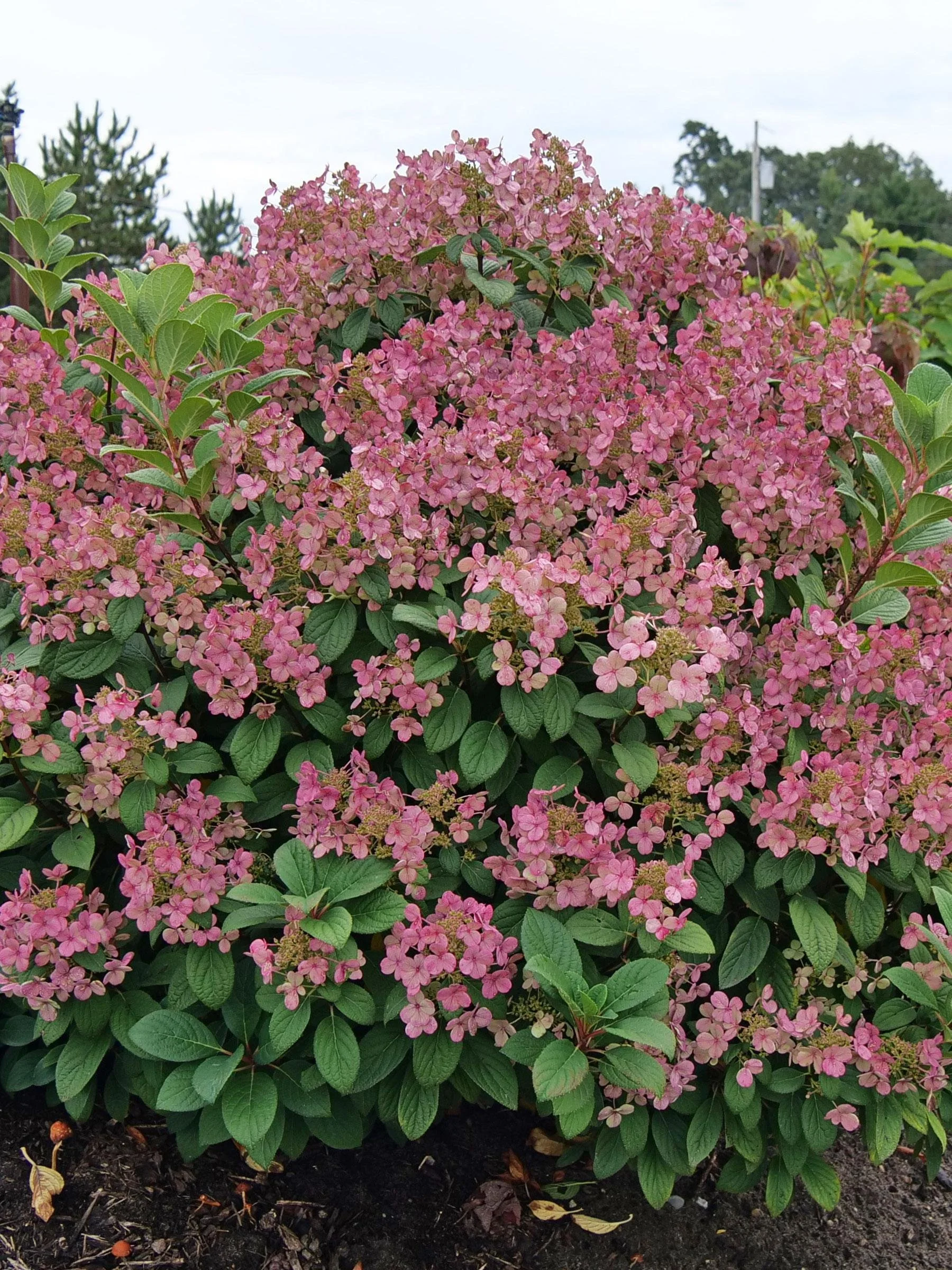
‘Little Quick Fire’ is a compact panicle hydrangea that produces large, upright flower clusters early in the summer. The blooms begin white and gradually deepen through pink and rosy-red tones as the season progresses, creating a long-lasting display. Its smaller size makes it especially useful for foundation plantings, perennial borders, and smaller gardens, while the sturdy stems help keep the flower heads upright. It flowers on new wood, making it dependable even after cold winters, and performs best in full sun to partial shade with consistent moisture.
Height: 3–5 ft
Width: 3–5 ft
Flower time: June–September
Sun/Shade: Full sun to part shade
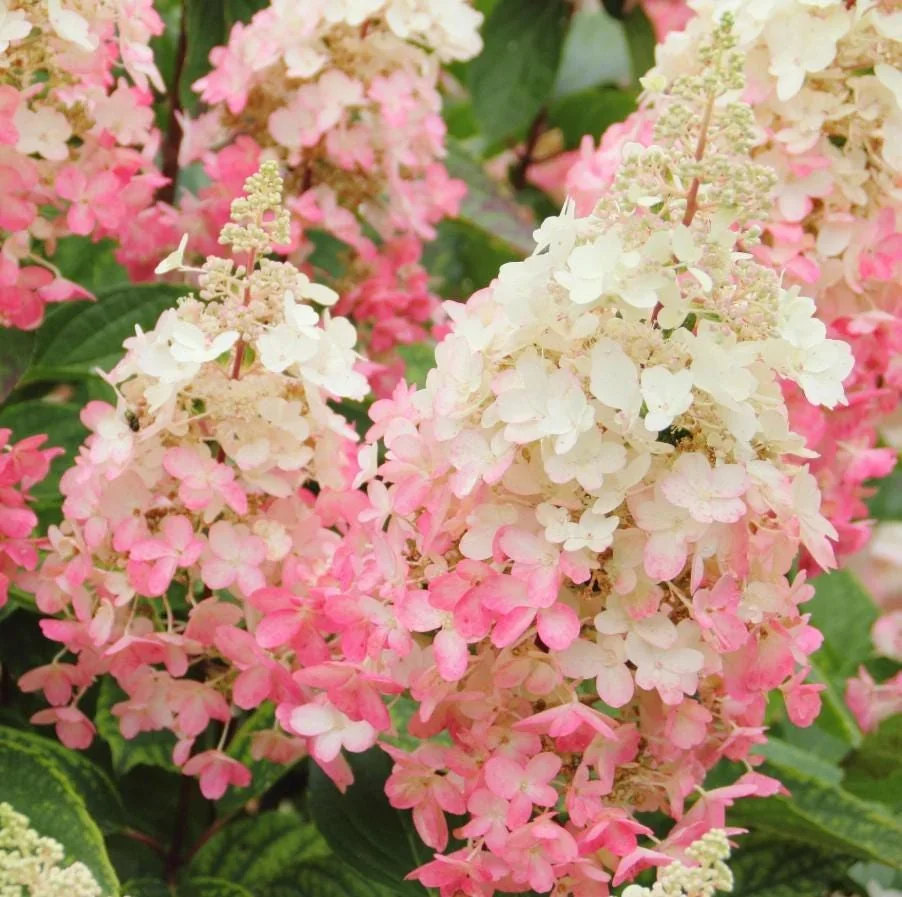
‘Pinky Winky Prime’ is a showy panicle hydrangea known for its dramatic two-tone flower clusters. The blooms emerge white and develop rich pink coloration from the base upward, leaving the upper portions lighter for much of the season. The strong contrast makes this a standout shrub in mixed borders or as a specimen planting. Like other panicle hydrangeas, it blooms on new wood and prefers a sunny location with adequate moisture, although it can tolerate some afternoon shade.
Height: 5–9 ft It can be pruned to maintain the smaller range of sizes
Width: 4–8 ft
Flower time: July–September
Sun/Shade: Full sun to part shade
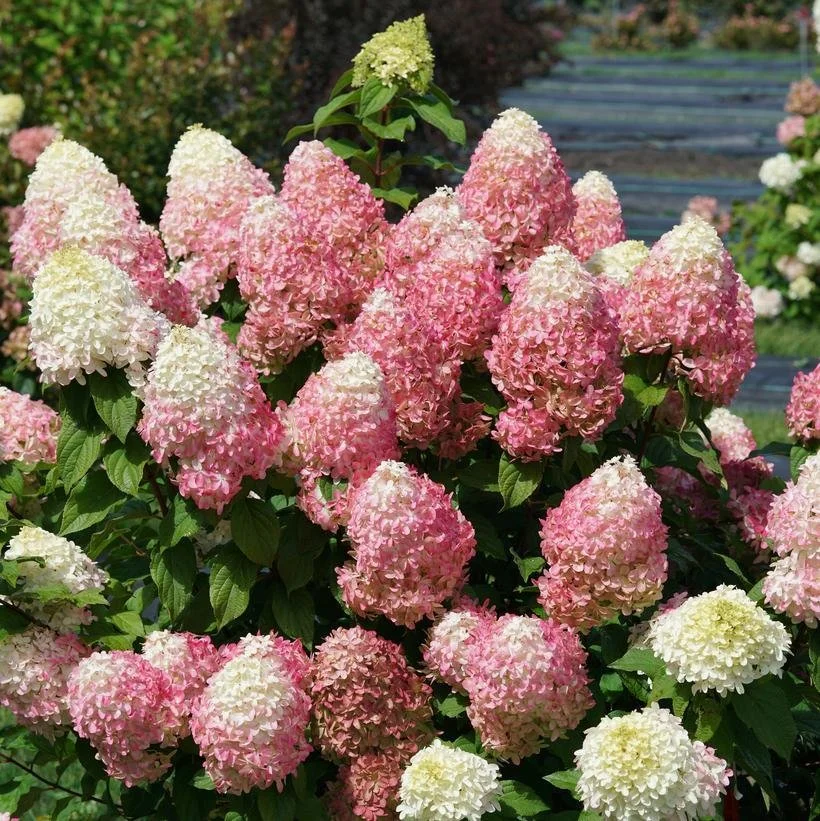
‘Quick Fire Fab’ is a panicle hydrangea valued for its early flowering and strong color progression. Its flower heads open in lighter tones before developing pink and deeper rosy coloration, giving the plant an extended period of seasonal interest. The upright habit and substantial flower clusters make it effective as a specimen, hedge, or mixed-border shrub. It is a sun-loving hydrangea that flowers on old growth.
Height: 5–8 ft Can be pruned to maintain smaller range of sizes.
Width: 4–8 ft
Flower time: July–September
Sun/Shade: Full sun to part shade
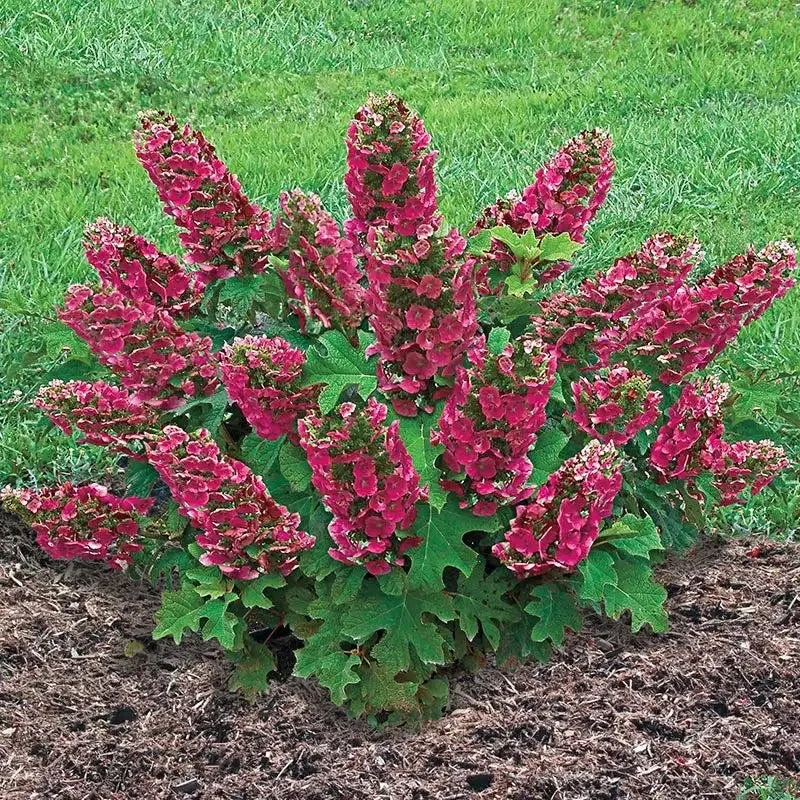
‘Ruby Slippers’ is a compact oakleaf hydrangea with distinctive oak-shaped foliage and large cone-shaped flower clusters. The flowers open white, gradually turn pink, and eventually develop a rich ruby-red coloration, giving the shrub its name. Its foliage also provides excellent fall interest, often developing shades of red, burgundy, and purple as temperatures cool. The exfoliating bark on mature stems adds winter interest, making this a particularly useful four-season shrub. It is native to the southeastern United States and generally performs well in sun to partial shade.
Height: 3–4 ft
Width: 4–5 ft
Flower time: June–July
Sun/Shade: Full sun to part shade
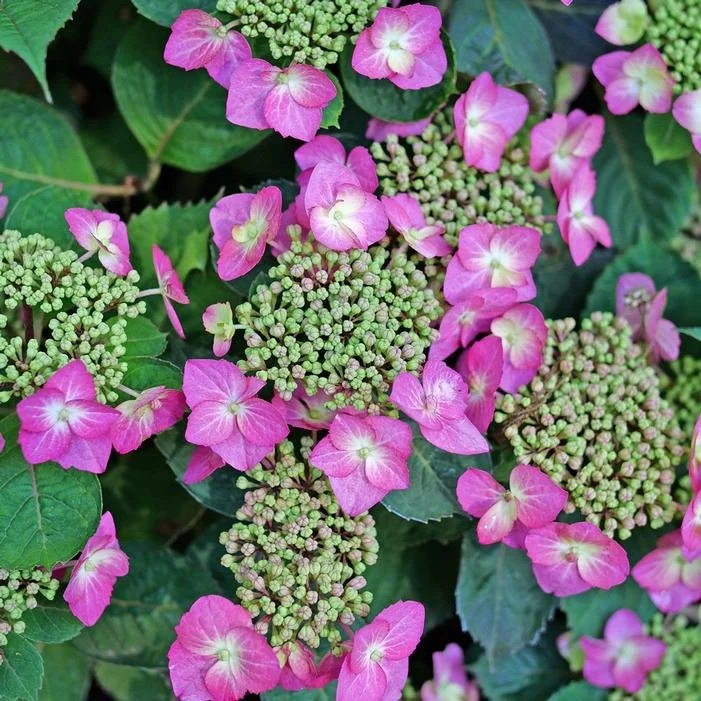
‘Tuff Stuff Top Fun’ is a compact mountain hydrangea selected for its colorful lacecap-style flowers and repeat-blooming ability. The flowers can range from pink to purplish tones depending on soil conditions, with fertile flowers surrounded by showy outer florets. Its relatively compact habit makes it useful for smaller landscapes, woodland edges, containers, and mixed shrub borders. It prefers moist, well-drained soil and benefits from morning sun or partial shade, particularly in hotter locations. The plant flowers on both old and new wood, helping provide a dependable summer display.
Height: 2–3 ft
Width: 2–3 ft
Flower time: June–September
Sun/Shade: Part sun to part shade
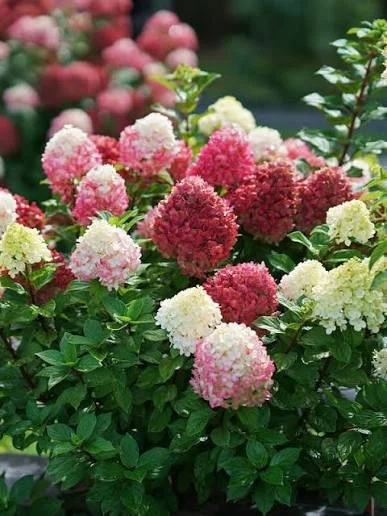
‘Little Lime Punch’ is a compact panicle hydrangea with large flower heads that progress through several colors during the season. Blooms begin in lighter greenish and creamy tones and gradually develop pink and deeper rosy shades, holding some green, pink, and white blooms and producing a particularly attractive multi-colored effect as older flowers remain on the plant. Its smaller stature makes it easier to fit into residential borders than many full-sized panicle hydrangeas. It can be used as a foundation shrub, in mixed borders, as a flowering hedge, or as a specimen. Unlike bigleaf hydrangeas, panicle hydrangeas flower on new wood, making them generally dependable bloomers even after cold winters. This is our most popular Hydrangea
Height: Approximately 3–5 ft
Width: Approximately 3–5 ft
Flower time: July–September
Sun/Shade: Full sun to part shade
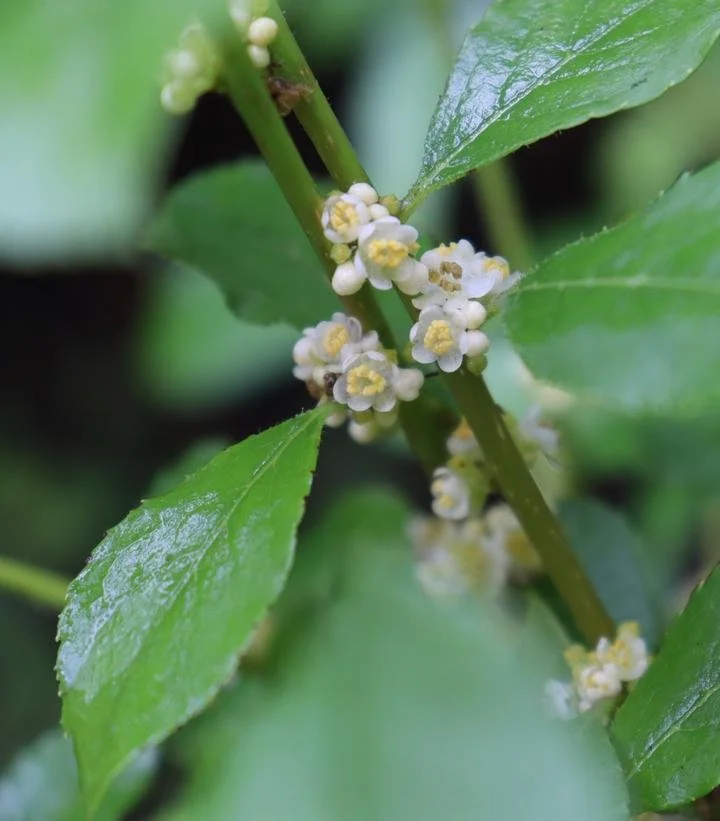
‘Mr. Poppins’ is a compact male winterberry holly grown primarily as a pollinator for female winterberry cultivars such as ‘Berry Poppins’. Unlike the female plants, it does not produce the colorful berry display, but its small flowers provide the pollen necessary for nearby female plants to set fruit. It has a neat, compact habit and fits well into mixed shrub plantings where winterberry pollination is desired. Planting the male near to female plants is important for dependable pollination. One ‘Mr Poppins’ can pollinate up to 5 “Berry Poppins.” It can be planted in the same hole with a female to effectively ‘hide’ its less showy nature by making it look like only one shrub..
Height: 3–4 ft
Width: 3–4 ft
Flower time: May–June
Sun/Shade: Full sun to part shade
Deer resistant
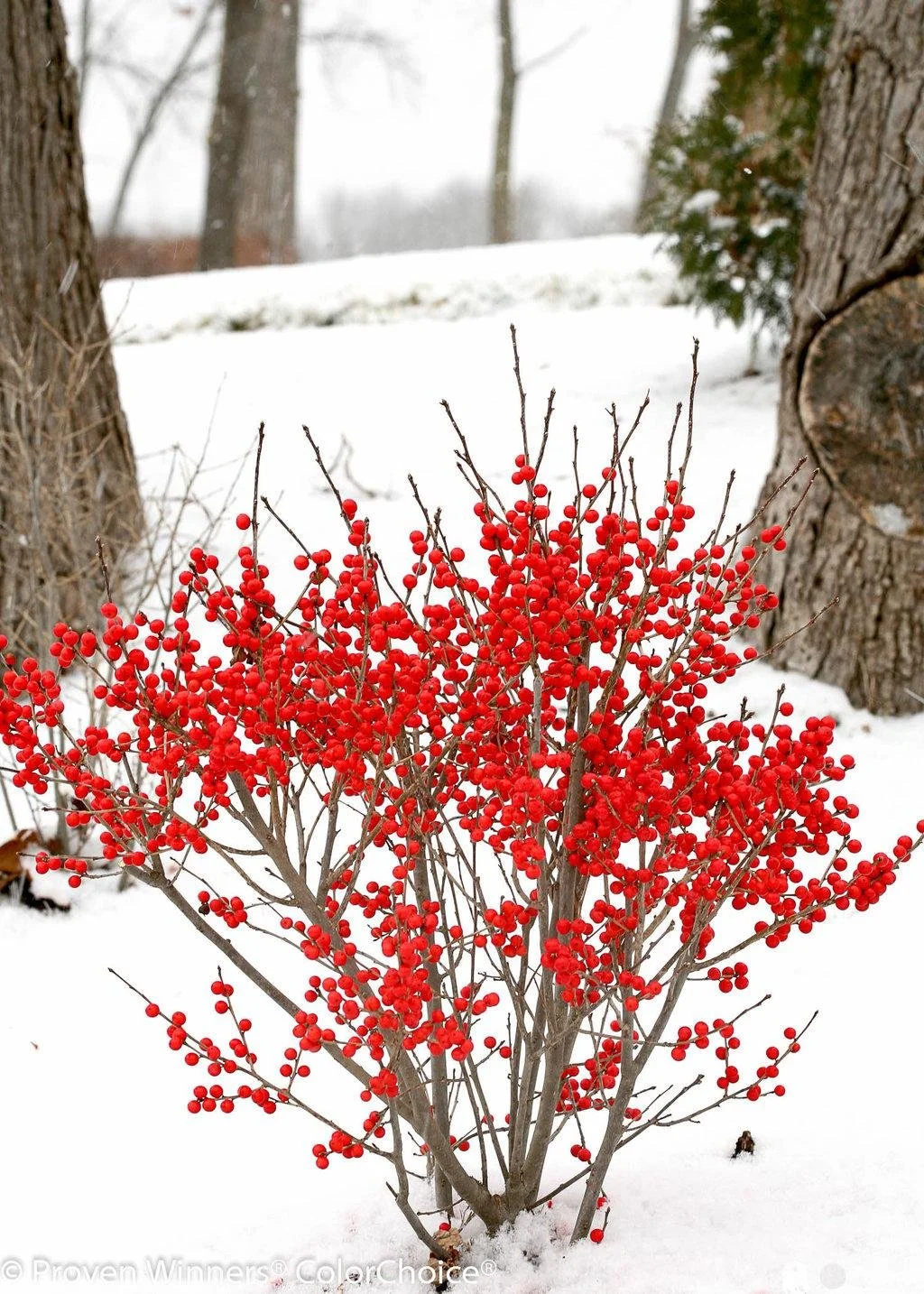
‘Berry Poppins’ is a compact winterberry holly prized for its abundant display of bright red berries in fall and winter. The berries stand out especially well after the leaves drop, providing valuable winter color and food for birds. Like other winterberries, it is a deciduous holly, so the foliage disappears in winter while the berries remain prominent. A male winterberry cultivar, such as ‘Mr. Poppins’, is needed nearby for pollination and reliable berry production. One ‘Mr. Poppins” can pollinate up to 5 nearby ‘Berry Poppins.’ It prefers moist soils and performs well in rain gardens, woodland edges, naturalized plantings, and shrub borders.
Height: 3–4 ft
Width: 3–4 ft
Flower time: May–June
Sun/Shade: Full sun to part shade
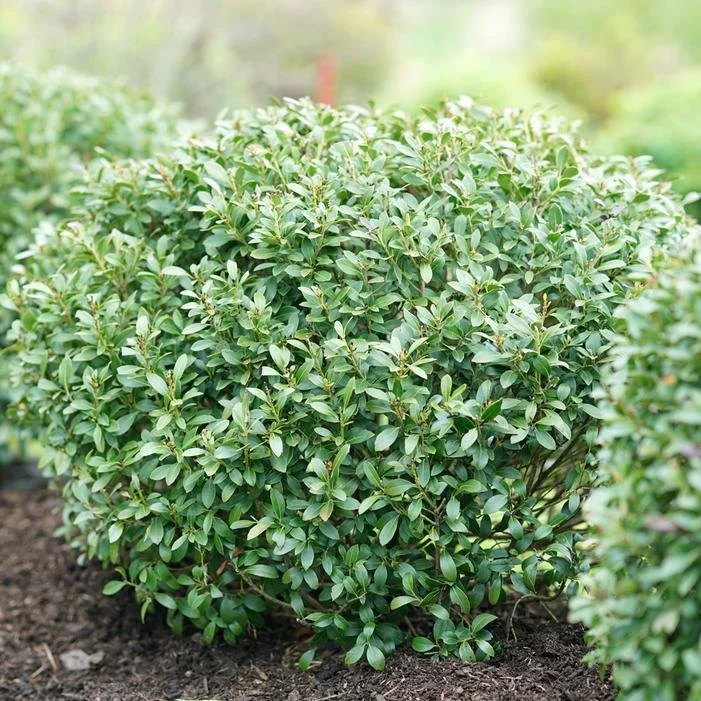
‘Squeeze Box’ is a distinctive inkberry holly selection with an unusually narrow, upright habit that makes it useful where a traditional broad shrub would take up too much space. Its evergreen foliage provides structure throughout the year, while the dense branching creates a clean vertical form in the landscape. Inkberry is a native holly and is particularly useful in naturalized plantings, foundation beds, rain gardens, and mixed shrub borders. Female plants can produce dark berries when pollinated by a compatible male. It prefers acidic soil and performs best when the root zone does not become excessively dry.
Height: Approximately 3–5 ft
Width: Approximately 1–2 ft
Flower time: May–June
Sun/Shade: Full sun to part shade
Deer resistant
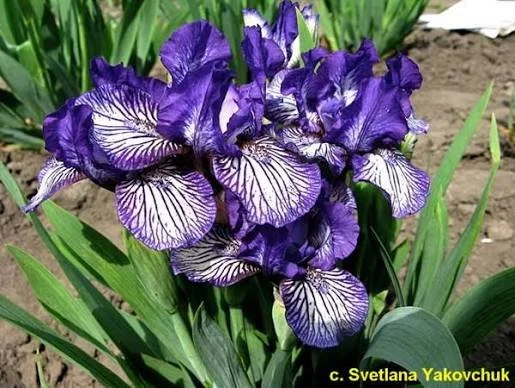
‘Dinky Circus’ is a dwarf bearded iris that brings the classic form and intricate coloring of bearded iris flowers to a much smaller plant. Its compact stature makes it especially useful along pathways, rock gardens, perennial borders, and the front of larger beds. The flowers rise above narrow sword-like foliage in spring, creating a colorful display while taking up very little space. Like most bearded irises, it prefers well-drained soil and plenty of sunlight, and it should not be planted where the rhizomes remain constantly wet.
Height: 8–12 in
Width: 12–18 in
Flower time: April–May
Sun/Shade: Full sun
Deer resistant
Rabbit resistant
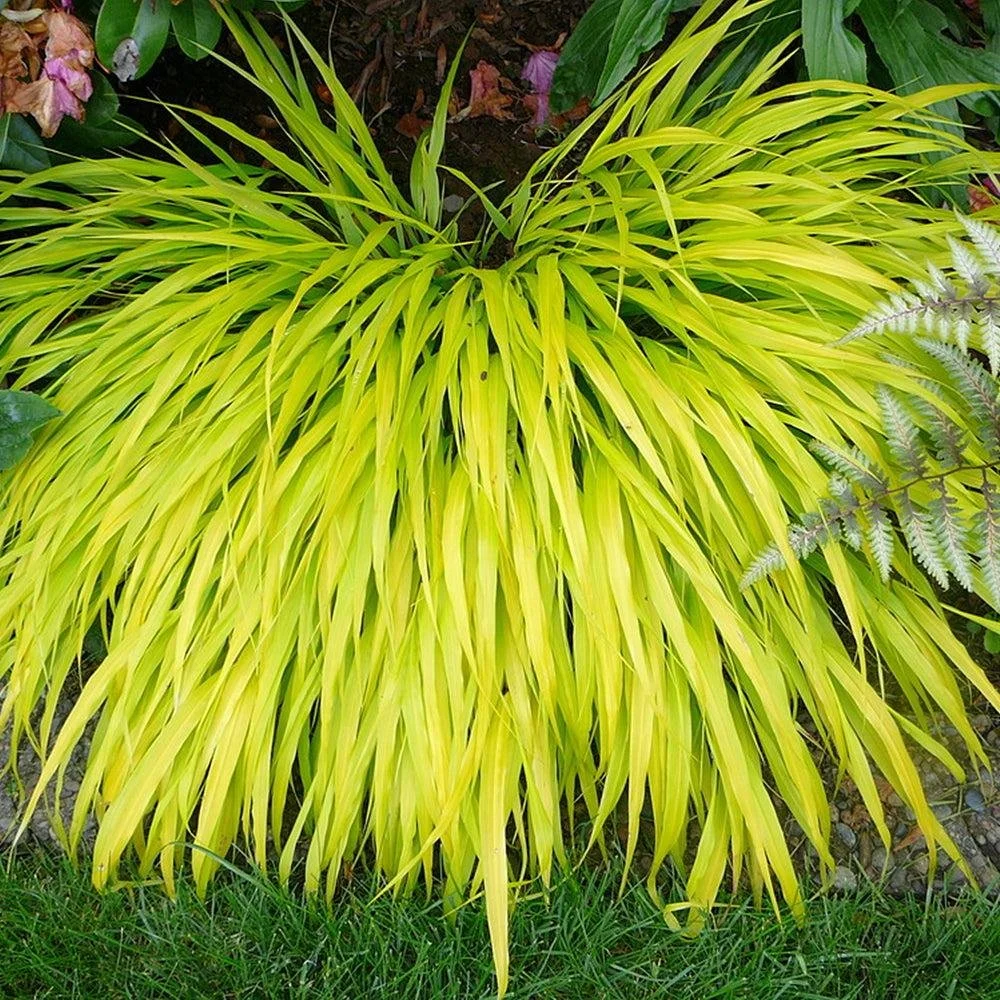
‘All Gold’ is a beautiful, relatively small ornamental grass that is especially useful for brightening shady areas. Its narrow leaves are a striking golden-yellow, although they become more chartreuse when grown in deeper shade. Unlike some Hakone grasses that form very low, floppy mounds, ‘All Gold’ has a somewhat more upright habit when young before gradually developing the graceful arching or cascading form characteristic of Japanese forest grass. Small yellow-green flower panicles appear in late summer, but the flowers are secondary—the gold foliage is the real reason to grow it. It prefers rich, consistently moist, well-drained soil and is best protected from hot afternoon sun, which can scorch the leaves. It is slow growing and therefore won't rapidly take over an area, and it is considered deer resistant.
Height: about 12–18 inches
Width: about 18–24 inches
Sun/Shade: Part shade to shade; avoid hot full sun
Deer resistant
Rabbit resistant
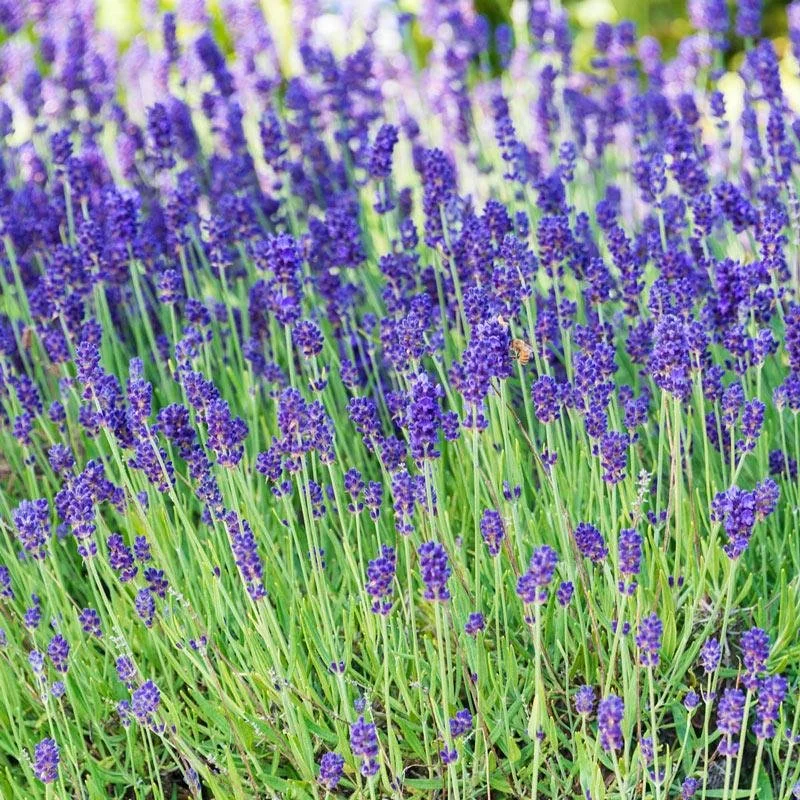
‘Phenomenal’ is a highly regarded English lavender selection prized for its fragrant foliage, abundant purple flower spikes, and ability to perform well in challenging conditions. Its silvery foliage forms a neat, rounded mound, while tall flower stems rise above the plant during summer and attract bees and butterflies. The aromatic foliage also makes it useful near walkways, patios, and areas where its fragrance can be appreciated. The most important requirement is excellent drainage—lavender dislikes sitting in wet soil, particularly during winter. A sunny, relatively dry location is ideal, and trimming after flowering helps maintain a compact, attractive shape.
Height: Approximately 2–3 ft
Width: Approximately 2–3 ft
Flower time: June–August
Sun/Shade: Full sun
Deer resistant:
Rabbit resistant
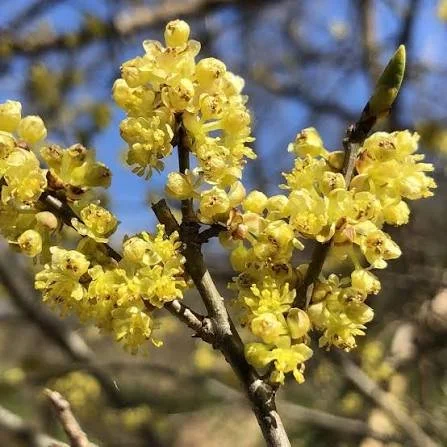
Spicebush is a native deciduous woodland shrub valued for its fragrant foliage, early spring flowers, and bright red berries. Small yellow flowers appear along the bare branches in early spring before the leaves emerge, followed by aromatic green foliage that becomes attractive yellow to golden in fall. Female plants can produce clusters of brilliant red berries when a male plant is nearby for pollination. Spicebush is an important host plant for the spicebush swallowtail butterfly and is particularly well suited to woodland gardens, naturalized areas, rain gardens, and the edges of shady properties. The leaves and twigs have a pleasant spicy fragrance when crushed.
Height: 6–12 ft
Width: 6–12 ft
Flower time: March–April
Sun/Shade: Part shade to full shade
Deer resistant
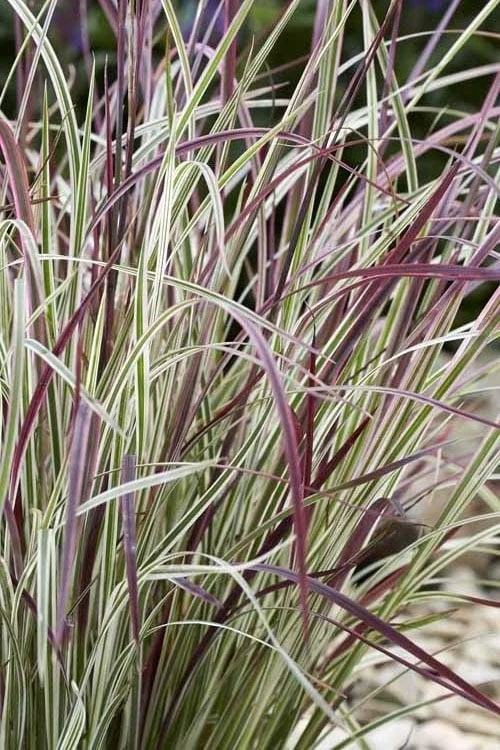
‘Chameleon’ is an unusual selection of native little bluestem that stands out because of its variegated foliage. The blades emerge green with prominent white or cream margins, giving the plant a much brighter appearance than ordinary little bluestem. As summer progresses, the foliage begins taking on pink, purple, wine-red and burgundy tones, so the plant changes substantially as the season progresses. In late summer and early fall, small silvery-white to pale-tan flower/seed plumes rise above the foliage.
Height: about 24–36 inches, depending on conditions
Width: about 18–24 inches
Flower time: Late summer into early fall
Sun/Shade: Full sun
Deer resistant
Rabbit resistant
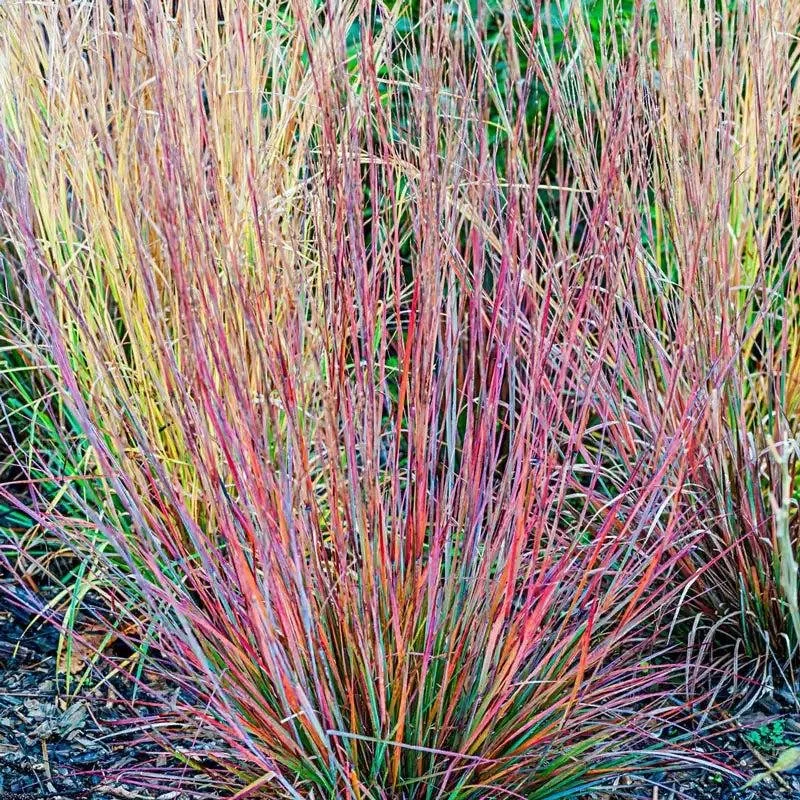
‘Standing Ovation’ is a more upright and sturdy form of native little bluestem, making it useful when you want an ornamental grass that maintains a strong vertical presence rather than flopping outward. Its summer foliage is blue-green with purplish tones near the base, then becomes increasingly dramatic in autumn, changing to orange, red and reddish-purple. In late summer, narrow silvery flower spikes rise above the foliage and remain attractive as they mature into seed heads.
Height: about 3–4 feet
Width: about 2 feet
Flower time: August–September, with seed-head interest lasting into fall and winter
Sun/Shade: Full sun to partial shade
Deer resistant
Rabbit resistant
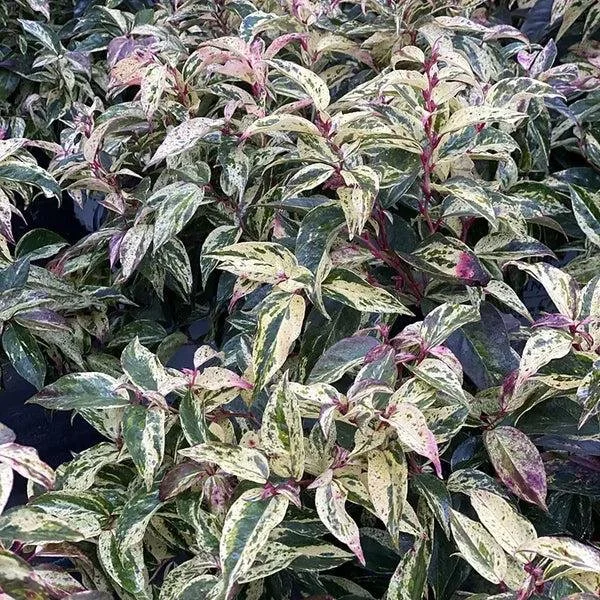
‘Paisley Pup’ is a compact evergreen shrub grown primarily for its colorful, variegated foliage rather than showy flowers. Its leaves emerge with attractive shades of pink, cream, and green before developing deeper coloration into a deep red as they mature, providing interest into the winter. Small white flowers may appear in spring, but the foliage remains the main feature. This woodland-type shrub prefers moist, acidic, well-drained soil and protection from intense afternoon sun. Its compact size makes it particularly useful in shaded borders, woodland gardens, and beneath larger shrubs.
Height: 1–2 ft
Width: 2–3 ft
Flower time: April–May
Sun/Shade: Part shade to full shade
Deer resistant
Rabbit resistant
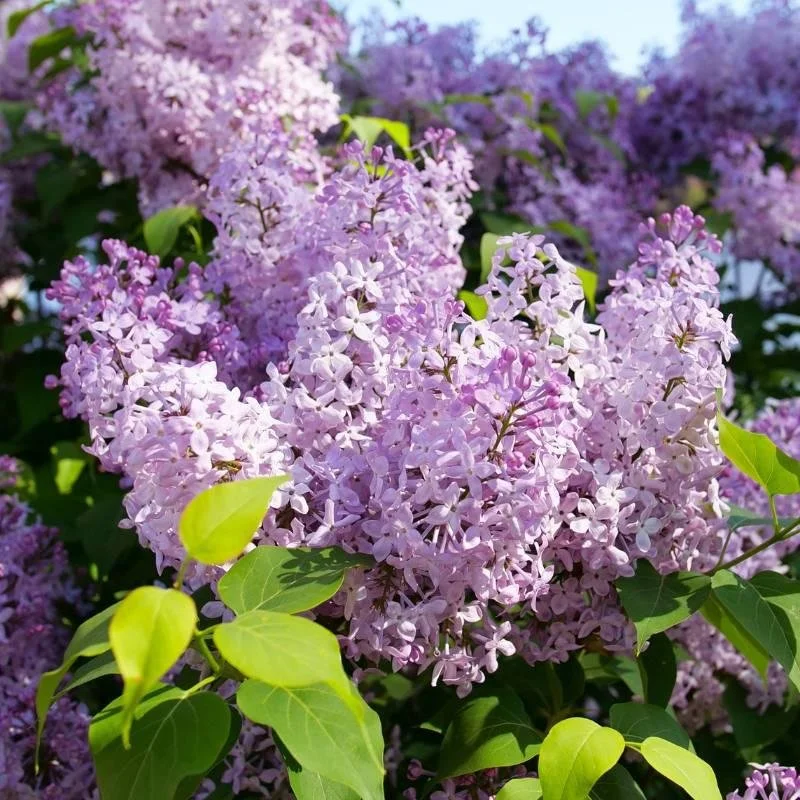
‘Scentara Pura’ is a fragrant lilac selected for its abundant clusters of pale flowers and especially strong fragrance. Blooming in spring, it can fill the surrounding garden with the classic sweet scent associated with traditional lilacs. The flowers are attractive to pollinators and also make excellent cut flowers. Its upright shrub form works well as a specimen, hedge, or foundation planting, while full sun and good air circulation help encourage the best flowering. Removing spent flower clusters after blooming can help keep the plant looking tidy.
Height: 6–8 ft
Width: 5–7 ft
Flower time: May
Sun/Shade: Full sun
Deer resistant: Yes
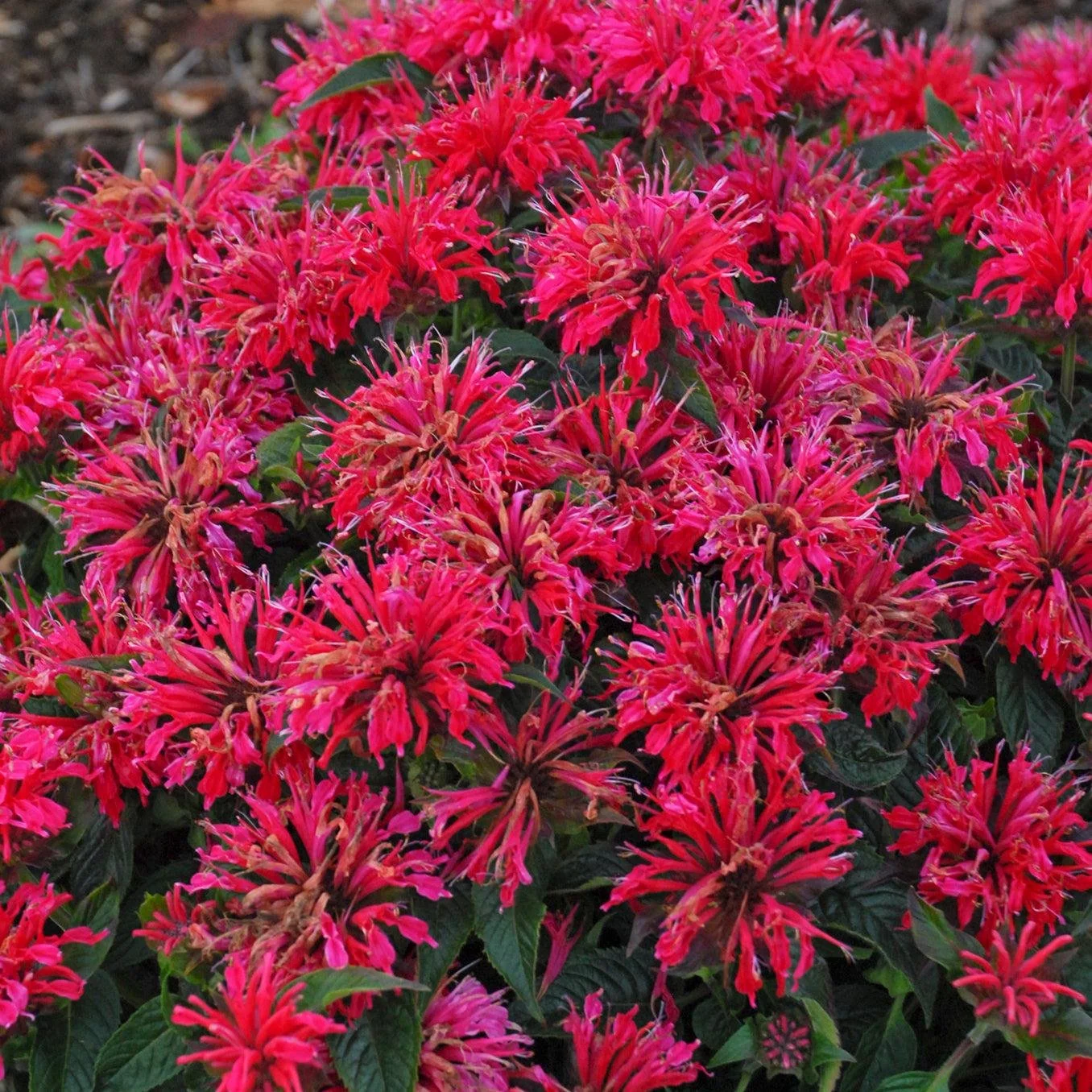
‘Sugar Buzz Cherry Pops’ is a colorful bee balm selected for its vivid cherry-pink flowers and strong pollinator appeal. The flowers are arranged in distinctive rounded heads above upright stems, creating both color and architectural interest in the perennial garden. Bees, butterflies, and hummingbirds are especially attracted to Monarda, making this a strong choice for a wildlife or pollinator planting. Planting it alongside coneflowers, rudbeckias, grasses, and other prairie-style perennials creates an especially attractive summer display.
Height: Approximately 18–24 in
Width: Approximately 18–24 in
Flower time: June–August
Sun/Shade: Full sun to part shade
Deer resistant
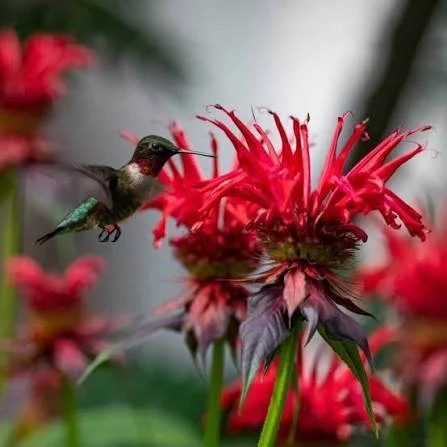
‘Garden View Scarlet’ is a striking scarlet-red bee balm that brings a strong vertical splash of color to summer perennial gardens. Its shaggy, tubular flowers are especially attractive to bees, butterflies, and hummingbirds, making it an excellent choice for pollinator gardens. The aromatic foliage has the characteristic minty fragrance of Monarda, while the upright clumping habit works well in borders and naturalistic plantings. It performs best in full sun with good air circulation and consistently moist soil.
Height: 3–4 ft
Width: 2–3 ft
Flower time: June–August
Sun/Shade: Full sun to part shade
Deer resistant
Rabbit resistant
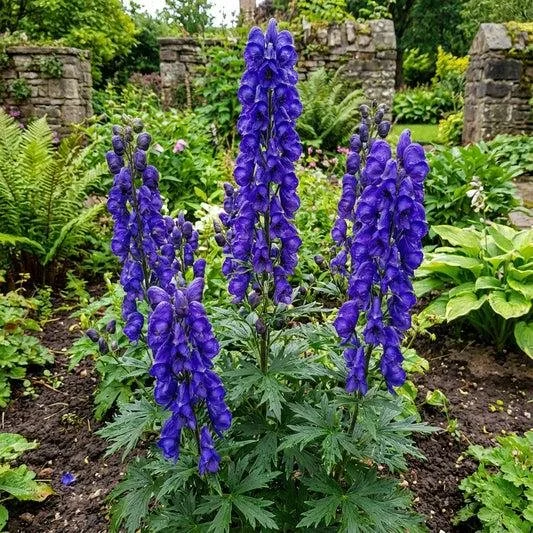
Monkshood is an elegant perennial grown for its tall spikes of hood-shaped flowers, usually in rich shades of blue or violet. Its upright form makes it particularly useful toward the back of a perennial border, where the vertical flower stems can rise above shorter plants. Monkshood is especially attractive in cottage gardens and partially shaded perennial beds where its cool-colored flowers provide contrast with surrounding foliage. It generally appreciates rich, evenly moist soil and does not perform well when allowed to dry out severely. All parts of monkshood are highly poisonous if ingested, so it should be planted and handled with appropriate care, particularly around children and pets.
Height: Approximately 3–5 ft
Width: Approximately 1–2 ft
Flower time: Late summer–fall
Sun/Shade: Part shade to full sun with adequate moisture
Deer resistant
Rabbit resistant
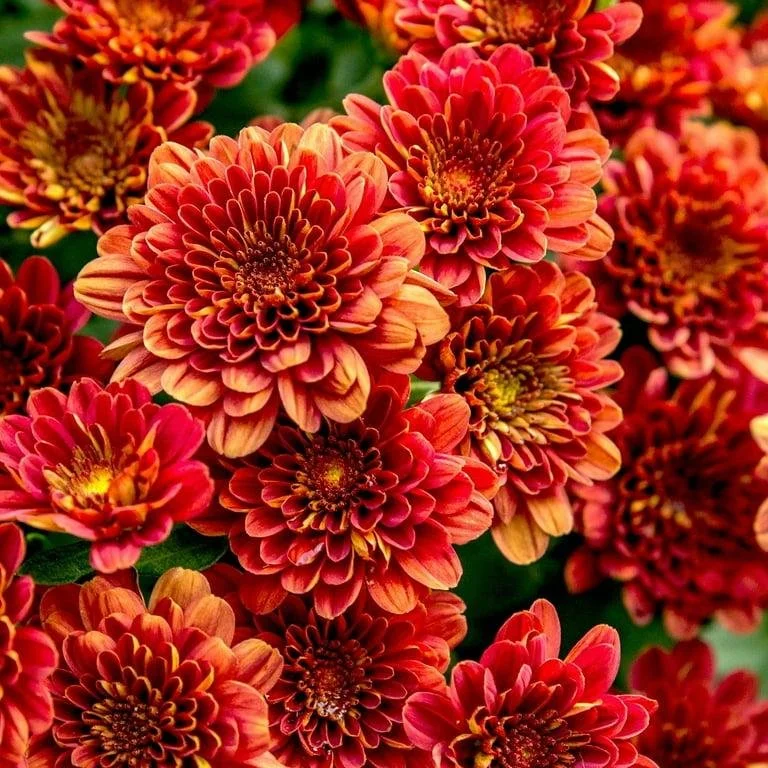
‘Brandywine Sunset’ is a fall-blooming mum selected for its rich, warm sunset-colored flowers. It is especially useful for bringing strong color into the garden when summer perennials are beginning to decline. The numerous blooms can create an impressive mound of color when the plant is grown in full sun with adequate moisture and good fertility. Mums work particularly well in mixed perennial borders, containers, cottage gardens, and fall displays. For a fuller plant, regular pinching earlier in the season can encourage additional branching and flower stems; once flower buds begin forming, allow the plant to grow without further pinching.
Height: Approximately 18–24 in
Width: Approximately 18–24 in
Flower time: Late summer–fall
Sun/Shade: Full sun
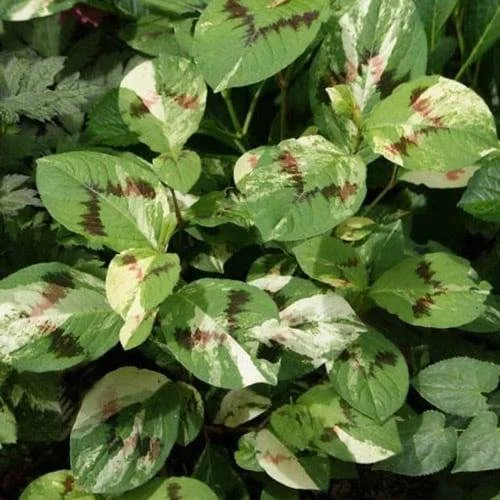
Painter's Palette Fleeceflower (Persicaria virginiana 'Painter's Palette') is a popular herbaceous perennial grown for its vibrant, multi-colored variegated leaves and airy spikes of tiny red flowers. Leaves display splashes of green, cream, yellow, and pink, accented with a distinct burgundy or chocolate-brown V-shaped marking.
Size: Grows 18 to 30 inches tall and spreads about 18 to 24 inches wide.
Prefers partial shade or dappled light, though it can tolerate more sun if the soil stays consistently moist.
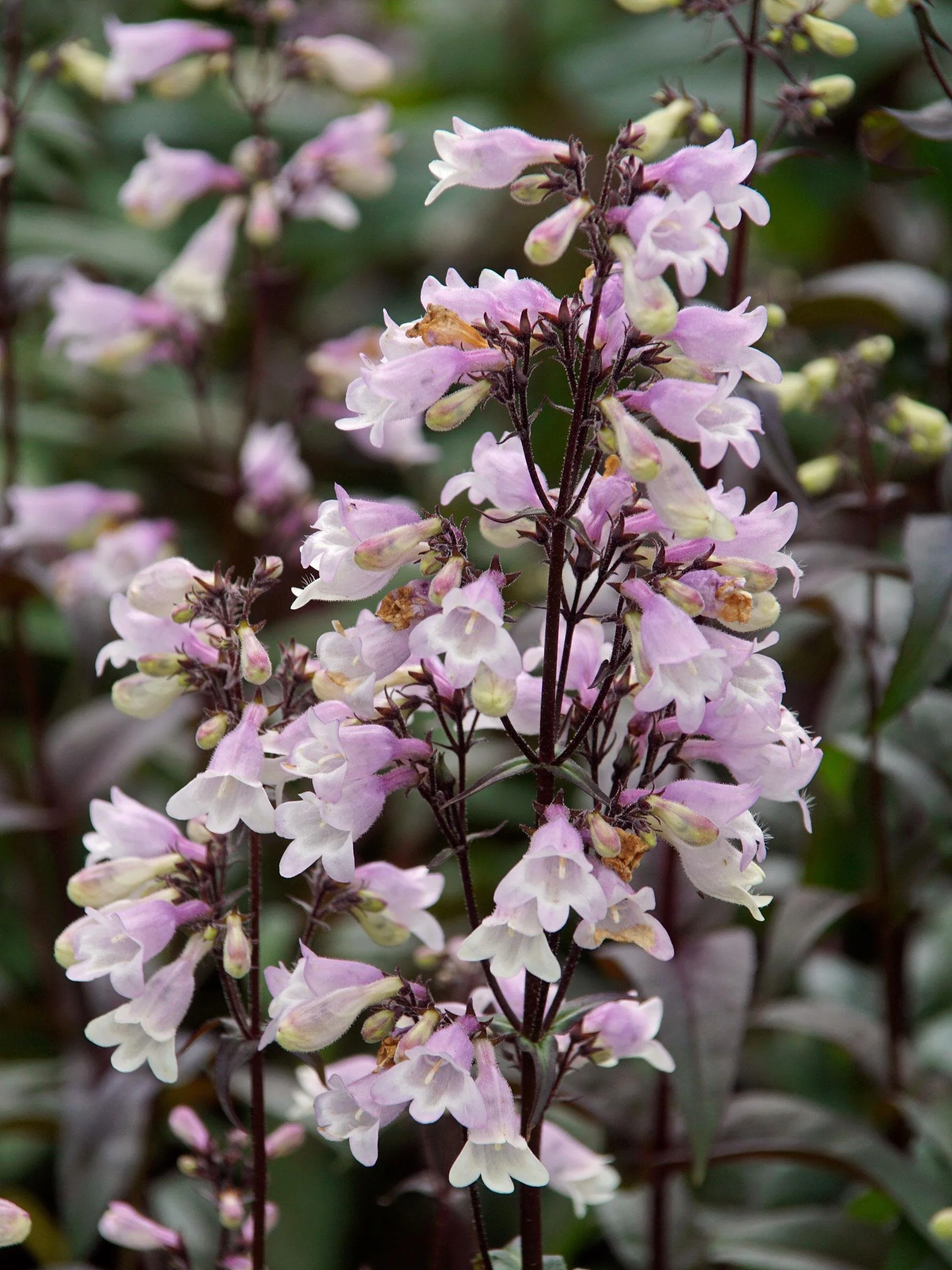
‘Blackbeard’ is a dramatic beardtongue valued for its dark foliage and contrasting flowers. The deep-colored leaves and stems give the plant an unusually strong presence even when it isn't blooming, while its tubular flowers provide a valuable nectar source for hummingbirds and other pollinators. Its upright form works particularly well in perennial borders, prairie-style plantings, and mixed beds where the dark foliage can contrast with plants having lighter green or silvery leaves. Like many Penstemon selections, it prefers good drainage and performs particularly well in sunny locations. Avoid consistently wet soil, especially during winter.
Height: Approximately 2–3 ft
Width: Approximately 18–24 in
Flower time: Late spring–summer
Sun/Shade: Full sun
Deer resistant
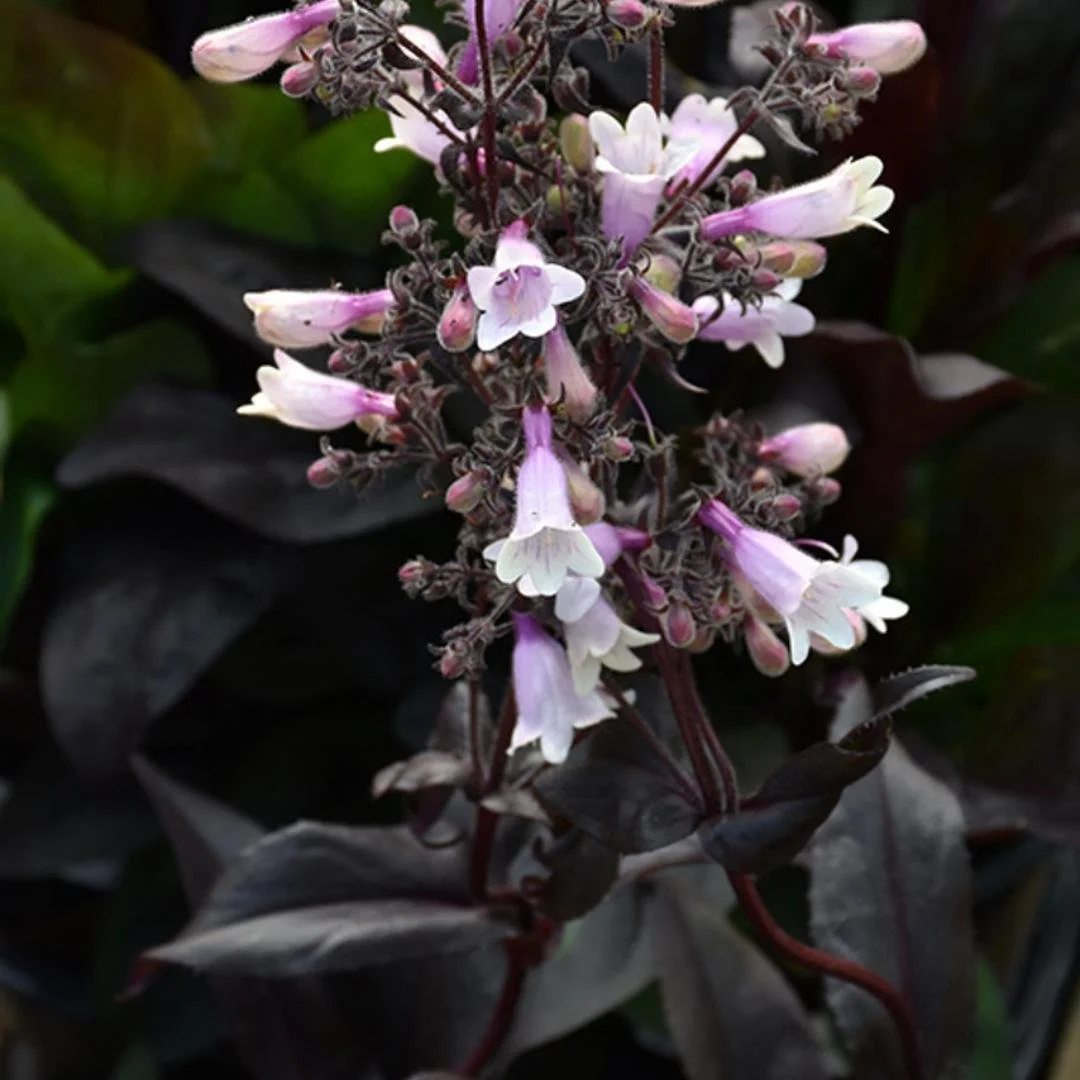
‘Dark Towers’ is an attractive beardtongue combining tall spikes of pinkish flowers with dark burgundy foliage. The tubular blooms are particularly appealing to hummingbirds and other pollinators, while the dark foliage provides contrast with neighboring green or silver-leaved plants even when the plant is not flowering. Its upright habit makes it useful toward the middle or back of perennial borders, and it prefers a sunny location with well-drained soil. Once established, it has good tolerance for relatively dry conditions and provides a long season of ornamental interest.
Height: 2–3 ft
Width: 1.5–2 ft
Flower time: June–July
Sun/Shade: Full sun
Deer resistant
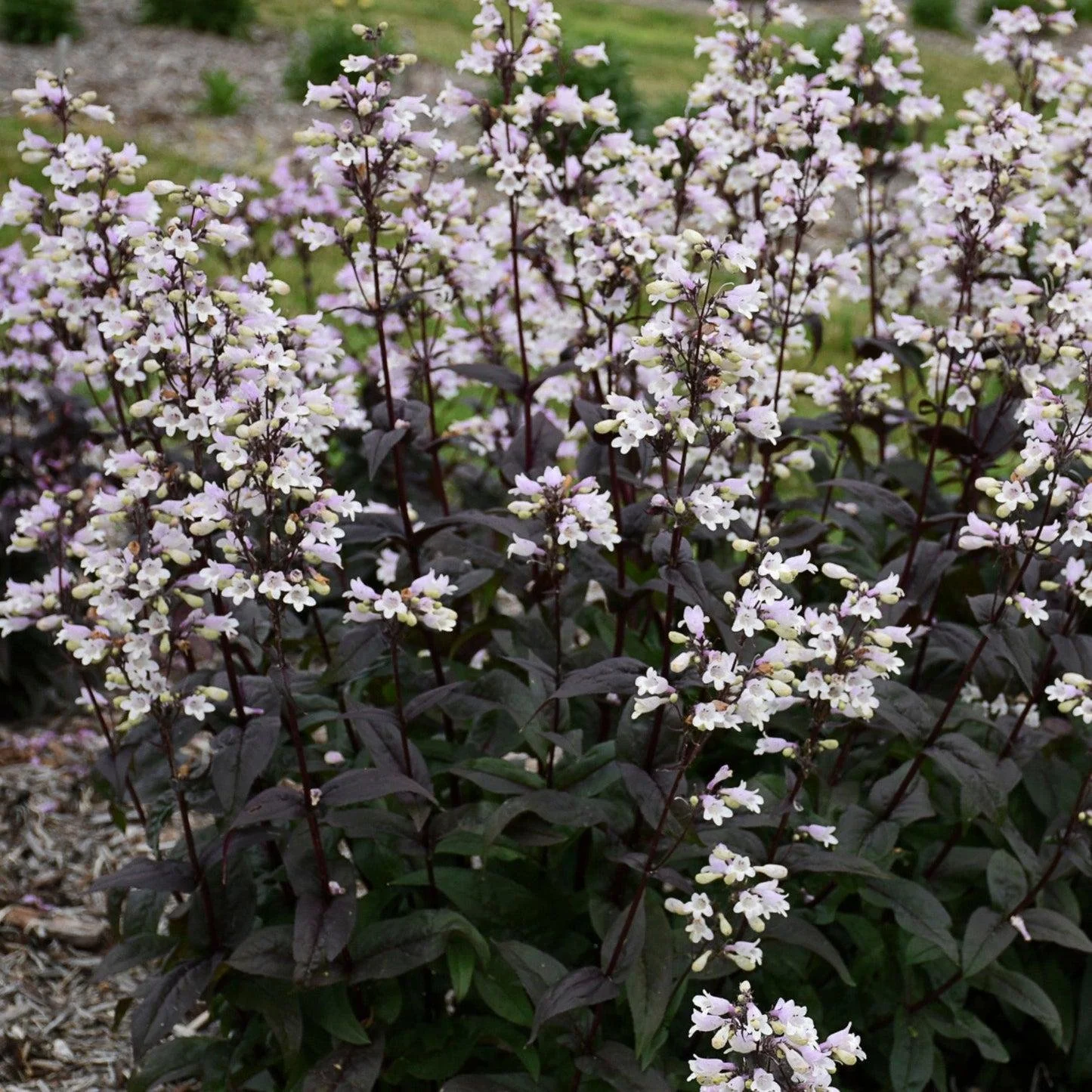
‘Onyx & Pearls’ is a distinctive penstemon grown for the combination of dark foliage and elegant pale flowers. The tubular blooms rise on upright stems above the foliage and provide a strong contrast against the darker leaves. Like other beardtongues, the flowers are well suited to pollinator gardens and are particularly attractive to hummingbirds. Its upright form fits naturally into perennial borders, cottage gardens, and sunny mixed plantings. A sunny position encourages the strongest flowering and foliage coloration.
Height: 2–3 ft
Width: 1.5–2 ft
Flower time: June–July
Sun/Shade: Full sun
Deer resistant
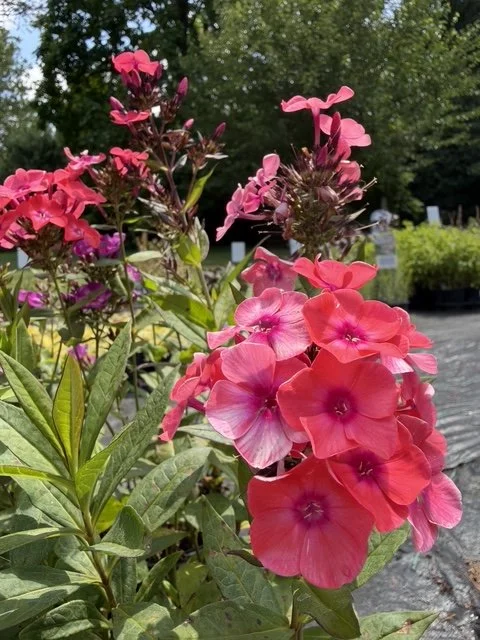
‘Sunset Coral’ is a tall garden phlox selected for its warm coral-colored flowers and strong summer presence. The large flower clusters are held on upright stems, making the plant particularly effective in perennial borders and cottage-style gardens. Its flowers are attractive to butterflies and other pollinators, and the blooms can also be used as cut flowers.
Height: 2–3 ft
Width: 1.5–2 ft
Flower time: July–September
Sun/Shade: Full sun to part shade
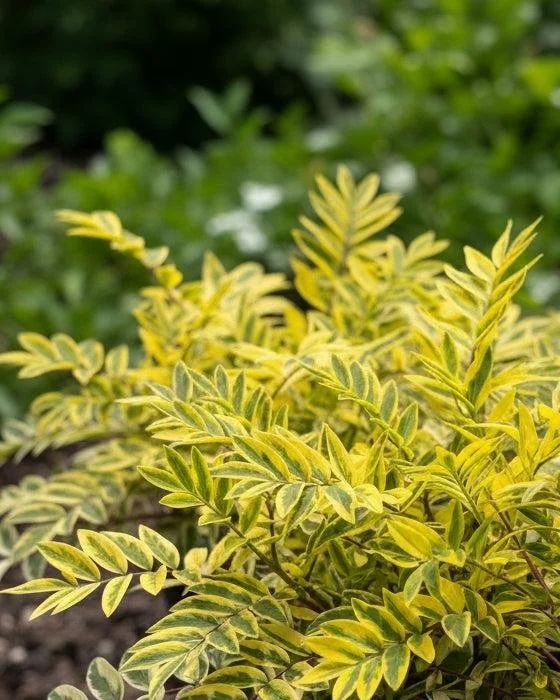
‘Golden Feathers’ is a distinctive Jacob’s Ladder valued for its bright, finely divided golden foliage. The foliage provides color and texture even when the plant is not flowering, making it especially useful for illuminating partially shaded garden areas. Clusters of small flowers rise above the foliage in late spring or early summer, adding another layer of interest. It works well in woodland gardens, shaded perennial borders, and mixed plantings where its golden leaves can contrast with darker green foliage.
Height: 18–24 in
Width: 18–24 in
Flower time: May–June
Sun/Shade: Part shade to shade
Deer resistant
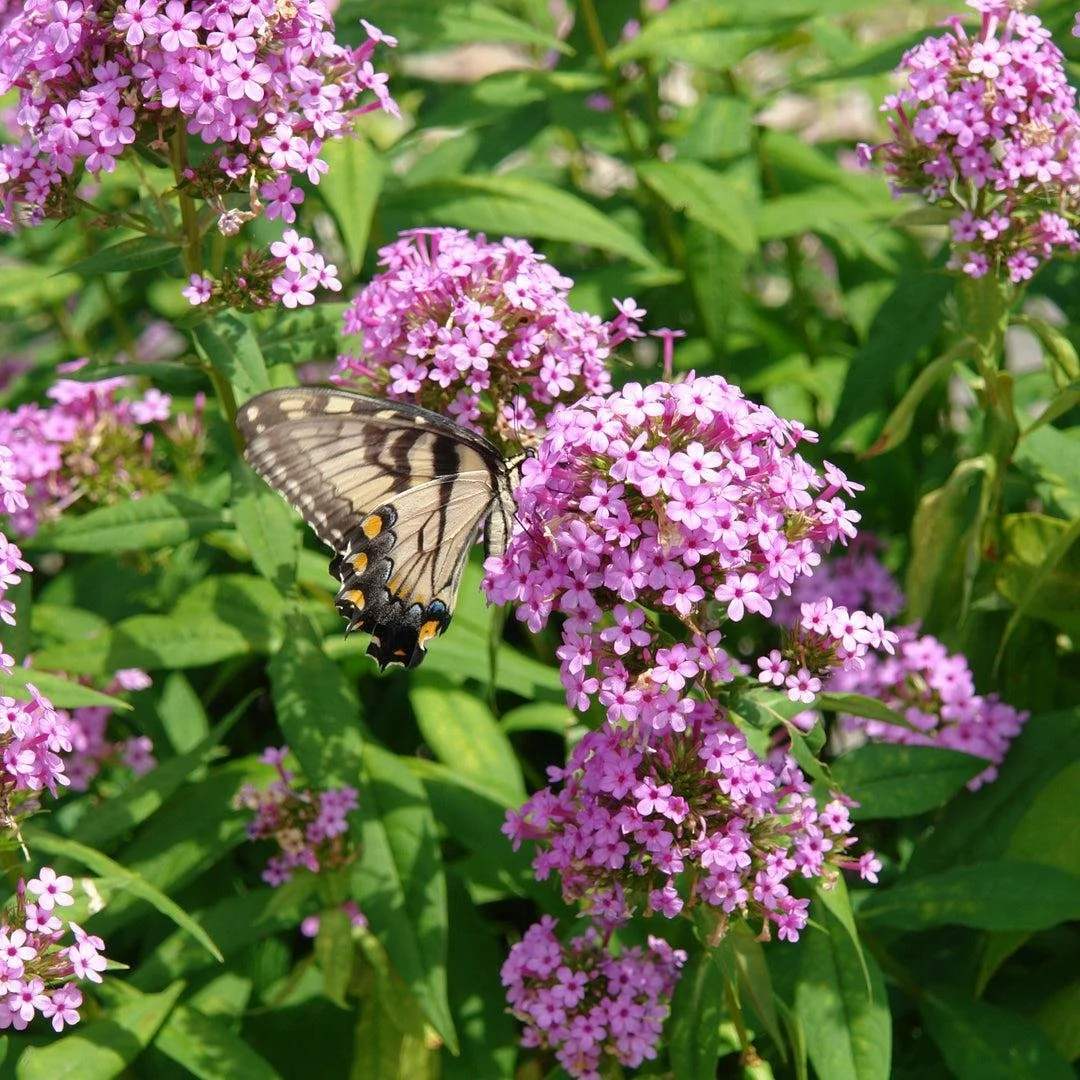
‘Jeanna’ is a tall garden phlox celebrated for its abundant clusters of small lavender-purple flowers and exceptional appeal to butterflies. It creates a substantial upright clump and produces masses of flower heads during summer, making it an excellent choice for the middle or back of a perennial border. The flowers are especially effective when planted in groups, and their fragrance adds another dimension to the summer garden. Good air circulation and adequate spacing are helpful with garden phlox, particularly in humid conditions. Pairing ‘Jeanna’ with coneflowers, rudbeckias, ornamental grasses, and other summer perennials creates a classic cottage or pollinator-garden effect.
Height: Approximately 4–5 ft
Width: Approximately 2–3 ft
Flower time: July–September
Sun/Shade: Full sun to part shade
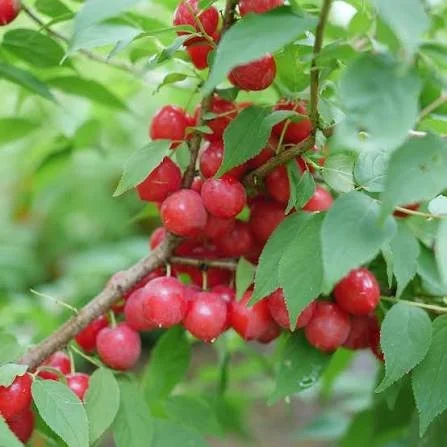
The Easy As Pie Bush Cherry is a compact, low-maintenance deciduous shrub that produces an abundance of juicy tart cherries on a manageable 3-to-4.5-foot plant. Easy As Pie bush cherry offers both ornamental beauty and delicious fruit. Its showy white spring flowers are followed by showy tart berries. Perfect for baking, preserves, or eating fresh. Its dwarf size and low-maintenance nature make it easy to grow in any garden.
Height: 3-4ft
Width: 3-4ft
Flower time: Spring
Sun/Shade: Full sun
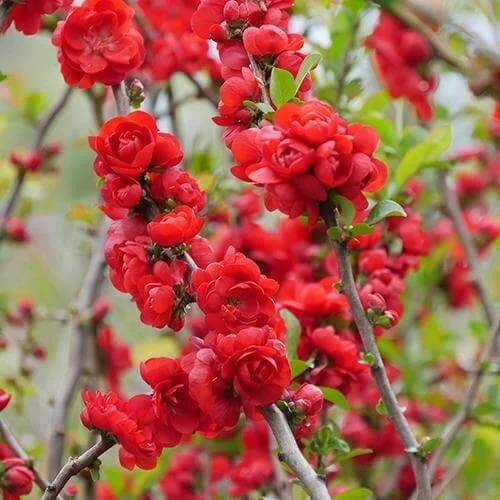
‘Double Take Scarlet’ is a flowering quince grown primarily for its spectacular double scarlet-red flowers in spring. As one of the earliest blooming shrubs, the flowers appear on the branches before or as the foliage emerges, creating a particularly bold early-season display. Unlike traditional flowering quince, the Double Take series is known for thornless stems, making it easier to place along walkways and in areas where people pass close to the plant. Its compact shrub form works well in borders, foundation plantings, and wildlife-friendly landscapes. The flowers are also useful for cutting and bringing indoors for spring arrangements.
Height: 4–5 ft
Width: 4–5 ft
Flower time: April–May
Sun/Shade: Full sun to part shade
Deer resistant
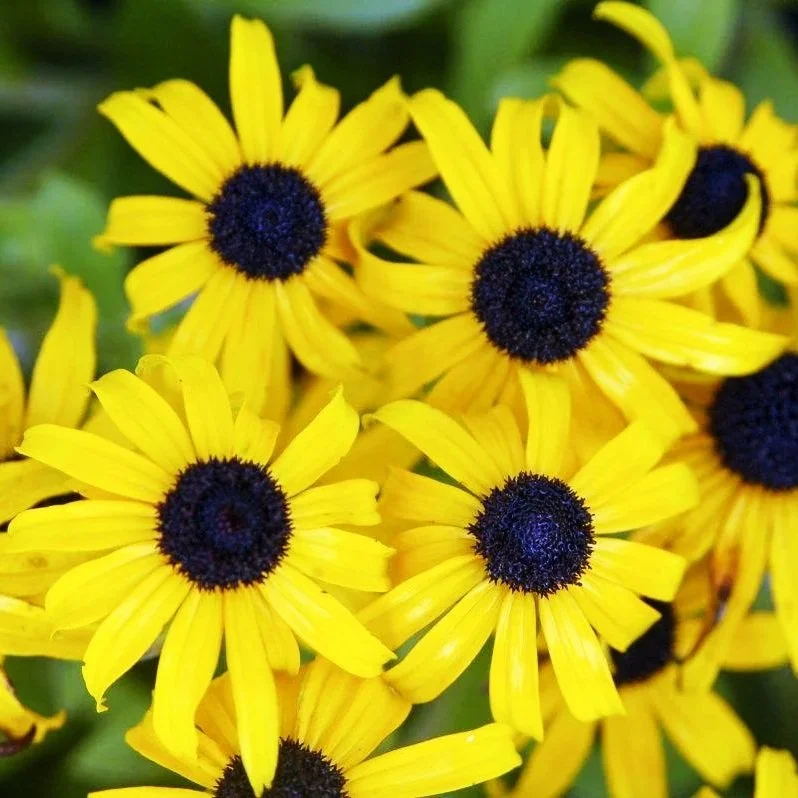
‘American Gold Rush’ is a compact, floriferous Black-Eyed Susan with masses of golden-yellow flowers surrounding dark brown centers. It creates a long-lasting summer-to-fall display and is especially valuable in pollinator gardens, where the flowers attract bees and butterflies. The narrow foliage forms a dense clump beneath the flowers, while the sturdy stems hold the blooms well above the plant. It is a tough, adaptable perennial that performs particularly well in sunny locations and can tolerate periods of dry soil once established.
Height: 2–2.5 ft
Width: 2–2.5 ft
Flower time: July–September
Sun/Shade: Full sun
Deer resistant
Rabbit resistant
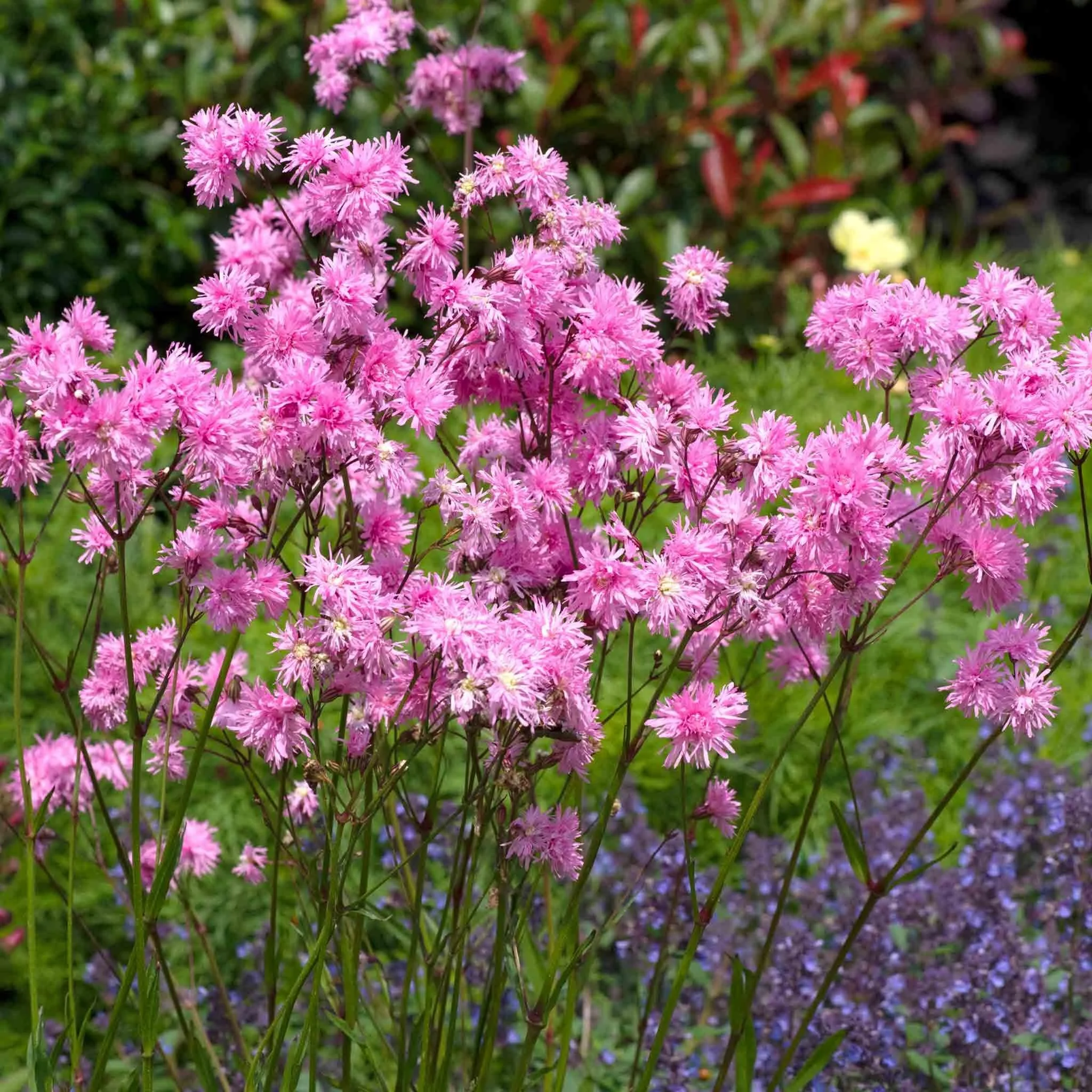
‘Petite Jenny’ is a compact form of Ragged Robin with delicate, deeply divided pink flowers held above low, leafy growth. Its finely cut petals give the flowers a distinctive, airy appearance, making it an attractive addition to perennial borders and naturalistic plantings. The plant provides a soft splash of color during the summer and works particularly well alongside grasses and other fine-textured perennials.
Height: Reaches 12 to 16 inches tall.
Spread: Grows about 12 to 18 inches wide.
Bloom Period: Flowers from late spring through autumn, especially when deadheaded.
Sun/Shade: Full Sun
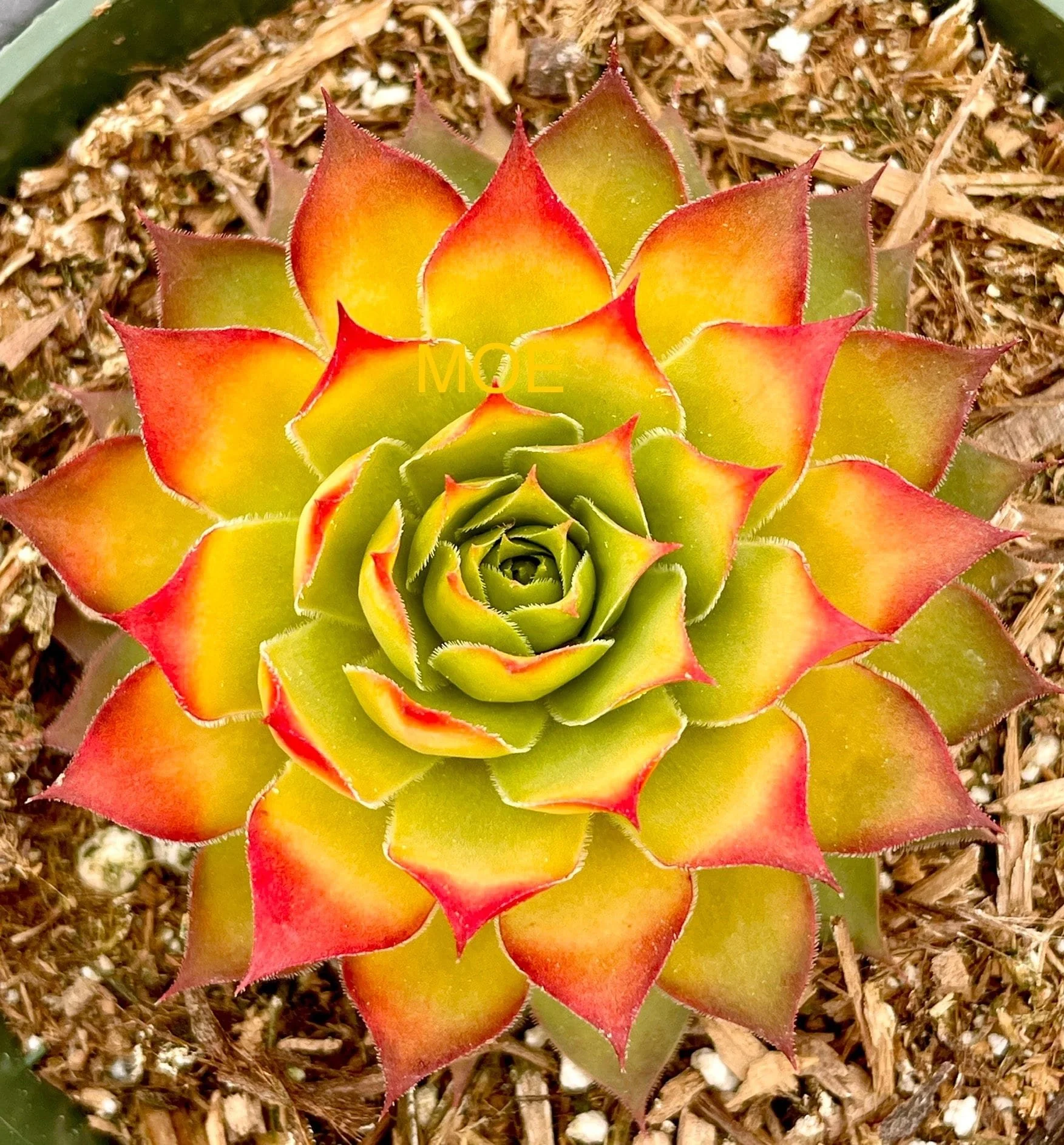
Sempervivum ‘Gold Rush’ (Hens and Chicks) is a mat-forming succulent perennial forming attractive, evergreen rosettes, 5-6 in. wide (12-15 cm), of fleshy, ruby-red leaves with bright gold tips. It is similar to our popular Sempervivum ‘Gold Nugget’ but the rosette is larger, more open and the leaves are thinner. The mother rosette (Hen) spreads in all directions by horizontal stems to form offsets (chicks). Each offset will develop roots of its own and become independent of the parent plant as he connecting stolon withers. The offsets usually make up for the losses and fill the gaps left by the dead rosettes. Cute, but tough, this Sempervivum is tolerant of drought. Low water needs. Allow soil to dry out completely between each watering. Use well draining soil.
Size: Grows 2–3 inches tall and spreads about 4–6 inches wide.
Full Sun
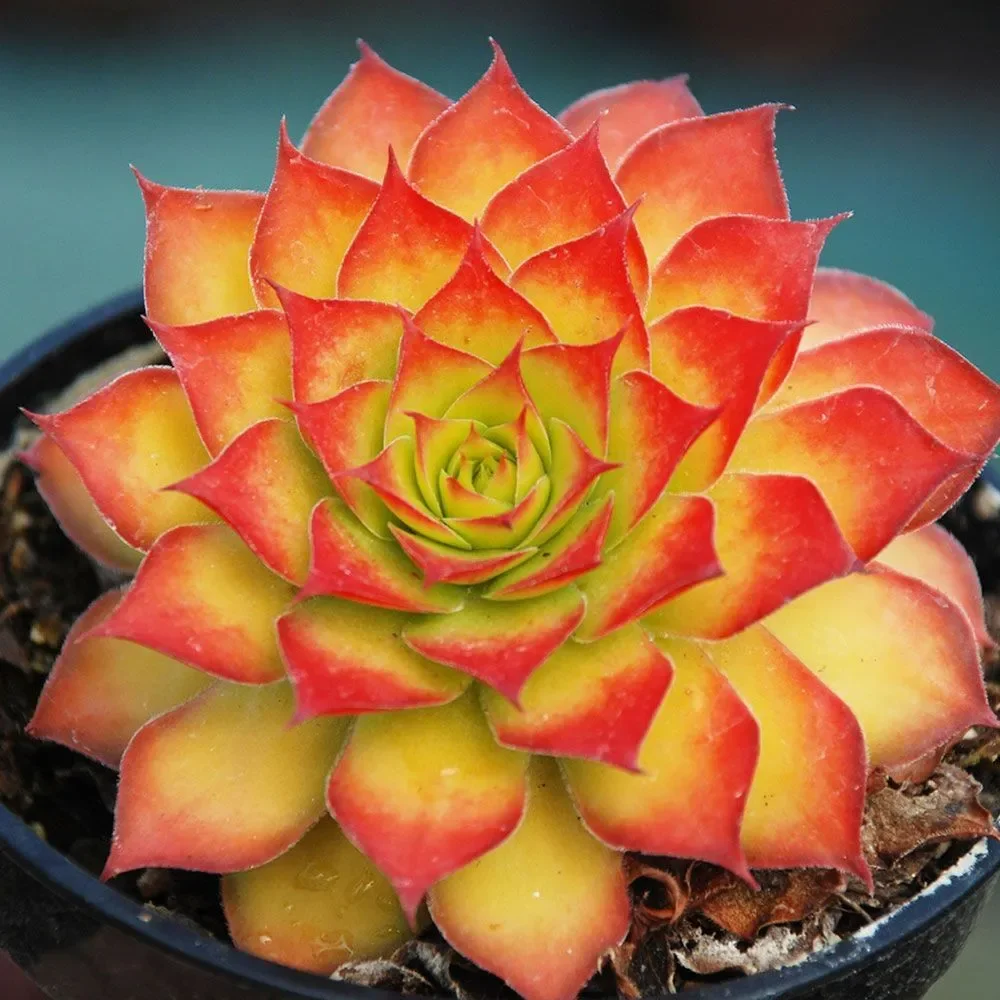
Gold Nugget, A Chick Charms original cultivar with unbelievable colors that constantly shift with the seasons. Only 3 inches tall at maturity extending to 8 inches tall with the flowers, with a spread of 5 inches. When grown in masses or used as a bedding plant. Its foliage tends to remain low and dense right to the ground. It grows at a medium rate. As an herbaceous perennial, this plant will usually die back to the crown each winter, and will regrow from the base each spring. Be careful not to disturb the crown in late winter when it may not be readily seen!\
Height: 3in
Spread: 5in
Full Sun
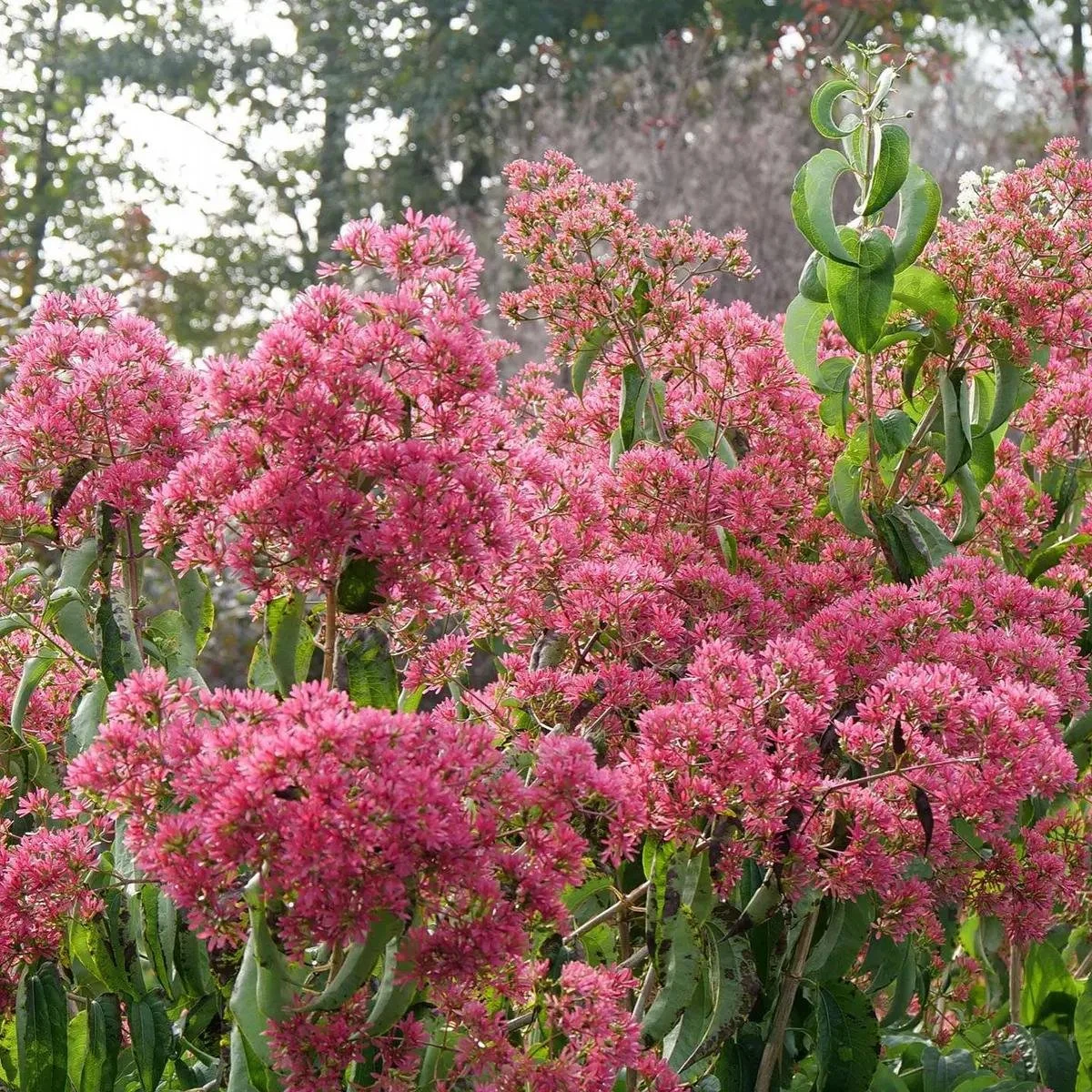
‘Temple of Bloom’ is a distinctive seven-son flower selected for its late-season flowering and attractive ornamental structure. Clusters of fragrant white flowers appear when many other woody plants have finished blooming, providing valuable late-summer food for bees and other pollinators. After flowering, the calyces develop pink to reddish tones that extend the display into fall. The plant can develop into a substantial multi-stemmed shrub or small tree, with attractive exfoliating bark providing additional winter interest.
Height: 15–20 ft
Width: 8–12 ft
Flower time: August–September
Sun/Shade: Full sun to part shade
Deer resistant
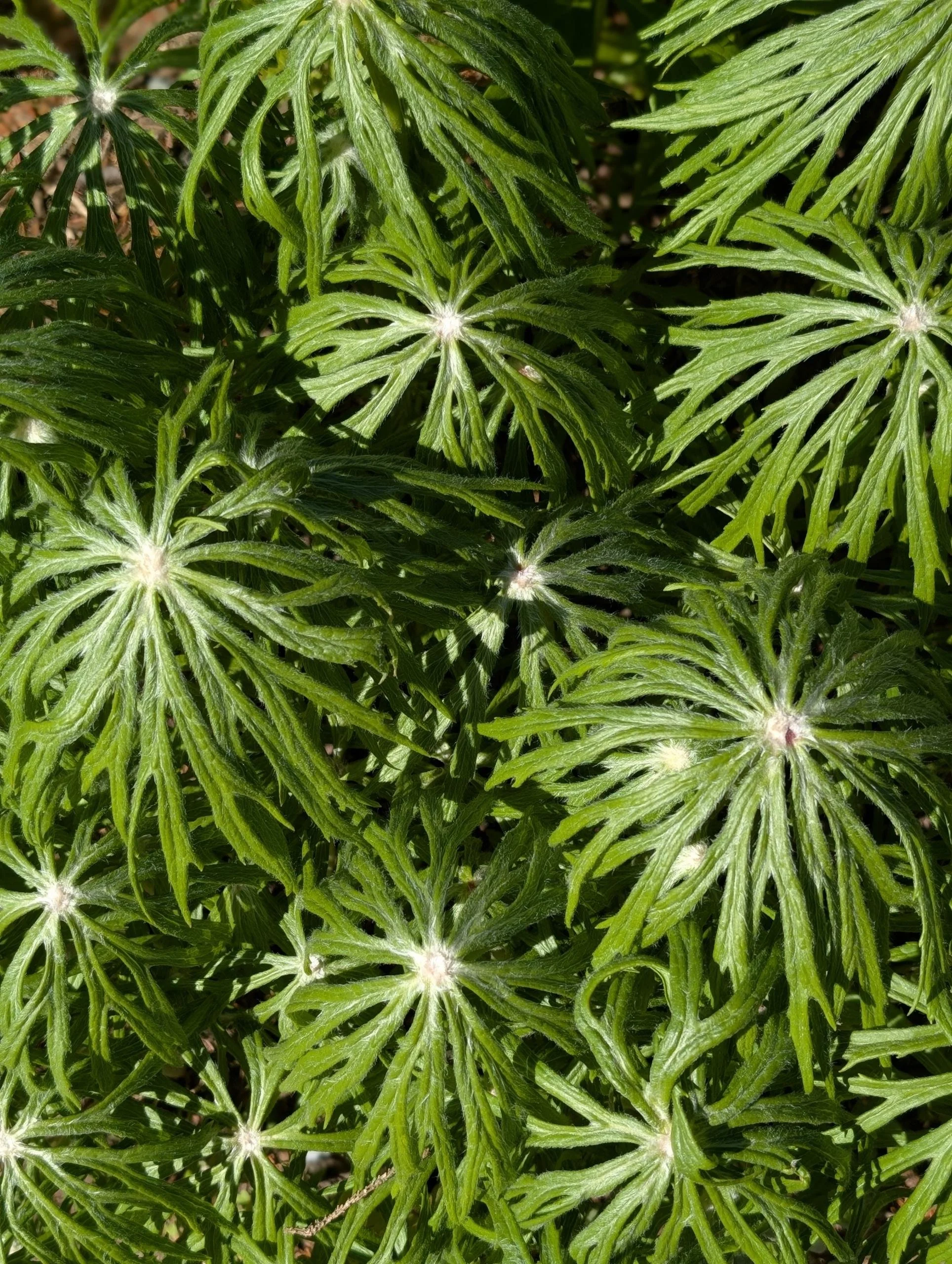
The shredded umbrella plant is an herbaceous perennial that is grown for its attractive green foliage. In the spring, the leaves emerge on stiff stems like an unopened umbrella and are covered with silvery-white wooly hairs. As the leaves grow, they slowly open like a shredded umbrella and measure 10 inches in diameter. Small pinkish-white flowers appear in corymbs atop the brownish-purple stem from June to July. The plant may be difficult to obtain commercially, but its unique foliage will add much interest to a shade garden. This plant is a member of the Asteraceae or daisy family.
Blooms: Late Spring/Early Summer
Size: Grows 18 to 24 inches tall and spreads slowly via creeping rhizomes to form tidy colonies.
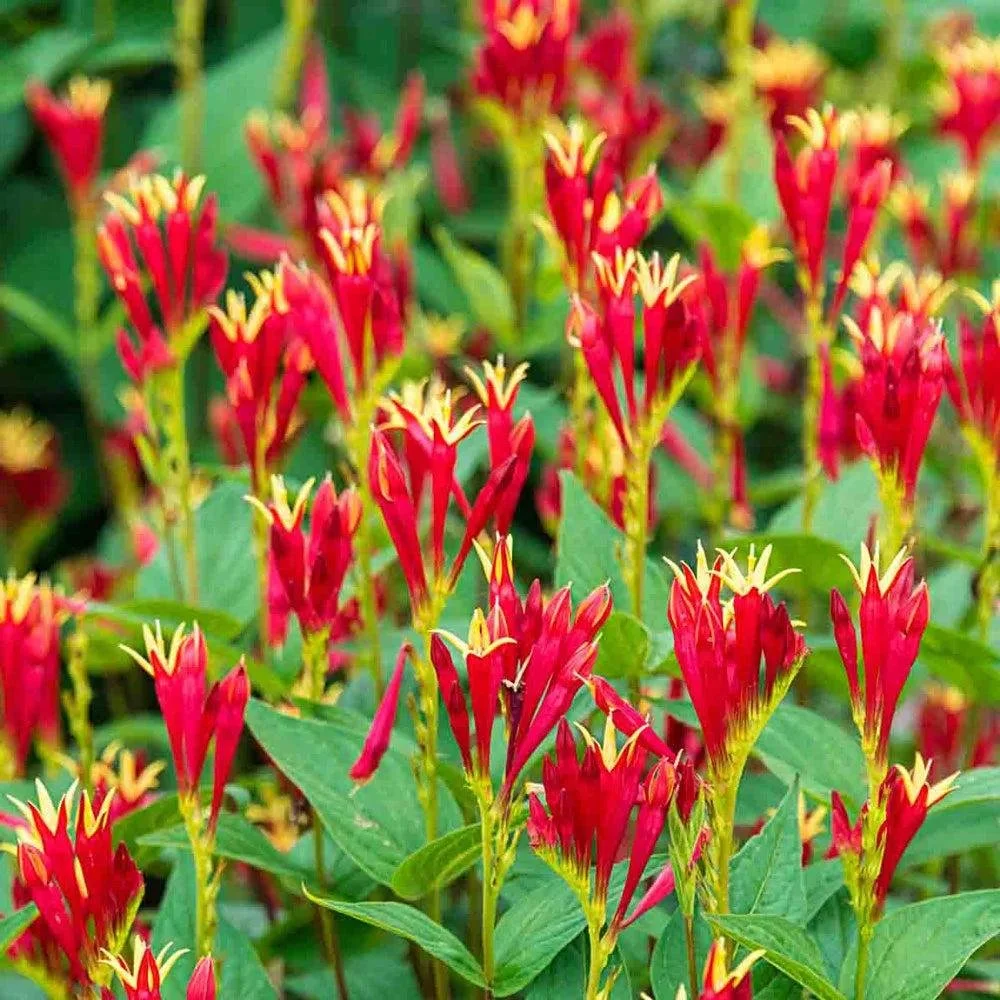
Spigelia ‘Little Redhead’, commonly known as Indian pink, is a striking native perennial grown for its unusual tubular flowers. The blooms have vivid red exteriors that open to reveal contrasting yellow interiors, creating an especially attractive display for hummingbirds. Its upright flower stems emerge from a neat clump of foliage, making it an excellent choice for woodland edges, native gardens, and partially shaded perennial borders. This is an especially good plant for gardeners who want something unusual while also supporting native wildlife. The perfect plant.
Height: Approximately 18–24 in
Width: Approximately 18–24 in
Flower time: June–July
Sun/Shade: Sun- partial shade
Deer resistant
Rabbit resistant
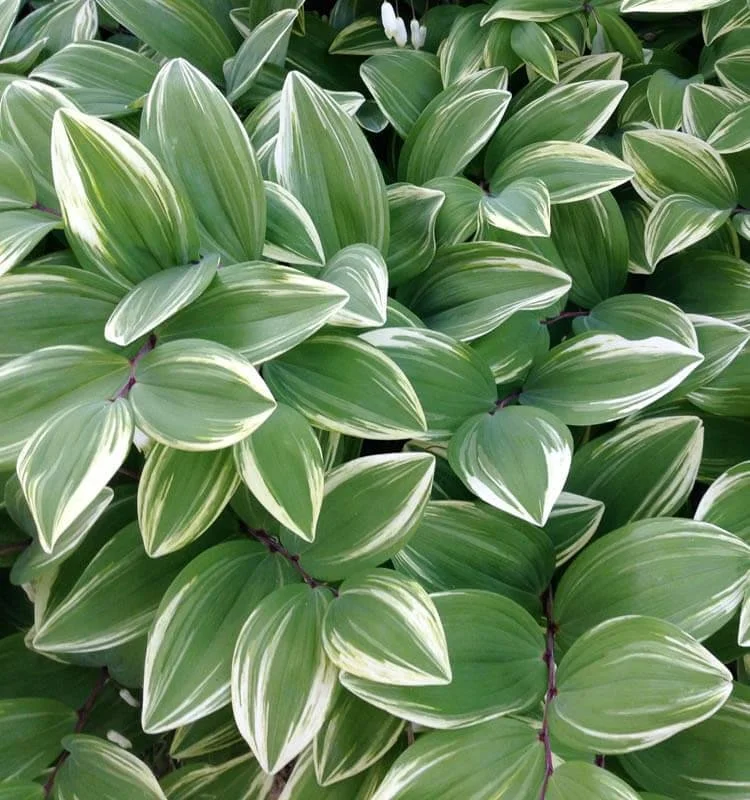
Variegated Solomon’s Seal is an elegant woodland perennial prized for its arching stems and attractive cream-and-green variegated foliage. In spring, small bell-shaped flowers hang beneath the stems, adding a subtle but charming floral display beneath trees and shrubs. The plant gradually forms colonies, making it especially effective when used as a naturalized groundcover in a woodland setting. Its foliage remains attractive well after flowering and provides a beautiful contrast with darker green and other shade plants. It prefers rich, organic soil with consistent moisture and is particularly well suited to filtered light rather than intense direct sun.
Height: Approximately 18–24 in
Width: Approximately 2–3 ft
Flower time: April–May
Sun/Shade: Part shade to full shade
Deer resistant
Rabbit resistant
Dwarf Solomon’s Seal is a charming low-growing woodland perennial that provides the graceful character of traditional Solomon’s Seal in a much smaller package. Instead of producing the tall, arching stems associated with larger Solomon’s Seal varieties, it spreads along the ground with shorter stems and attractive foliage. Small, bell-shaped white flowers appear beneath the foliage in spring, followed by attractive berries later in the season. It is especially useful for woodland gardens, shaded borders, beneath shrubs, and as a low groundcover where a refined foliage plant is desired. Like other Solomon’s Seals, it prefers organically rich, evenly moist soil and performs best in filtered or dappled shade.
Height: 6–12 in
Width: 1–2 ft
Flower time: April–May
Sun/Shade: Part shade to full shade
Deer resistant
Rabbit resistant
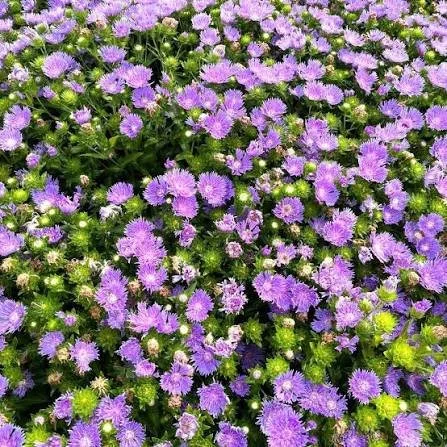
‘Peachie’s Pink’ is a Stokes’ aster with large, fringed flowers in soft pink tones. The flowers have a distinctive cornflower-like appearance and are held above a compact clump of foliage, creating a strong focal point in the summer perennial garden. Blooms attract bees and butterflies and can also be used as cut flowers. The plant prefers full sun and well-drained soil and is particularly well suited to cottage gardens, perennial borders, pollinator plantings, and sunny woodland edges. Removing spent flowers can encourage additional blooming and keep the plant looking tidy.
Height: 18–24 in
Width: 18–24 in
Flower time: June–September
Sun/Shade: Full sun to part shade
Deer resistant
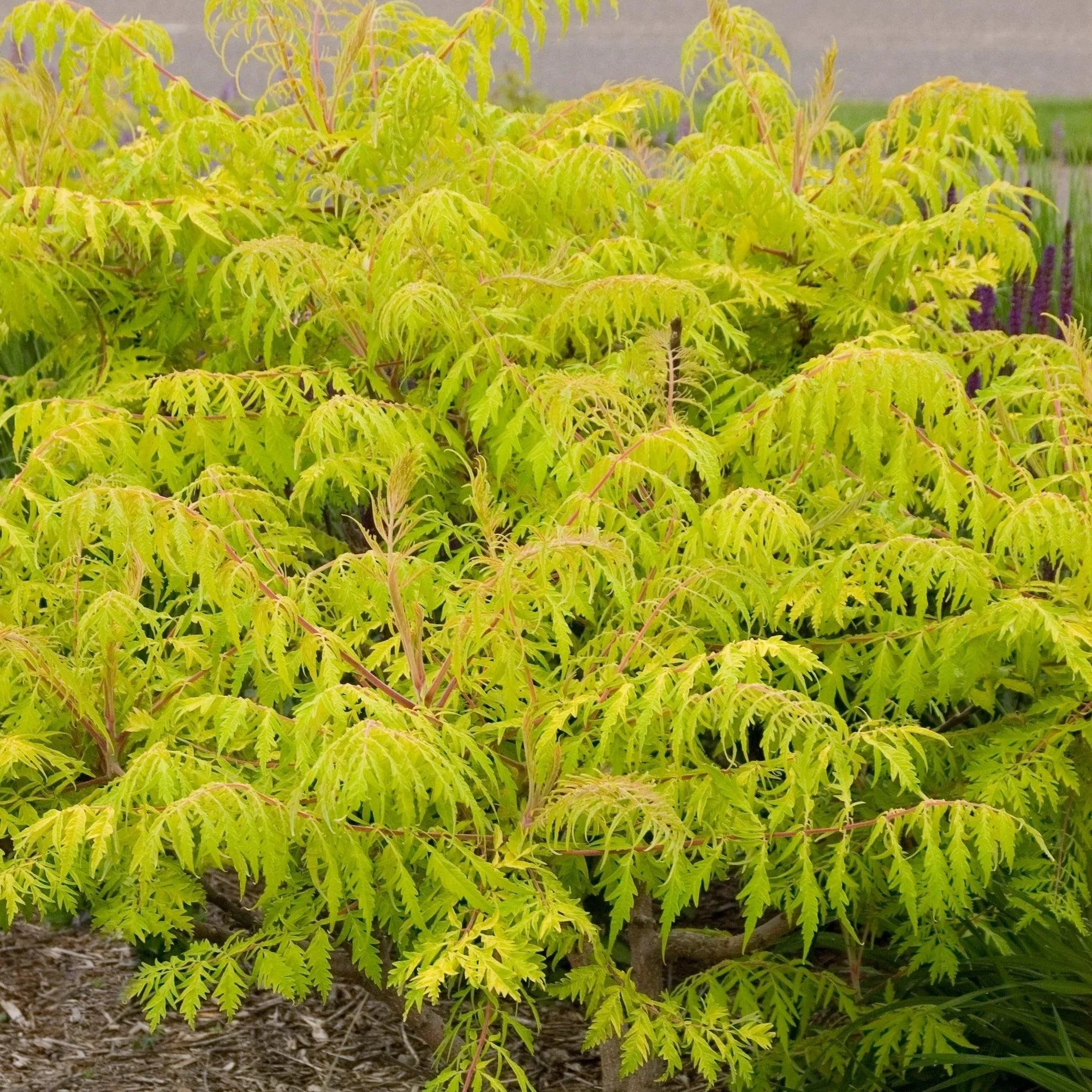
‘Tiger Eye’ is a distinctive cutleaf sumac prized for its bright chartreuse-gold foliage and strongly layered branching habit. The foliage emerges golden yellow, providing a vivid contrast against darker shrubs and green perennials, and develops attractive orange and red tones in fall. Its finely divided leaves give the plant a fern-like texture, while the open structure provides interest even after the leaves drop. It is adaptable and relatively drought tolerant once established, making it useful as a specimen or bold accent in sunny landscapes. Like the species, it can spread by suckering, so allow adequate room or remove unwanted shoots when necessary.
Height: 3–6 ft
Width: 3–6 ft
Flower time: June–July
Sun/Shade: Full sun to part shade
Deer resistant
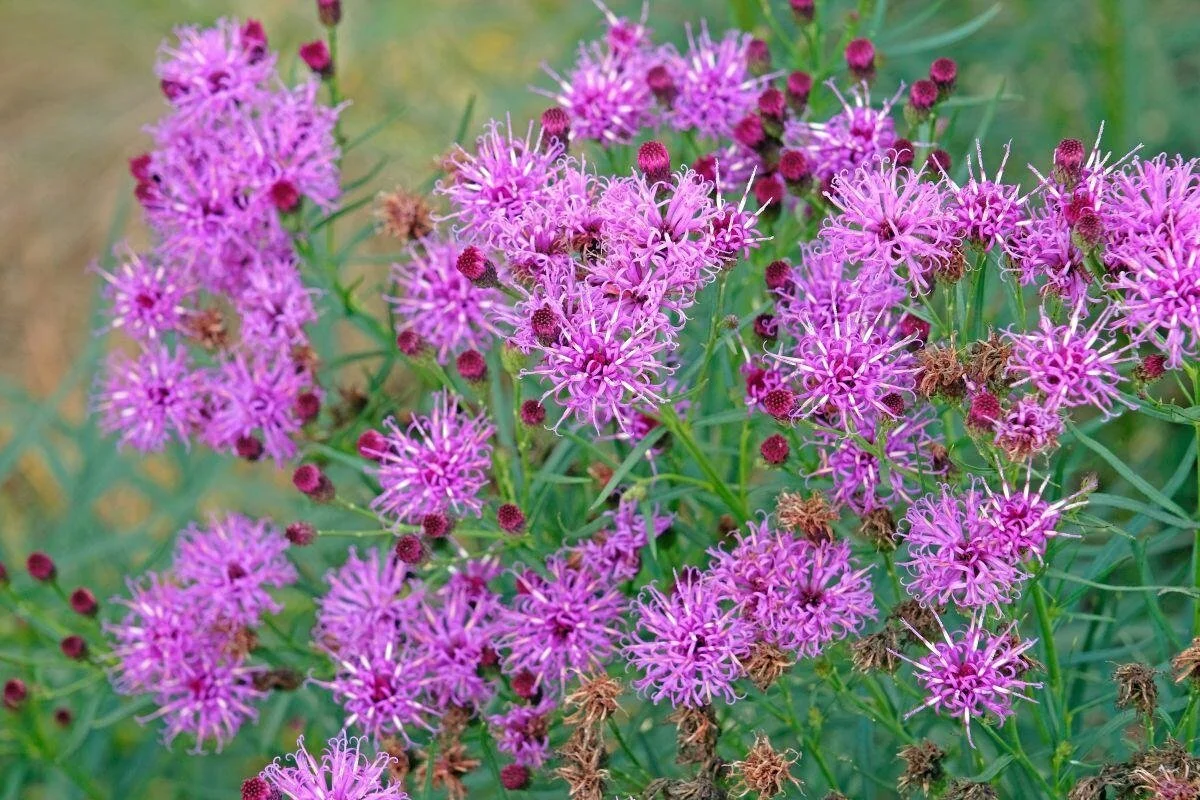
‘Iron Butterfly’ is a compact ironweed distinguished by its narrow, finely textured foliage and clusters of vivid purple flowers. The slender leaves give the plant a graceful, almost grass-like appearance, while the flowers provide strong late-season color and attract butterflies and other pollinators. Its upright habit works particularly well in naturalistic plantings, prairie-style gardens, perennial borders, and rain gardens. It prefers a sunny position and reasonably moist soil, although established plants can tolerate periods of drier conditions. The combination of fine foliage and intense purple flowers makes it especially effective when planted among contrasting ornamental grasses.
Height: 2–3 ft
Width: 2–3 ft
Flower time: August–September
Sun/Shade: Full sun
Deer resistant
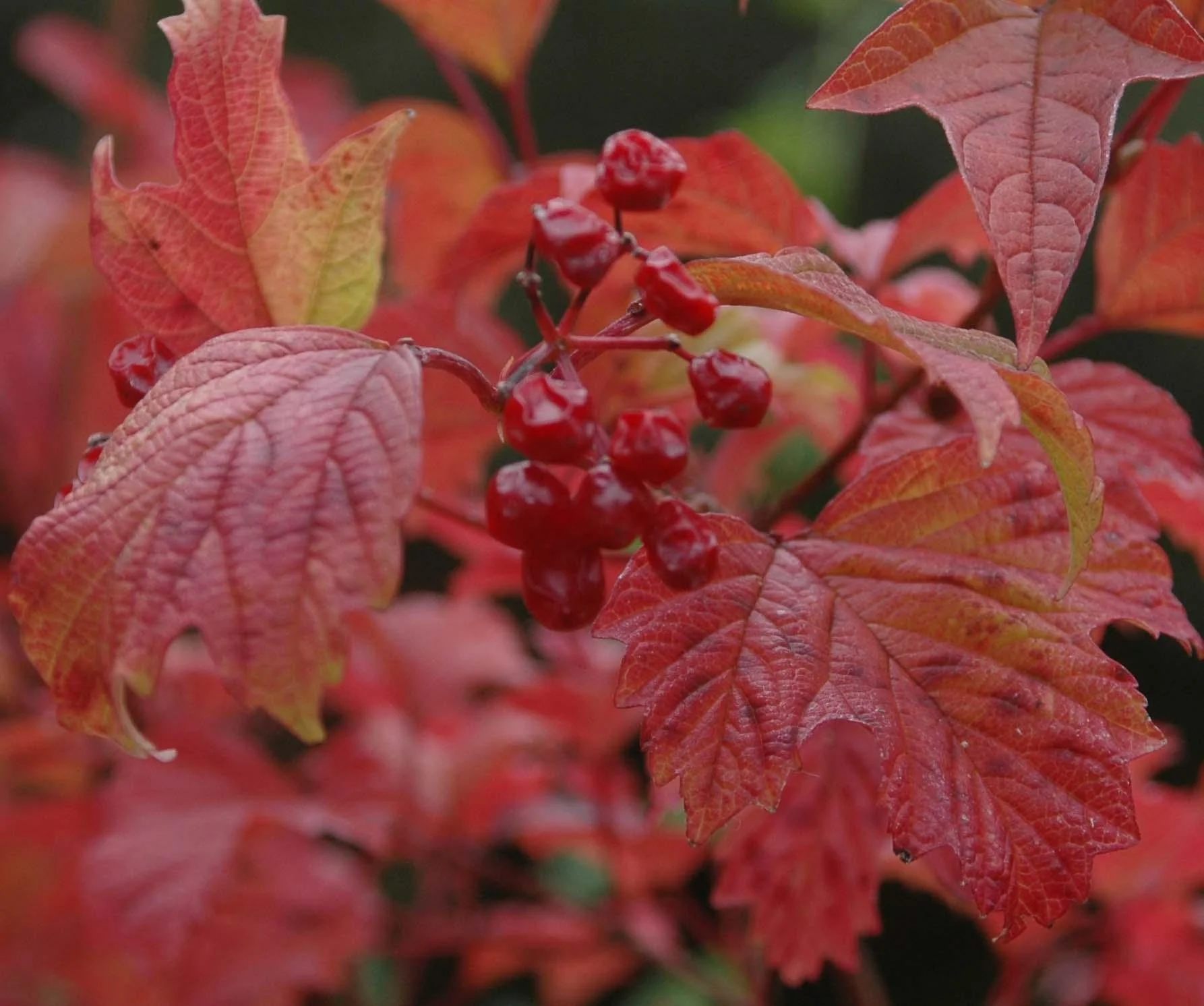
American Cranberry Viburnum is a native shrub valued for its combination of spring flowers, summer fruit, colorful fall foliage, and winter interest. Flat clusters of white flowers appear in spring, followed by bright red berry-like fruit that can persist into fall and winter and provide food for birds. The foliage develops attractive red and purple tones in autumn, giving the shrub several seasons of ornamental value. Its larger size makes it useful for naturalized plantings, wildlife gardens, informal screens, and shrub borders.
Height: 8–12 ft
Width: 8–12 ft
Flower time: May–June
Sun/Shade: Full sun to part shade
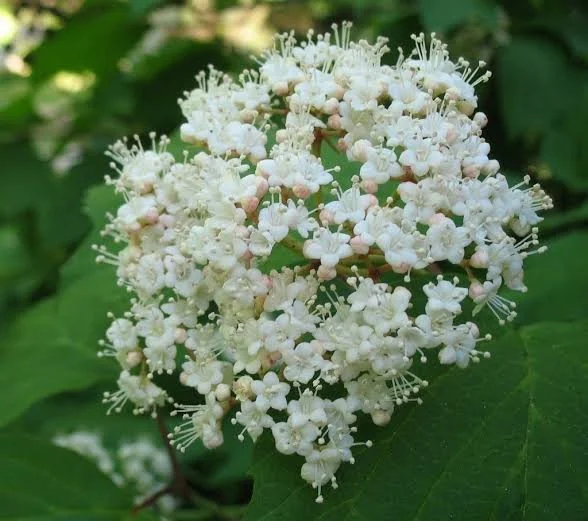
Mapleleaf Viburnum is a native deciduous shrub named for its maple-like leaves, which provide attractive texture throughout the growing season and develop rich pink, red, and purple tones in fall. Flat clusters of small white flowers appear in late spring, followed by small berries that mature from reddish tones to blue-black and provide food for birds. Its relatively open, suckering habit makes it useful for naturalized areas, woodland gardens, wildlife plantings, and shaded shrub borders. It is particularly well suited to the edges of wooded areas where it can receive filtered sunlight and consistent moisture.
Height: 4–6 ft
Width: 3–4 ft
Flower time: May–June
Sun/Shade: Part shade to full shade
Deer resistant
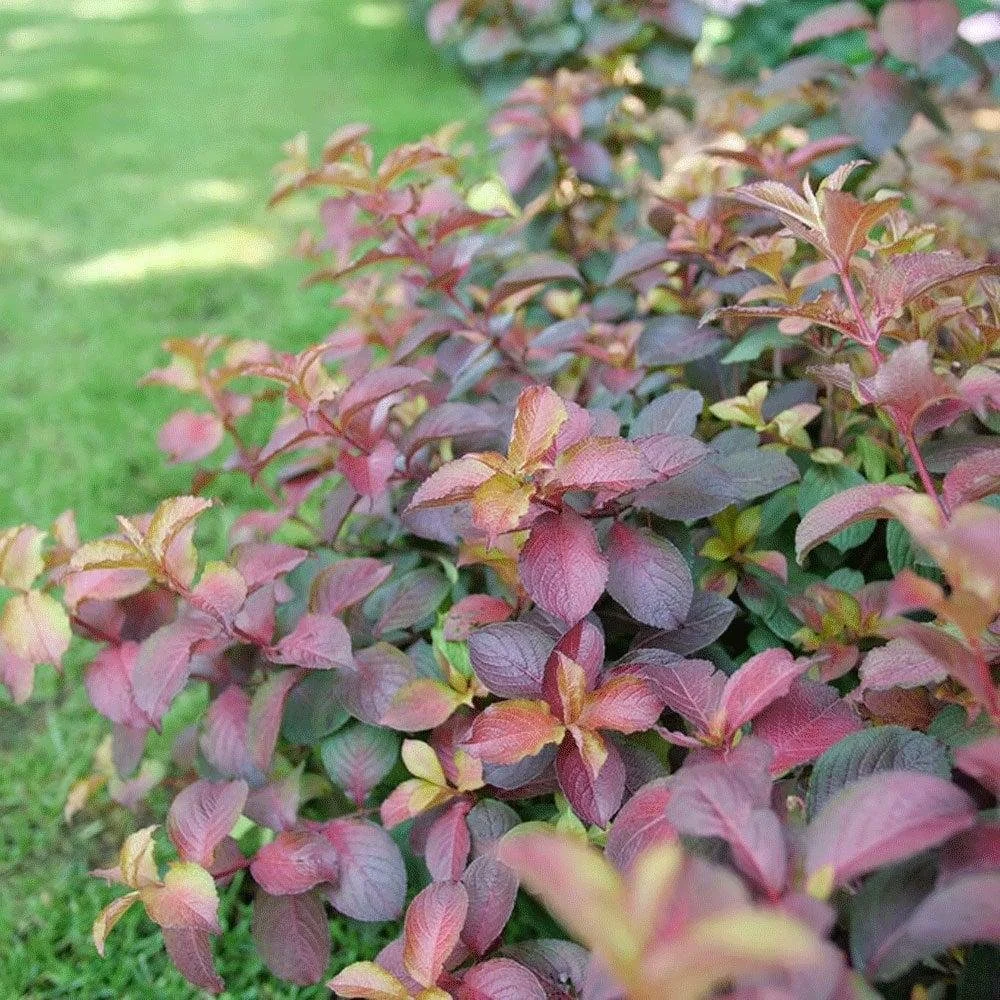
‘Midnight Sun’ is a compact weigela valued for its colorful foliage and spring flowers. The foliage provides deep, dark coloration that contrasts beautifully with the pink tubular flowers, which appear along the branches in spring and can attract hummingbirds and other pollinators. The foliage changes color as the season goes on creating an amazing display of dark purple-ish, bergundy, and yellow-orange. Its compact habit makes it useful for foundation plantings, perennial borders, containers, and smaller garden spaces where a full-sized weigela would be too large. It performs best with good sunlight, which helps maintain the strongest foliage color, and benefits from well-drained soil.
Height: 1–2 ft
Width: 1–2 ft
Flower time: May–June
Sun/Shade: Full sun to part shade
Deer resistant