‘Kintzley’s Ghost’ is a deciduous native honeysuckle vine that is especially unusual because of its silvery-white structures surrounding the flowers and its extremely interesting story, see below*. In early summer, small yellow flowers appear in clusters, and the surrounding leaf-like bracts gradually become silvery white, giving the impression of little ghostly flowers scattered along the vine. Later, small red berries can develop. Unlike invasive Asian honeysuckles, this is a native North American species and is useful for covering a trellis, fence, arbor or other vertical structure. It is a vigorous climber. It prefers sun to part shade and reasonably well-drained soil.
Height: 8–12 feet
Width: 3–6 feet, depending on support
Flower time: May–June
Sun/Shade: Full sun to partial shade
Deer resistant
Rabbit resistant
*The Story of Kintzley’s Ghost Honeysuckle*
Kintzley’s Ghost is a striking native North American honeysuckle (Lonicera reticulata), known for its unique foliage, flowers, and the rich history behind its discovery.
Origins in the 1880s
In the 1880s, William “Ped” Kintzley, a Civil War veteran, worked in the greenhouses at Iowa State University (then Iowa State College). He found a rare honeysuckle variety, a natural sport, in the wild and propagated it himself. He never commercialized it, instead giving plants to members of the Kintzley family across the area as gifts. He was so proud of his discovery that he requested it be planted on his grave.
Rediscovery in 2001
We might never have known about Kintzley’s Ghost had it not been for a Colorado plantsman, Scott Skogerboe, who was driving down a side street in Fort Collins in 2001. He stopped, having spotted a beautiful plant that looked like a eucalyptus with a blue-green hue and rounded leaves, thriving in the harsh Northern Colorado climate. He knocked on the door, and the elderly gentleman living in the home described the plant as a family heirloom and told him the story of his grandfather, William Kintzley. (What are the chances that Scott would knock on the door of the grandson?!) Scott was able to take cuttings and propagated this unique vine, selling it online for a number of years. Eventually, Proven Winners bought the propagation rights from Scott (I imagine he was paid a tidy sum!).
Botanical Features
‘Kintzley’s Ghost’ is a moderate climber, typically 8–12 feet tall with a spread of 3–6 feet. Each season, it begins like any other honeysuckle, with typical dusty green leaves. In late spring, flower buds pop out like saucers. These rounded bracts look a lot like eucalyptus, but the yellow flowers at the center feed native pollinators, including bees, butterflies, and hummingbirds! Red berries form in the fall, but won’t become a nuisance like other honeysuckles. Due to its size and interesting seasonal changes, it makes an incredible specimen. It has dusty blue-green leaves that develop into large, saucer-like silvery-white bracts, holding their color through summer and into fall. It is drought-tolerant and deer ignore it.
Cultural Significance
The plant’s name honors William Kintzley, and its rediscovery brought it to national attention through the Plant Select program. It is now cultivated for its ornamental value, cut flower use, and as a specimen vine or groundcover. ‘Kintzley’s Ghost’ is both a botanical curiosity and a living link to a forgotten greenhouse discovery, preserved and celebrated through the dedication of a few family members and the keen eye of a modern plantsman. And, yes, this namesake plant is thriving on William "Ped” Kintzley’s grave!
‘Kintzley’s Ghost’ is a deciduous native honeysuckle vine that is especially unusual because of its silvery-white structures surrounding the flowers and its extremely interesting story, see below*. In early summer, small yellow flowers appear in clusters, and the surrounding leaf-like bracts gradually become silvery white, giving the impression of little ghostly flowers scattered along the vine. Later, small red berries can develop. Unlike invasive Asian honeysuckles, this is a native North American species and is useful for covering a trellis, fence, arbor or other vertical structure. It is a vigorous climber. It prefers sun to part shade and reasonably well-drained soil.
Height: 8–12 feet
Width: 3–6 feet, depending on support
Flower time: May–June
Sun/Shade: Full sun to partial shade
Deer resistant
Rabbit resistant
*The Story of Kintzley’s Ghost Honeysuckle*
Kintzley’s Ghost is a striking native North American honeysuckle (Lonicera reticulata), known for its unique foliage, flowers, and the rich history behind its discovery.
Origins in the 1880s
In the 1880s, William “Ped” Kintzley, a Civil War veteran, worked in the greenhouses at Iowa State University (then Iowa State College). He found a rare honeysuckle variety, a natural sport, in the wild and propagated it himself. He never commercialized it, instead giving plants to members of the Kintzley family across the area as gifts. He was so proud of his discovery that he requested it be planted on his grave.
Rediscovery in 2001
We might never have known about Kintzley’s Ghost had it not been for a Colorado plantsman, Scott Skogerboe, who was driving down a side street in Fort Collins in 2001. He stopped, having spotted a beautiful plant that looked like a eucalyptus with a blue-green hue and rounded leaves, thriving in the harsh Northern Colorado climate. He knocked on the door, and the elderly gentleman living in the home described the plant as a family heirloom and told him the story of his grandfather, William Kintzley. (What are the chances that Scott would knock on the door of the grandson?!) Scott was able to take cuttings and propagated this unique vine, selling it online for a number of years. Eventually, Proven Winners bought the propagation rights from Scott (I imagine he was paid a tidy sum!).
Botanical Features
‘Kintzley’s Ghost’ is a moderate climber, typically 8–12 feet tall with a spread of 3–6 feet. Each season, it begins like any other honeysuckle, with typical dusty green leaves. In late spring, flower buds pop out like saucers. These rounded bracts look a lot like eucalyptus, but the yellow flowers at the center feed native pollinators, including bees, butterflies, and hummingbirds! Red berries form in the fall, but won’t become a nuisance like other honeysuckles. Due to its size and interesting seasonal changes, it makes an incredible specimen. It has dusty blue-green leaves that develop into large, saucer-like silvery-white bracts, holding their color through summer and into fall. It is drought-tolerant and deer ignore it.
Cultural Significance
The plant’s name honors William Kintzley, and its rediscovery brought it to national attention through the Plant Select program. It is now cultivated for its ornamental value, cut flower use, and as a specimen vine or groundcover. ‘Kintzley’s Ghost’ is both a botanical curiosity and a living link to a forgotten greenhouse discovery, preserved and celebrated through the dedication of a few family members and the keen eye of a modern plantsman. And, yes, this namesake plant is thriving on William "Ped” Kintzley’s grave!


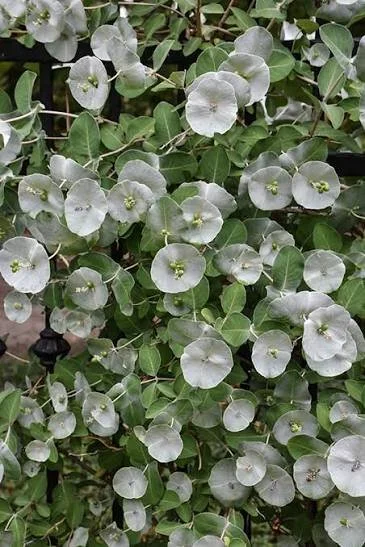 Image 1 of 7
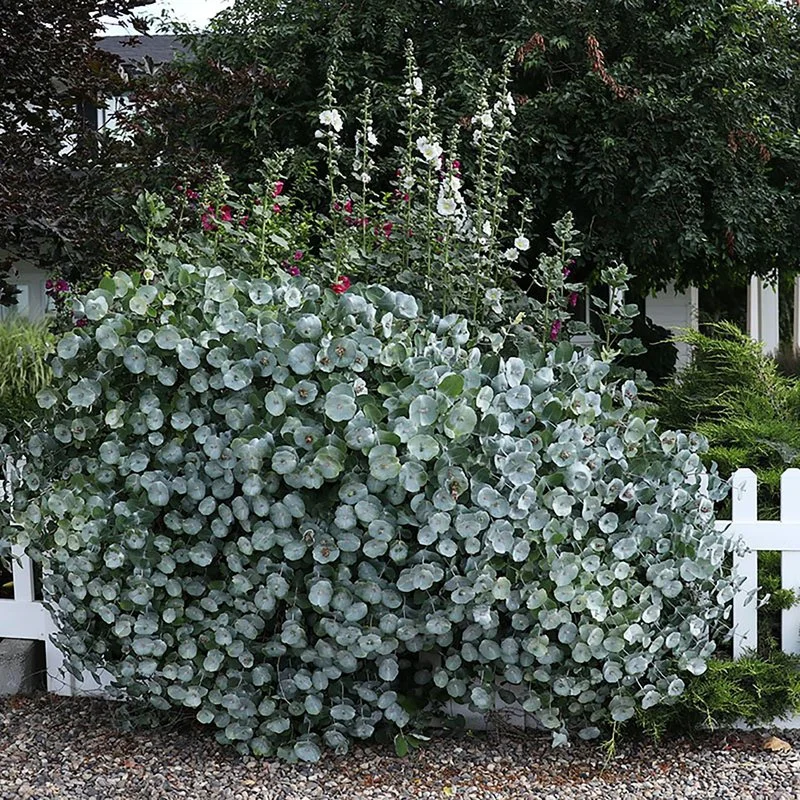 Image 2 of 7
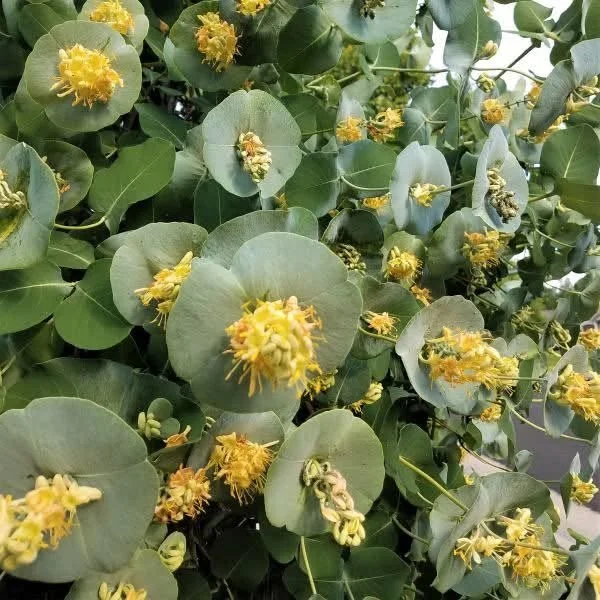 Image 3 of 7
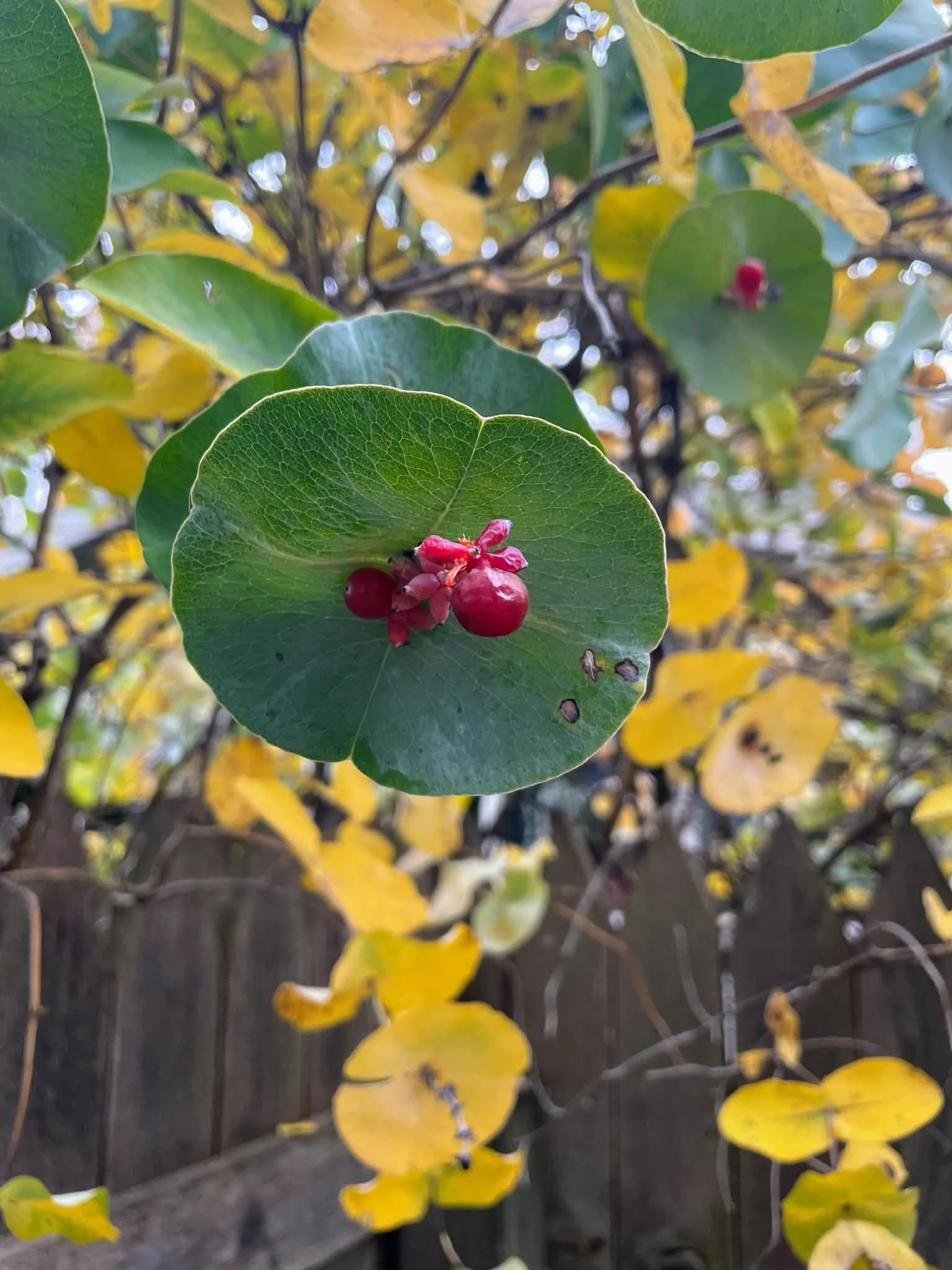 Image 4 of 7
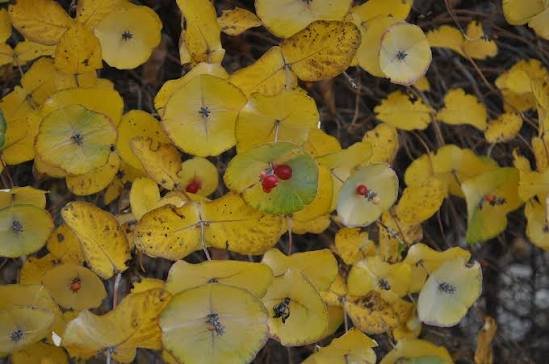 Image 5 of 7
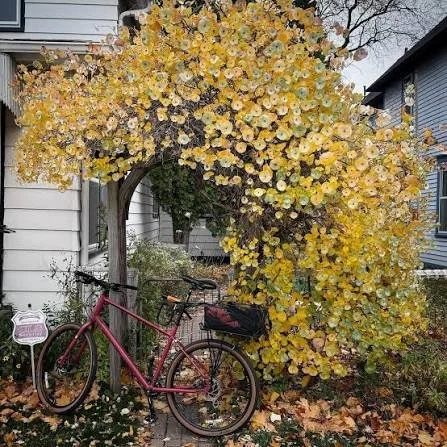 Image 6 of 7
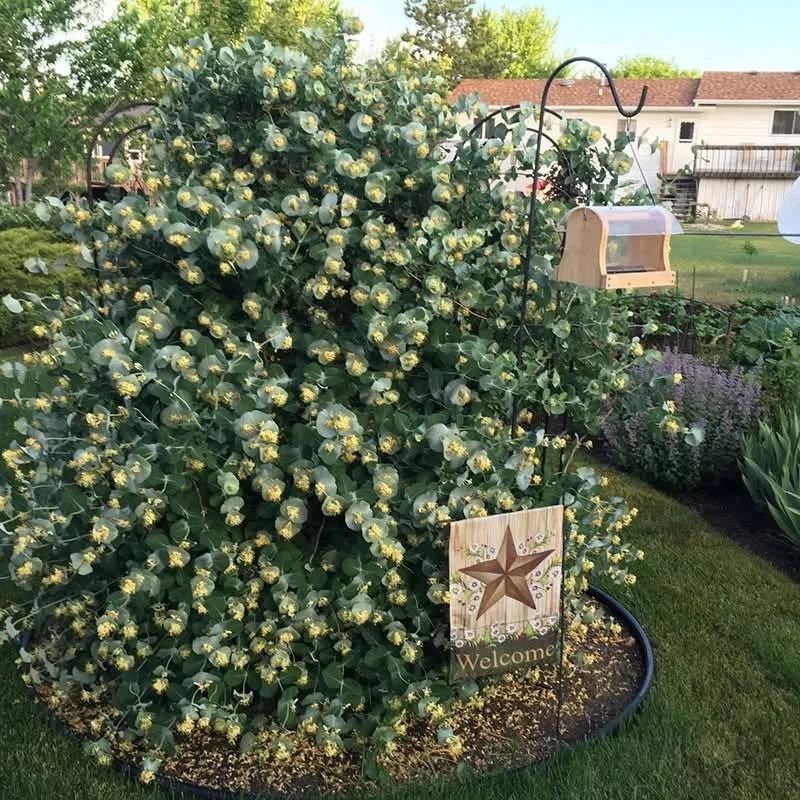 Image 7 of 7